
Signing up for banksman training is a straightforward decision. Arriving on the day with no idea what to expect, however, is where many people come unstuck.
| ⚡ At a Glance: What This Article Covers ✔ What a banksman course looks like from start to finish ✔ The difference between classroom and online banksman training formats ✔ What topics you will cover on the day ✔ The HSE hand signals you will need to know ✔ What the assessment involves and how to pass it ✔ A preparation checklist so you arrive ready ✔ Real examples of what can go wrong without proper preparation ✔ FAQs answered by industry professionals |
Whether you are attending a classroom-based banksman course or completing online banksman training, understanding what lies ahead will help you arrive prepared, settle in more quickly, and get far more from the experience.
This guide explains exactly what to expect during banksman training, from the moment you arrive to receiving your certificate at the end. It also outlines how to prepare beforehand, helping you approach the course with confidence and maximise your chances of success.
Before you think about what happens on the day, it is worth confirming that banksman training is the right course for you. The good news is that banksman training is designed to be accessible to a wide range of workers.
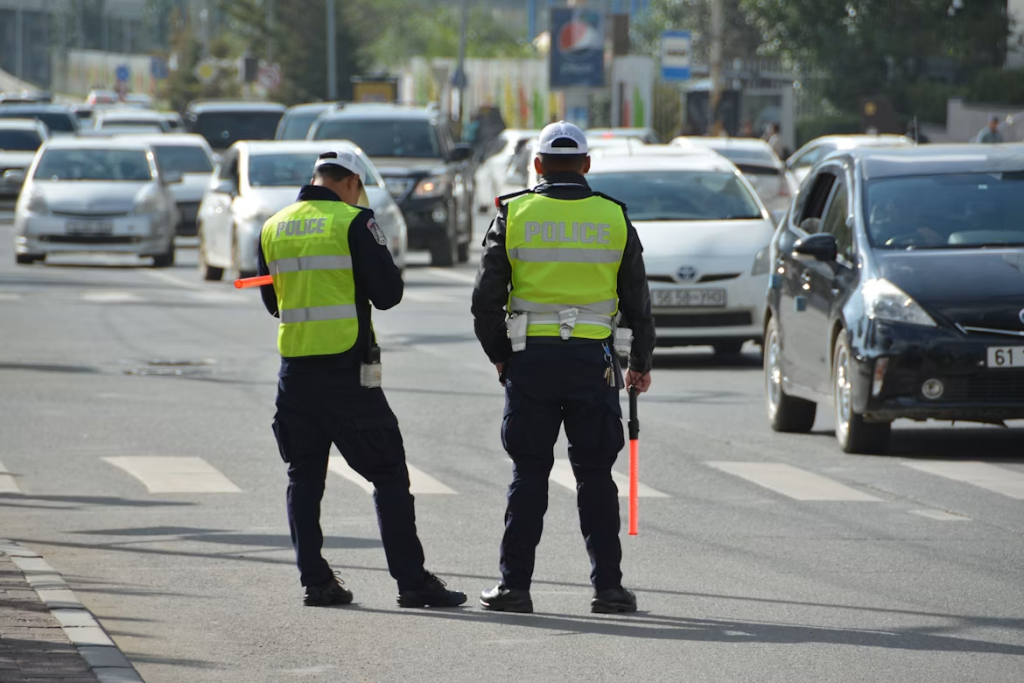
You do not need to be an experienced site operative. You do not need previous health and safety knowledge, and you do not need any formal educational qualifications. Banksman training is designed for people who are new to the role, while also serving as a valuable refresher for those who have previously held a banksman ticket and need to renew it.
| Who | Why |
| Construction labourers and operatives | Required on many sites where reversing vehicles or mobile plant are in use. |
| Warehouse and logistics staff | To safely guide delivery vehicles in yards, loading bays, and other confined spaces. |
| Site supervisors and managers | To understand the banksman role and help ensure safe vehicle movements on site. |
| Security personnel | To manage vehicle movements at site entrances, exits, and car parks. |
| Utilities and highways workers | To guide vehicles operating on or alongside the public highway. |
| Events staff and marshals | To safely manage vehicle movements at festivals, sporting events, and other public gatherings. |
| Anyone returning after a career break | To refresh their knowledge and renew an expired banksman ticket where required. |
| 📊 Why This Matters: The Numbers Behind Banksman TrainingAccording to the Health and Safety Executive (HSE), around 50 workers are killed each year in workplace transport accidents across Great Britain, with more than 5,000 others injured. Nearly one in four of these fatalities involves a reversing vehicle—one of the key hazards that banksman training is designed to help manage. Being struck by a moving vehicle accounts for approximately 76% of workplace transport fatalities.These figures highlight why banksman training is an essential part of workplace safety. By teaching recognised signalling techniques, communication methods, hazard awareness, and safe systems of work, the course helps reduce the risks associated with vehicle movements, protecting drivers, pedestrians, and banksmen alike. |
Before looking at what happens during banksman training, it is important to understand which course format you are enrolled on, as the learning experience differs slightly.
| Factor | Classroom Banksman Course |
| Typical duration | Half day (3–4 hours) to full day including assessment |
| Location | Training centre, or on-site delivery for groups |
| Learning style | Instructor-led sessions, group discussion, demonstrations |
| Practical elements | Signal demonstrations, scenario walkthroughs, live Q&A |
| Assessment | Multiple-choice paper, completed in the training room on the day |
| Certificate | Issued same day — physical certificate and (usually) photo ID card |
| Best for | First-time learners, those needing immediate site access, group bookings |
Factor | Online Banksman Training |
| Typical duration | 2–3 hours of self-paced study, completed in your own time |
| Location | Any device — computer, tablet, or smartphone with internet access |
| Learning style | Video modules, interactive exercises, written content |
| Practical elements | Theory and awareness only — employer provides site-specific practical top-up |
| Assessment | Online multiple-choice assessment at the end of the modules |
| Certificate | Digital/printable certificate issued immediately on passing |
| Best for | Refreshers, remote learners, teams needing rapid roll-out |
The remainder of this guide focuses primarily on the classroom banksman training experience, as this is the format most first-time delegates attend. However, the learning outcomes, core topics, and assessment methods are broadly similar for both classroom and online banksman training.
Not knowing what to expect is often the biggest source of first-day nerves. The outline below reflects the structure of a typical half-day banksman training course, although the exact timetable may vary slightly between training providers.
On arrival, you will usually be asked to sign in, present a form of identification, and complete any necessary registration paperwork. If the course includes a photo ID card, your photograph may also be taken at this stage.
It is important to arrive on time. Some training providers cannot admit late arrivals once the course has started, particularly where attendance requirements or assessments could be affected.
Your trainer will introduce themselves, explain the day's agenda, and cover important housekeeping information, including emergency procedures, fire exits, and available facilities.
This also provides an opportunity to become familiar with the training environment and ask any initial questions. Many banksman training instructors have practical industry experience, allowing them to relate the course content to real workplace situations.
Most banksman training courses begin by explaining why effective vehicle marshalling is essential for workplace safety.

Trainers commonly refer to Health and Safety Executive (HSE) statistics on workplace transport incidents, including the number of fatalities and injuries involving reversing vehicles. This helps place the course content into context and demonstrates why correct hand signals, safe positioning, effective communication, and emergency procedures are critical for reducing risk.
The trainer will explain the legal framework that underpins banksman training, including the Health and Safety at Work etc. Act 1974, the Management of Health and Safety at Work Regulations 1999, the Construction (Design and Management) Regulations 2015 (CDM), and the Health and Safety (Safety Signs and Signals) Regulations 1996, which establish the recognised hand signal system used in UK workplaces.
You will also learn about the responsibilities of employers, employees, and banksmen, the hierarchy of vehicle safety controls, and the standards expected of a competent banksman.
For many delegates, this is the most engaging part of the banksman training course.
The trainer will demonstrate the recognised hand signals, explain when each signal should be used, and provide opportunities to practise them through demonstrations and interactive exercises. Some providers also use videos or practical scenarios to reinforce learning.
By the end of this session, delegates should be able to recognise and correctly perform the standard hand signals used during vehicle marshalling.
This section focuses on identifying and controlling the risks associated with vehicle movements.
Topics typically include dynamic risk assessment, blind spots, overhead obstructions, uneven or soft ground, pedestrian routes, exclusion zones, communication methods, and emergency stop procedures. Understanding these hazards is a key objective of effective banksman training.
Many banksman training courses include scenario-based discussions that encourage delegates to apply what they have learned to realistic workplace situations.
Whether you work in construction, warehousing, logistics, utilities, or events, this session allows you to discuss site-specific challenges and ask questions relevant to your own working environment.
The course usually concludes with a multiple-choice assessment based on the topics covered during the training.
The assessment is intended to confirm your understanding of the course content rather than catch you out with unexpected questions. Results are often available shortly after completion, although the exact process varies between training providers.
Delegates who successfully complete the banksman training course will receive their certificate and, where applicable, a photo ID card before leaving the training centre.
The trainer may also explain any additional site-specific instruction your employer should provide, along with guidance on when refresher or renewal training is recommended to help maintain competence.
Here is a complete overview of the topics covered during a professional banksman training course. Quality banksman training equips delegates with the practical knowledge, legal understanding, and communication skills required to safely guide vehicle movements in the workplace. Professional banksman training is designed to reflect current UK health and safety legislation and recognised industry best practice. Reputable training providers review their course content periodically to ensure it remains aligned with current legal requirements and industry guidance.
A quality banksman training course typically covers:
Banksman training courses aligned with public highway operations will additionally cover Chapter 8 traffic management, the Road Traffic Acts, and the specific procedures required when working in areas where members of the public may be present.
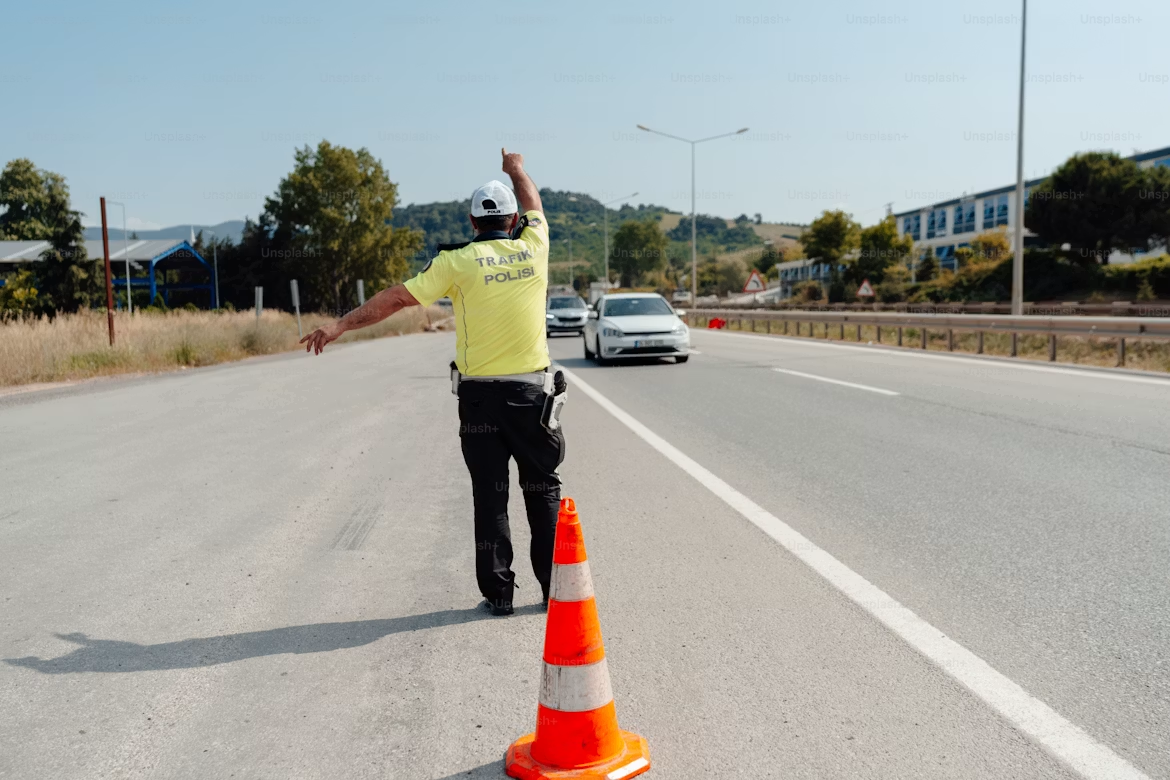
Hand signals are the backbone of banksman training and everyday banksman work. They allow you to communicate clearly with a driver who may be unable to hear you due to engine noise, distance, or other site conditions. Learning and correctly applying these signals is one of the most important practical skills developed during banksman training.
The HSE-approved hand signal system is drawn from the Health and Safety (Safety Signs and Signals) Regulations 1996 and is recognised across UK industry. This means that any trained banksman and any trained driver should understand the same signals, regardless of where they work.
| Signal | Meaning & Key Points |
| Come forward (both arms raised, palms facing inward, moving toward body) | Bring the vehicle towards you. Used to direct forward movement. |
| Reverse (both arms raised, palms facing away, pushing outward) | Move the vehicle away from you. The most commonly used signal in banksman work. |
| Stop (one or both arms raised, palm facing the driver) | Halt all movement immediately. The most critical signal — must be obeyed without question. |
| Emergency stop (both arms crossed above head) | Immediate danger — stop now. Used only in genuine emergency situations. |
| Turn left (left arm extended horizontally, right arm making circular motion) | The driver's vehicle should turn left. Left/right signals are from the driver's perspective. |
| Turn right (right arm extended horizontally, left arm making circular motion) | The driver's vehicle should turn right. |
| Raise (one arm extended upward, index finger pointing up, making circular motion) | Used in crane and lifting operations to raise the load. |
| Lower (one arm extended downward, index finger pointing down, making circular motion) | Used in crane and lifting operations to lower the load. |
| Slow down (arm extended horizontally, palm facing down, gentle up-and-down motion) | Reduce speed gradually. |
| Distance indication (hands held at appropriate distance apart) | Indicates how far the vehicle can safely continue to travel. |
If the driver cannot see you—stop.
If you cannot see the driver in their mirror—stop.
The banksman must maintain constant visual contact with the driver throughout every manoeuvre. The moment that contact is lost, all vehicle movement must cease until visual contact has been safely re-established.
This rule is non-negotiable and forms one of the most important safety principles taught during banksman training.
During practical exercises, delegates are expected to demonstrate that they can perform each signal consistently, maintain clear visual communication with the driver, and position themselves safely throughout every manoeuvre. Trainers will normally provide immediate feedback to help correct technique before the assessment.
The assessment at the end of a banksman training course is usually a multiple-choice question paper. It is not designed to catch you out; instead, it confirms that you have understood the key knowledge and practical principles covered during the course.
Although assessment formats vary slightly between providers, the learning outcomes remain broadly consistent. Reputable banksman training providers explain each topic thoroughly before the assessment, allowing delegates to build confidence through guided learning and practical demonstrations.
Pass rates for banksman training assessments are consistently high, with many providers reporting success rates of around 99%.
The course is specifically designed to prepare delegates thoroughly for the assessment. If you pay attention during the training, participate in the practical exercises, and ask questions where necessary, you are very likely to pass on your first attempt.
If you do not pass, many providers offer a free re-sit.
Successfully completing your banksman training means you leave with recognised evidence of your competence.
You will typically receive:
Your certificate will normally include:
Keep your certificate in a safe place, as employers may request to see it before allowing access to sites where a valid banksman qualification is required.
Many employers also retain a copy of the certificate within their health and safety records to help demonstrate workforce competence during audits, inspections, or client compliance checks.
The most common reason delegates struggle during banksman training is not a lack of ability or industry experience—it is simply arriving unprepared.
Following this checklist will help you get the most from your training day.
To bring this guide to life, here is a composite example based on the typical experience of someone attending banksman training for the first time. While individual experiences vary between training providers, the following reflects what many delegates can expect.
James is a labourer working on a construction site in Sheffield. His site manager tells him he needs to complete banksman training and obtain his banksman ticket before assisting with a series of concrete deliveries scheduled for the following month. He books a half-day classroom-based banksman training course at a local training centre.
James arrives 15 minutes early, signs in, and is shown to a training room with seven other delegates—a mix of construction workers, a warehouse supervisor, and a delivery driver whose employer wants him to understand the banksman's role from the driver's perspective.
The trainer, a former site safety officer with more than 20 years of industry experience, begins the session by discussing HSE workplace transport statistics. James had not fully appreciated the risks associated with reversing vehicles. Learning that a significant proportion of workplace transport fatalities involve reversing manoeuvres changes his perspective on the importance of the role and the purpose of banksman training.
The hand signal section quickly becomes James's favourite part of the course. At first, he finds the 'turn left' and 'turn right' signals confusing because they are given from the driver's perspective rather than the banksman's. However, with guidance from the trainer and practical repetition, he masters the signals before the end of the session.
The assessment takes James around 15 minutes to complete. He passes with 27 out of 30 correct answers and leaves with his banksman training certificate and photo ID card. Later that afternoon, he sends a copy of his certificate to his site manager and is confidently guiding vehicle movements on site the following week.
James's preparation was straightforward. He checked his identification documents the evening before, planned his journey, arrived early, and remained engaged throughout the course. For most delegates, that level of preparation is all that is needed to succeed.
This article has focused on what to expect during banksman training, from arriving at the training venue through to successfully receiving your certificate.
However, becoming a confident and competent traffic marshal involves much more than completing a single banksman training course. Developing competence also involves applying your training on site, understanding employer procedures, and continuing to build experience in real working environments.
If you would like to explore the role in greater depth—including the legal framework, salary expectations, career opportunities, the differences between on-site and public highway operations, certificate renewal, and career progression—we have created a comprehensive guide covering every aspect of the profession.
| 📖 Want the Full Picture? This article focuses specifically on what to expect during banksman training. For a comprehensive end-to-end guide covering the role itself, legal requirements, salary, career progression, and more, read our definitive pillar guide: 👉 How to Become a Traffic Marshal — The Definitive Guide |
Whether you are preparing for your first banksman training course or planning the next stage of your career, this guide provides a comprehensive overview from start to finish.
If you are ready to obtain your banksman ticket, our accredited Banksman / Traffic Marshal Training Course is designed to provide everything you need, whether you are completing banksman training for the first time or renewing an existing qualification.
✔ Accredited course recognised by employers across the UK
✔ Course content aligned with HSE guidance and the Health and Safety (Safety Signs and Signals) Regulations 1996
✔ Flexible online learning—study on any device, at your own pace
✔ No previous experience or qualifications required
✔ Certificate issued immediately upon successful completion
✔ Suitable for construction, warehousing, logistics, utilities, manufacturing, and events
| 🎓 READY TO GET CERTIFIED? Enrol on our accredited Banksman / Traffic Marshal Training course today. Flexible online learning · Recognised certificate · No experience needed 👉 Enrol on the Banksman / Traffic Marshal Course → |

No formal preparation is required before attending banksman training. The course is designed to take complete beginners from little or no knowledge to a good understanding of the role within a single session.
If you would like to feel more confident beforehand, you may find it helpful to read HSE guidance on workplace transport safety and become familiar with the purpose of standard hand signals. The most important preparation is practical: make sure you have the required identification, know where the training venue is, and arrive on time.
Most classroom-based banksman training providers ask delegates to bring at least one form of photographic identification, such as a passport or driving licence, together with proof of their National Insurance number. Some providers may request additional identification, so it is always advisable to check the joining instructions before the course.
Most banksman training providers offer a free re-sit if you do not pass the assessment on your first attempt, although policies may vary.
Pass rates are generally very high because the assessment is based entirely on material covered during the course. If you do not achieve the required pass mark, the trainer will usually explain which areas need further revision before you attempt the assessment again.
Your banksman training certificate provides evidence that you have successfully completed formal training and understand the principles of safely directing vehicle movements.
However, employers should also provide a site-specific induction and any additional practical instruction needed for the particular vehicles, traffic routes, hazards, and working environment on their site. Formal banksman training provides the foundation, while site-specific training ensures those principles are applied safely in practice.
Most banksman training providers issue certificates with a recommended validity period of three years.
Many employers choose to refresh banksman training every three years or sooner if working practices change significantly, new equipment is introduced, or an employee has been away from the role for an extended period. Refresher training helps ensure knowledge remains current and supports ongoing workplace safety.
Yes. Many providers offer online banksman training, covering the same core theoretical knowledge as classroom-based learning.
Online learning can be particularly suitable for refresher training or organisations that need to train several employees efficiently. Some employers, particularly for first-time delegates, may also require practical site-specific instruction to complement the online qualification.
Always check with your employer to ensure the chosen banksman training course meets their requirements.
A standard banksman training course teaches the principles of safely directing vehicle movements across a wide range of workplace vehicles, including HGVs, forklifts, dumpers, excavators, and similar plant.
It may not cover every specialist vehicle or unique site layout. This is why employers should provide site-specific instruction alongside formal banksman training. If you regularly work around specialist equipment, mention this to your trainer so they can offer relevant guidance where appropriate.
In most UK workplaces, yes.
The terms banksman and traffic marshal are commonly used interchangeably, and many banksman training providers issue a combined Banksman / Traffic Marshal certificate.
While "traffic marshal" is often considered the broader and more modern job title, "banksman" remains widely used within construction, civil engineering, logistics, and heavy industry. Regardless of the title used, the responsibilities and core training outcomes are generally the same.
Your first banksman training course does not need to feel daunting. It is designed to be practical, engaging, and suitable for complete beginners, with experienced trainers guiding delegates through every stage of the learning process.
Arrive prepared, bring the required identification, participate in the practical exercises, and pay close attention to the hand signal demonstrations. By actively engaging throughout your banksman training, you will leave with both a recognised certificate and the confidence to apply your new knowledge safely in the workplace.
Remember that formal banksman training is only one part of becoming a competent banksman. Continuing to follow site procedures, communicating clearly with drivers, and applying safe working practices every day are equally important in helping to reduce workplace transport risks.
Ready to book? Enrol on our Banksman / Traffic Marshal Training Course today.
— Training Station
Accredited Health & Safety Training for the Modern Workforce | trainingstation.org.uk