
Complete Teaching Assistant Diploma Level 3 (TA, SEN, Autism, ADHD & Dyslexia)

- Access
- Lifetime
- Assistance
- Expert Tutor Support
- Flexibility
- Learn Anytime, Anywhere
Overview
Complete Teaching Assistant Diploma Level 3 (TA, SEN, Autism, ADHD & Dyslexia)
Get Ready to Build a Career as a Teaching Assistant in the UK
Develop essential teaching assistant knowledge, understand classroom responsibilities, and build a strong foundation for exciting career opportunities in the UK’s education sector!
✅ Understand Teaching Assistant Fundamentals — Learn essential teaching assistant roles, explore classroom support responsibilities, and understand how teaching assistants contribute to school learning environments.
✅ Develop Classroom Support Knowledge — Explore classroom learning activities, curriculum principles, and the differences between teaching assistants and learning support assistants.
✅ Build School Policies & Teamwork Awareness — Understand essential school policies, professional working relationships, teamwork practices, and personal development within educational settings.
✅ Explore Career Opportunities — Build foundational knowledge relevant to teaching assistant, learning support assistant, and classroom support roles in primary schools, secondary schools, and other educational settings.
Course Overview
Explore the responsibilities of teaching assistants and their role in supporting classroom learning with this Teaching Assistant Training Course. The programme introduces the working relationships, school policies and educational principles associated with teaching assistant responsibilities.
The curriculum examines the role of a teaching assistant and how it may differ from that of a learning support assistant. It also explores professional relationships within school teams and the importance of understanding policies relevant to teaching assistant duties.
Further topics include assisting teaching and learning in the classroom, understanding the curriculum and recognising the role of self-development in educational support work. Together, these subjects introduce how teaching assistants contribute to classroom activities and work alongside other school staff.
Designed for learners interested in teaching assistant roles and educational support, the course provides introductory knowledge of school-based responsibilities, teamwork and classroom learning support.
Key Curriculum Topics
-
Teaching Assistant and Learning Support Assistant Roles: Explore the concept of a teaching assistant and the distinctions between related support roles.
-
Building Relationships Within the School Team: Understand the importance of professional working relationships in educational settings.
-
School Policies and Teaching Assistant Responsibilities: Examine how school policies relate to teaching assistant duties.
-
Assisting Learning and Teaching in the Classroom: Explore the role of teaching assistants in supporting classroom activities.
-
Understanding the Curriculum and Self-Development: Examine curriculum awareness and the importance of ongoing professional learning.
Course Curriculum
Module 1: Concept of TA and Differentiating with LSA
This module introduces the concept of a teaching assistant (TA) and explores how the role differs from that of a learning support assistant (LSA). It provides a starting point for understanding these education support roles.
Main learning topics:
-
Concept of a teaching assistant
-
Teaching assistant responsibilities
-
Learning support assistant role
-
Differences between TA and LSA
Module 2: Building Relationships in the School Team
This module focuses on relationships within the school team. It introduces the importance of working constructively with colleagues as part of a teaching and learning environment.
Main learning topics:
-
School-team relationships
-
Working with colleagues
-
Teamwork in schools
-
Relationships within the education setting
Module 3: School Policies Relevant to the Job of a TA
This module introduces school policies relevant to teaching assistant responsibilities. It helps learners recognise that the role operates within the policies and expectations established by the school.
Main learning topics:
-
School policies
-
Teaching assistant responsibilities
-
Policies relevant to the TA role
-
Working within school expectations
Module 4: Assisting Learning and Teaching in the Classroom
This module explores the teaching assistant’s role in assisting learning and teaching in the classroom. It introduces the relationship between classroom support and the wider teaching process.
Main learning topics:
-
Classroom learning
-
Assisting teaching
-
Supporting learning activities
-
The teaching assistant’s classroom role
Module 5: Understanding the Curriculum
This module focuses on understanding the curriculum. It introduces an important aspect of the school environment for teaching assistants who contribute to classroom learning and teaching.
Main learning topics:
-
Understanding the curriculum
-
Curriculum knowledge
-
Curriculum in the school setting
-
The curriculum and classroom support
Module 6: Self-Development
This module introduces self-development in relation to the teaching assistant role. It encourages learners to consider their own development and the knowledge they may need to strengthen for work in education support.
Main learning topics:
-
Self-development
-
Personal learning and development
-
Reflecting on role-related knowledge
-
Development as a teaching assistant
Who Is This Course For?
The Complete Teaching Assistant Diploma Level 3 may be useful for learners interested in school-based support roles and those who want to understand the responsibilities of a teaching assistant.
-
Aspiring teaching assistants: People exploring teaching assistant jobs who want an introduction to the role, school policies and classroom support.
-
Future learning support assistants: Learners who want to understand how the LSA role differs from the teaching assistant role.
-
People interested in SEN support: Learners exploring special educational needs support in schools. They should note that the supplied curriculum does not list separate modules specifically covering SEN, autism, ADHD or dyslexia.
-
Career changers: Individuals considering a move into education who want foundational knowledge before exploring vacancies or further training.
-
Existing school support staff: Teaching assistants or other education support workers who want to revisit role expectations, school-team relationships and curriculum understanding.
-
Learners exploring education careers: People researching how to become a teaching assistant and what knowledge may be relevant to the role.
Requirements
No formal entry requirements have been supplied for this course. Therefore, specific GCSEs, previous qualifications, professional experience or registration requirements cannot be confirmed from the available course information.
Learners interested in teaching assistant jobs should check individual school or employer requirements. Some vacancies may request relevant qualifications, experience working with children, English and maths qualifications, or enhanced background checks. Completing this course should not be assumed to satisfy every employer’s requirements or replace any additional training needed for a particular position.
Skills You Can Develop
Understanding the teaching assistant role — Explore the concept of a TA and how the role differs from that of an LSA.
Awareness of school-team relationships — Develop an understanding of the importance of relationships within a school team.
School-policy awareness — Become familiar with the relevance of school policies to teaching assistant responsibilities.
Classroom support awareness — Understand the teaching assistant’s role in assisting learning and teaching in the classroom.
Curriculum understanding — Build foundational knowledge of the curriculum as a component of the school environment.
Self-development awareness — Consider personal development in relation to the teaching assistant role.
Role comparison — Identify the distinction between teaching assistant and learning support assistant roles.
Understanding school expectations — Explore how teaching assistant responsibilities relate to school policies and the wider school team.
Learning Outcomes
By the end of the course, learners should be able to:
-
Explain the concept of a teaching assistant.
-
Identify differences between a teaching assistant and a learning support assistant.
-
Describe the importance of relationships within a school team.
-
Explain why school-team relationships matter in an education setting.
-
Identify the relevance of school policies to teaching assistant responsibilities.
-
Describe how school policies relate to the teaching assistant role.
-
Explain the teaching assistant’s role in assisting classroom learning.
-
Describe the connection between teaching assistance and classroom teaching.
-
Explain the importance of understanding the curriculum.
-
Recognise the role of self-development in their learning and professional growth.
Career Paths
The course introduces knowledge relevant to education support, but it does not guarantee employment or establish that learners meet all entry requirements for the roles below. Salary figures are indicative and may vary by location, experience, employer, working hours and whether the advertised salary is full-time equivalent or actual term-time pay.
Teaching Assistant
Typical UK Salary: Approximately £19,000–£26,000 per year.
How the course is relevant: The modules on the teaching assistant role, school policies, classroom support and curriculum provide foundational knowledge relevant to this position. Employers may require additional qualifications, experience or checks.
SEN Teaching Assistant
Typical UK Salary: Approximately £19,000–£27,000 per year.
How the course is relevant: The course may be a starting point for learners interested in education support, particularly through its focus on classroom assistance and school-team relationships. The supplied curriculum does not detail specialist SEN, autism, ADHD or dyslexia support techniques, so additional relevant training or experience may be needed.
Learning Support Assistant
Typical UK Salary: Pay varies by employer, location, hours and experience. The National Careers Service lists learning support assistant as an alternative title associated with teaching assistant work.
How the course is relevant: The first module specifically compares teaching assistants and learning support assistants. This can help learners understand the distinction between the roles before exploring suitable vacancies and any additional requirements.
Higher Level Teaching Assistant (HLTA)
Typical UK Salary: Pay varies by employer, responsibilities and location. Check current vacancies for indicative local rates.
How the course is relevant: The course may help learners establish foundational knowledge of teaching assistant responsibilities and school practices. Progression to HLTA roles generally involves further development and relevant experience; this course alone should not be considered sufficient qualification for the position.
Classroom Assistant
Typical UK Salary: Often comparable to teaching assistant pay, but varies according to the employer, working pattern and duties. The National Careers Service lists classroom assistant as an alternative title for a teaching assistant.
How the course is relevant: Understanding school policies, teamwork and classroom learning may be useful when exploring classroom assistant vacancies. Applicants should check the specific responsibilities and entry criteria for each role.
FAQs
1. What is the Complete Teaching Assistant Diploma Level 3?
The Complete Teaching Assistant Diploma Level 3 is a course introducing teaching assistant responsibilities, school-team relationships, relevant school policies, classroom learning, curriculum understanding and self-development.
2. What does a teaching assistant do?
A teaching assistant supports teachers and helps pupils with learning activities in a school environment. Specific duties depend on the school, the pupils being supported and the responsibilities assigned by the employer.
3. What will I learn in this teaching assistant course?
You will study six modules covering the concept of a teaching assistant, differences between TAs and LSAs, relationships in the school team, relevant school policies, classroom learning and teaching, curriculum understanding and self-development.
4. How do I become a teaching assistant in the UK?
Possible routes include relevant college courses, apprenticeships, volunteering and applying directly for vacancies. Requirements vary by employer. Check the qualifications, experience and background checks required for the roles you are interested in.
5. Can this course help me apply for SEN teaching assistant jobs?
The course may provide foundational knowledge relevant to education support, including classroom assistance and school-team relationships. However, its supplied curriculum does not include detailed specialist modules on SEN, autism, ADHD or dyslexia. SEN employers may require additional training, experience or qualifications.
6. What is the typical teaching assistant salary in the UK?
The National Careers Service gives an indicative annual salary range of £19,000 for starters to £26,000 for experienced teaching assistants. Actual earnings depend on factors such as location, experience, working hours and term-time arrangements.
7. Are there formal entry requirements for this teaching assistant course?
No formal entry requirements were provided in the supplied course information. Check the course provider’s current details for confirmation, and review individual employer requirements before applying for teaching assistant jobs.
Curriculum
- Concept of TA and differentiating with LSA
- Building relationships in the school team
- School policies relevant to the job of a TA
- Assisting learning and teaching in the classroom
- Understanding the curriculum
- Self development
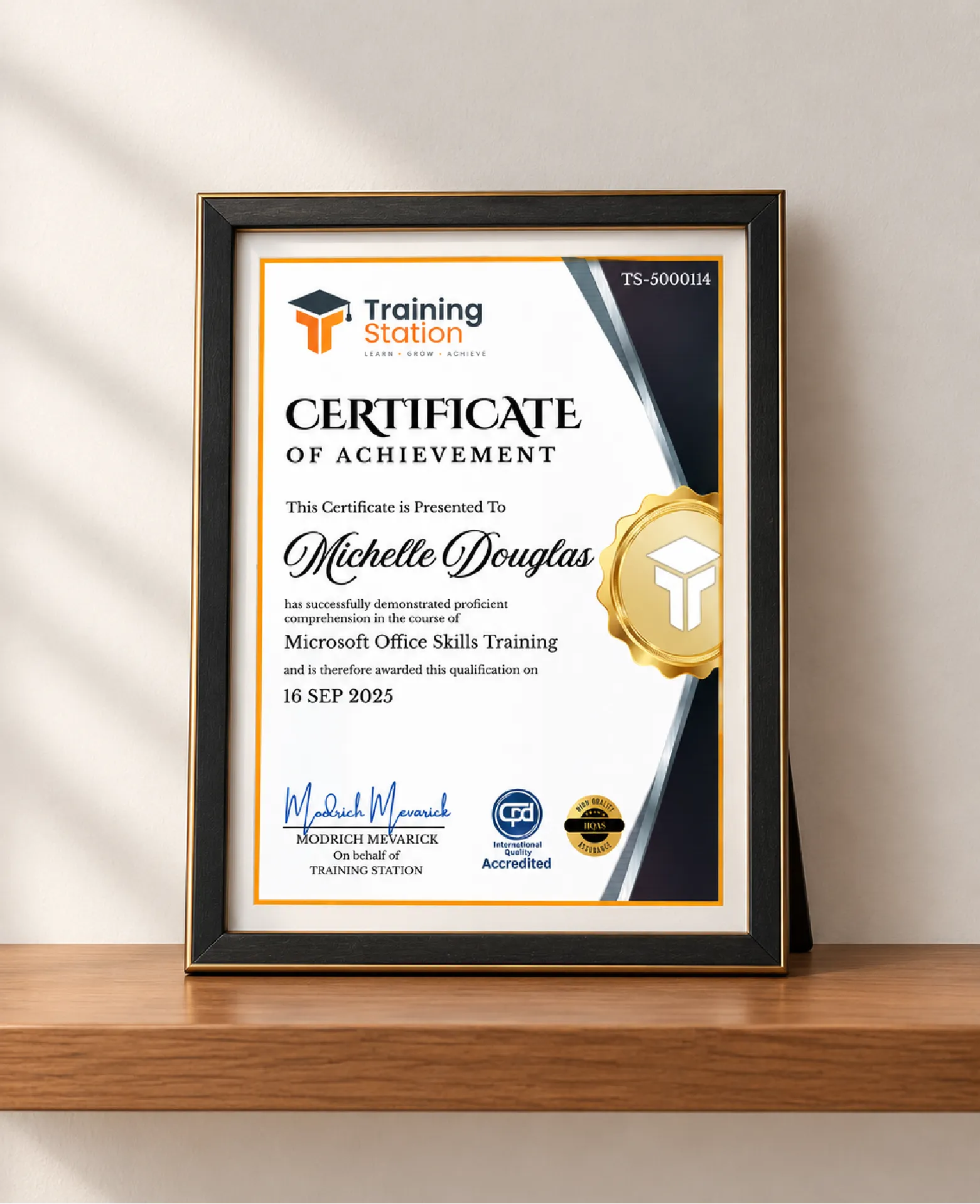
Celebrate your achievement with a CPD-IQ accredited certificate from Training Station! Perfect for showcasing your skills, boosting your career, and enhancing your professional profile.
Get this CourseOur Courses Accreditation





Frequently Asked Questions
Fully online through PDF materials and video lessons. Learn anytime, anywhere.
Self-paced: complete it in a week or spread it over months.
No. The course is beginner-friendly.
Yes. Instructor support is available Monday to Friday.
Yes. We offer a 14-day money-back guarantee.
 Access all courses for Only £99