
Level 3 Food Safety Training Course – UK
- Access
- Lifetime
- Assistance
- Expert Tutor Support
- Flexibility
- Learn Anytime, Anywhere
Overview
Level 3 Food Safety Training Course – UK
Develop essential Level 3 food safety knowledge, understand how to identify and control food hazards, and build a strong foundation for rewarding career opportunities in the UK’s food manufacturing, catering, hospitality, and food production sectors!
✅ Master Level 3 Food Safety & Hygiene Fundamentals — Learn essential food safety principles, food hygiene practices, common food hazards, and the foundations of maintaining safe food production and handling environments.
✅ Develop HACCP & Food Safety Management Knowledge — Explore Hazard Analysis and Critical Control Points (HACCP), food safety management systems, food risk assessment, and effective approaches to identifying and controlling food safety hazards.
✅ Build Food Preservation & Contamination Prevention Knowledge — Understand food preservation methods, chemical contaminants, food safety technologies, and the importance of safe food production practices and sustainability.
✅ Explore Career Opportunities — Build industry-relevant knowledge to support your journey toward food safety assistant, food production assistant, quality control assistant, and catering support roles across food manufacturing facilities, catering businesses, hospitality organisations, and food production companies, alongside any required practical training or qualifications.
Course Overview
Explore the principles of food safety, hazard control and risk management in food production with this Level 3 Food Safety Training Course – UK. The programme examines how food safety risks arise and how different approaches are used to manage hazards across food production processes.
Throughout the course, you will study food preservation and the role it plays in maintaining food safety. The curriculum also introduces Hazard Analysis and Critical Control Points (HACCP), exploring how food safety hazards are identified and considered within systematic control approaches.
Further topics include Food Safety Management Systems (FSMS) and chemical contaminants, providing an overview of how organisations approach food safety management and contamination risks. The course also explores sustainability and food production technologies in relation to food safety.
Designed for learners interested in food production, hygiene and safety-related responsibilities, this course introduces the concepts and systems associated with managing food safety risks.
Key Curriculum Topics
-
Food Preservation for Food Safety: Explore how preservation methods relate to maintaining food safety.
-
HACCP and Food Safety Hazard Analysis: Understand the principles of identifying and evaluating food safety hazards.
-
Food Safety Management Systems (FSMS): Examine how organisations structure and manage food safety processes.
-
Chemical Contaminants and Food Risk: Explore chemical contamination and its implications for food safety.
-
Food Safety, Sustainability and Production Technologies: Understand how production methods and sustainability considerations relate to food safety.
Course Curriculum
Module 1: Food Preservation for Food Safety
This module introduces food preservation in the context of maintaining food safety. Learners explore how preservation relates to protecting food and supporting safer food production.
Main learning topics:
- Food preservation
- Food safety
- Preservation principles
- Food production
Module 2: Food Safety Hazard Analysis and Critical Control HACCP
This module focuses on food safety hazard analysis and HACCP. Learners develop an understanding of how hazards and critical control principles contribute to food safety management.
Main learning topics:
- Food safety hazards
- Hazard analysis
- HACCP
- Critical control
Module 3: Food Safety Management System (FSMS)
This module examines Food Safety Management Systems and their role in organising and managing food safety within food-related operations.
Main learning topics:
- Food Safety Management Systems
- Food safety management
- Safety controls
- Food operations
Module 4: Food Safety, Sustainability and Food Production
This module explores the relationship between food safety, sustainability and food production. Learners consider these connected areas within modern food production environments.
Main learning topics:
- Food safety
- Sustainability
- Food production
- Production practices
Module 5: Introduction to Food Hygiene and Food Safety
This module establishes the foundations of food hygiene and food safety. It provides essential background for understanding the wider principles covered throughout the course.
Main learning topics:
- Food hygiene
- Food safety
- Hygiene principles
- Food safety foundations
Module 6: Management of Chemical Contaminants for Food Safety
This module focuses on chemical contaminants and their management in relation to food safety. Learners examine the importance of controlling chemical risks within food-related environments.
Main learning topics:
- Chemical contaminants
- Chemical food risks
- Contaminant management
- Food safety controls
Module 7: Origin and Nature of Food Risk
This module explores where food risks originate and the nature of those risks. Learners develop a broader understanding of risk as part of food safety.
Main learning topics:
- Food risk
- Origin of food risk
- Nature of food risk
- Food safety awareness
Module 8: Technologies and Food Safety
This module examines the connection between technologies and food safety, helping learners understand how technology relates to safer food production and management.
Main learning topics:
- Food technologies
- Food safety technology
- Production technology
- Technology and safety
Who Is This Course For?
This course is suitable for learners interested in food safety, food hygiene, food production and related workplace environments. It may be particularly useful for people considering food manufacturing, catering, hospitality or food-sector roles where knowledge of safe production and food risk is relevant.
It can support learners interested in food manufacturing inspector roles, where food hygiene, safety and production knowledge are relevant. It may also provide useful subject knowledge for aspiring food scientists or food technologists, although these careers can require additional academic qualifications and professional development.
The course can also suit existing food-sector workers who want to strengthen their understanding of HACCP, food safety management, chemical contaminants, preservation and food risks.
Requirements
No formal entry requirements have been supplied for this course. Therefore, no specific previous qualification, GCSE, A-level, work experience, professional registration or technical requirement should be assumed.
Learners should review any role-specific requirements separately if they intend to use their food safety knowledge for a particular job or further professional training.
Skills You Can Develop
Food Safety Knowledge — Develop an understanding of core food safety principles through the study of hygiene, preservation, risk and food production.
Food Hygiene Awareness — Build knowledge of food hygiene concepts and their relationship with safe food handling and production.
HACCP Awareness — Develop an understanding of food safety hazard analysis, HACCP and critical control principles.
Food Safety Management Awareness — Understand the purpose and role of Food Safety Management Systems within food-related operations.
Food Risk Awareness — Develop knowledge of the origin and nature of food risks.
Chemical Contaminant Management Awareness — Understand the importance of managing chemical contaminants in relation to food safety.
Food Preservation Knowledge — Develop knowledge of preservation as an area of food safety.
Sustainability Awareness — Explore the relationship between food safety, sustainability and food production.
Food Production Knowledge — Strengthen understanding of food production as it relates to safety and management.
Food Safety Technology Awareness — Develop knowledge of how technologies relate to food safety.
Learning Outcomes
By the end of the course, learners should be able to:
- Explain fundamental principles of food hygiene and food safety.
- Describe the importance of food preservation for food safety.
- Identify key concepts associated with food safety hazards and HACCP.
- Explain the role of critical control within HACCP.
- Describe the purpose of a Food Safety Management System.
- Explain the relationship between food safety, sustainability and food production.
- Recognise the importance of managing chemical contaminants for food safety.
- Describe the origin and nature of food risks.
- Explain how food technologies relate to food safety.
- Recognise how food safety principles connect across production and management environments.
Career Paths
Food Manufacturing Inspector
Typical UK Salary: £27,000–£45,000 per year, indicative.
How the course is relevant: The course covers food hygiene, food safety, HACCP, food risks, chemical contaminants and food production. These subjects are relevant to the knowledge base used in food manufacturing inspection. National Careers Service identifies food manufacturing inspector as a role focused on hygiene, safety standards and safe food production. The role itself can require further training and experience.
Food Scientist / Food Technologist
Typical UK Salary: £24,000–£45,000 per year, indicative.
How the course is relevant: Food safety, food production, preservation, contaminants and food technologies are relevant areas for people interested in food science and technology. This course can provide supporting subject knowledge, but becoming a food scientist or food technologist normally involves further academic or professional development.
Food Quality Control Officer
Typical UK Salary: £25,000–£40,000 per year, indicative.
How the course is relevant: The curriculum’s focus on food safety, HACCP, chemical contaminants, food risks and management systems can provide useful background for quality-focused work in manufacturing environments. Actual role requirements vary by employer and position.
Catering Manager
Typical UK Salary: £24,000–£34,000 per year, indicative.
How the course is relevant: Catering managers work within food service environments where food hygiene and safety knowledge are important. The course can strengthen understanding of food safety principles relevant to food production and service operations, although employers may require additional experience or training.
Production Manager – Manufacturing
Typical UK Salary: £30,000–£63,000 per year, indicative.
How the course is relevant: The course introduces food production, Food Safety Management Systems, HACCP, sustainability and food safety technologies. This knowledge can be relevant to learners interested in production-focused career development within food manufacturing, although management roles generally require broader workplace experience and competencies.
Salary figures are indicative UK ranges and can vary according to experience, location, employer, sector and responsibilities. Completing this course does not guarantee employment or a particular salary.
FAQs
What is a Level 3 Food Safety Course?
A Level 3 Food Safety Course provides structured learning around food hygiene, food safety, food preservation, HACCP, Food Safety Management Systems, chemical contaminants, food risk, sustainability and food safety technologies.
What does this Level 3 food safety training cover?
The course covers eight modules, including food preservation, HACCP, FSMS, food production and sustainability, food hygiene, chemical contaminants, food risk, and technologies related to food safety.
Is this Level 3 food hygiene course suitable for beginners?
No formal entry requirements have been supplied for the course, so it may be suitable for learners who want to develop structured knowledge of food hygiene and food safety. Specific employer requirements should always be checked separately.
What is HACCP in food safety?
HACCP refers to a structured approach to food safety hazard analysis and critical control. This course includes a dedicated module covering Food Safety Hazard Analysis and Critical Control HACCP.
What skills can I develop through a Level 3 food safety online course?
Learners can develop knowledge and awareness relating to food hygiene, food preservation, HACCP, food safety management systems, chemical contaminants, food risks, sustainability, food production and food safety technologies.
Can a Level 3 food safety certificate help with a career in food safety?
The course can provide relevant subject knowledge for learners interested in food safety and food-sector careers. However, it should not be treated as an automatic professional qualification, employment guarantee or replacement for additional role-specific requirements.
What careers are related to food safety training in the UK?
Relevant career areas include food manufacturing inspection, food science and technology, food quality control, catering management and food production. Requirements differ between roles, so further qualifications, training or experience may be necessary.
Curriculum
- Food Preservation for Food Safety
- Food Safety Hazard Analysis and Critical Control HACCP
- Food Safety Management System (FSMS)
- Food Safety, Sustainability and Food Production
- Introduction to Food Hygiene and Food Safety
- Management of Chemical Contaminants for food safety
- Origin and Nature of Food Risk
- Technologies and Food Safety
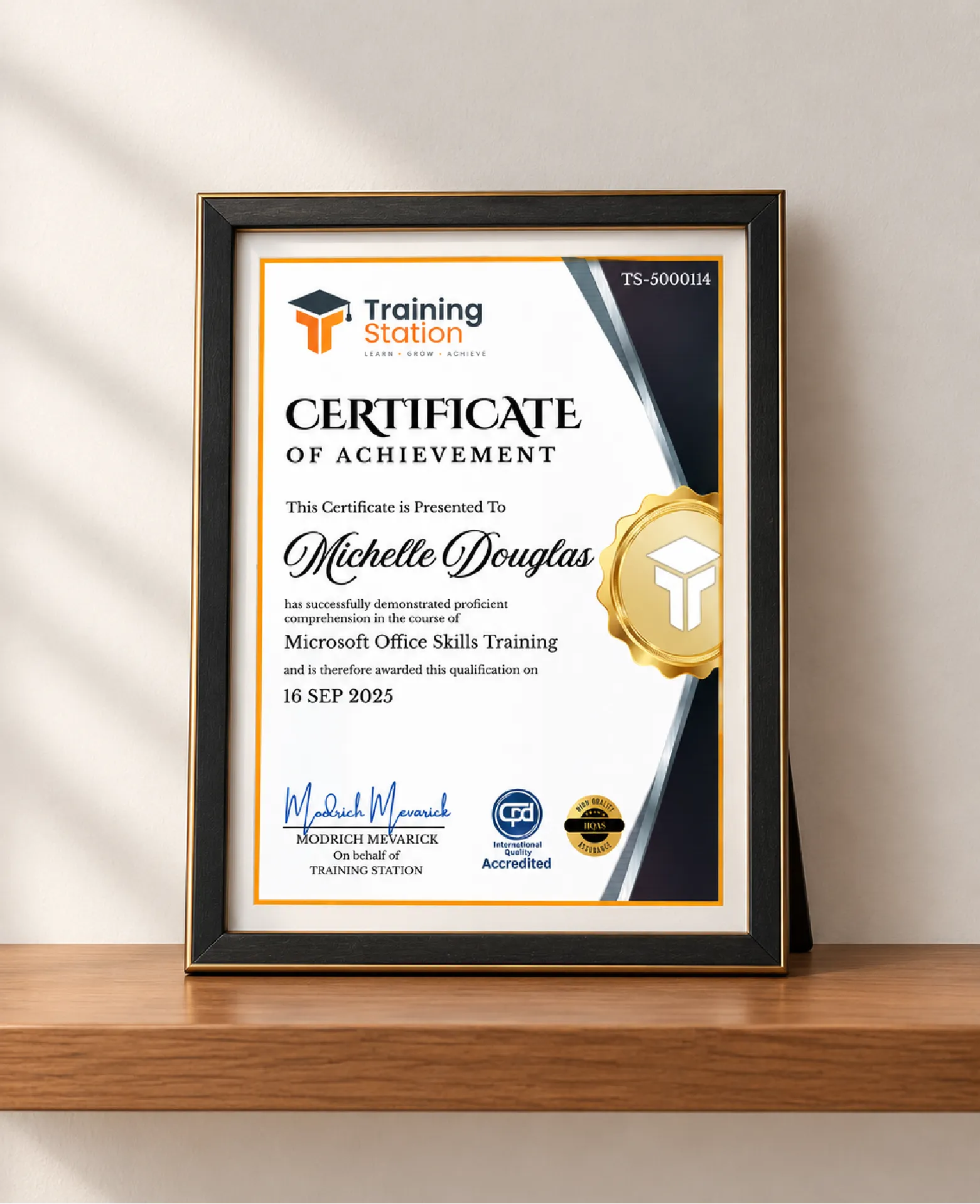
Celebrate your achievement with a CPD-IQ accredited certificate from Training Station! Perfect for showcasing your skills, boosting your career, and enhancing your professional profile.
Get this CourseOur Courses Accreditation




Frequently Asked Questions
Fully online through PDF materials and video lessons. Learn anytime, anywhere.
Self-paced: complete it in a week or spread it over months.
No. The course is beginner-friendly.
Yes. Instructor support is available Monday to Friday.
Yes. We offer a 14-day money-back guarantee.
 Access all courses for Only £99