

An engineering mechanics course is a fundamental subject that anyone considering a career in engineering, or currently pursuing an engineering degree, is likely to encounter. But what exactly does it involve? Is it the right choice for you?
Quick Overview
When you take an engineering mechanics course, you learn the fundamental principles of mechanics applied to real-world engineering problems. The course covers statics, dynamics, kinematics, strength of materials, and sometimes fluid mechanics, preparing you for a variety of engineering fields. You’ll understand how forces, motion, and materials interact, and develop skills essential for designing and analysing engineering systems.
Whether you’re pursuing civil, mechanical, aerospace, or structural engineering, this course walks you through:
✅ Building analytical thinking and problem-solving skills.
✅ Applying theoretical concepts to practical engineering problems.
✅ Preparing for advanced courses and enhancing career opportunities.
This article explores what an engineering mechanics course entails, who should consider taking it, its benefits, challenges, and how it can influence your engineering career. By the end of this post, you will have a comprehensive understanding of whether this course aligns with your goals, interests, and abilities.
At its core, an engineering mechanics course is designed to provide students with the fundamental principles of mechanics as applied to engineering problems. Mechanics is the branch of physics that deals with the behaviour of objects under forces or displacements. It bridges theoretical concepts with real-world engineering applications, making it essential for civil, mechanical, aerospace, and even biomedical engineering disciplines.
An engineering mechanics course typically covers key topics such as:
By taking an engineering mechanics course, students learn to analyse structures, design mechanical components, and predict the behaviour of physical systems — all of which are essential skills for engineers.
While the course may sound technical, not every student is naturally suited for it. Here are some indicators that an engineering mechanics course may be the right choice for you:
If you like tackling complex problems and breaking them down into smaller, manageable parts, an engineering mechanics course will suit your thinking style. Mechanics often requires logical reasoning and analytical thinking, especially when solving statics or dynamics problems.
Do you ever wonder why bridges don’t collapse under weight, how aeroplanes stay in the air, or why certain machines function efficiently? An engineering mechanics course focuses precisely on these questions, providing the theoretical and practical tools to understand and design systems safely and effectively.
A successful student in an engineering mechanics course needs to be comfortable with mathematics—especially algebra, calculus, and trigonometry—and basic physics concepts such as force, motion, and energy. Mechanics is essentially applied physics in an engineering context, so a strong grasp of these subjects will make the course more manageable.
Certain engineering fields rely heavily on the principles taught in an engineering mechanics course. Civil, mechanical, aerospace, and structural engineering students, in particular, will find the knowledge gained indispensable. Even if your focus is in electrical or computer engineering, understanding mechanics can give you a competitive edge when working on hardware projects or interdisciplinary designs.
An engineering mechanics course is structured to gradually build your understanding from foundational concepts to more complex applications. Here’s a breakdown of the topics you might encounter:

Statics forms the first part of most engineering mechanics courses. It deals with forces in equilibrium. Key topics include:
Understanding statics is critical because it lays the groundwork for all structural and mechanical analysis. Engineers use these principles to ensure that buildings, bridges, and machinery remain stable under load.
Once you understand bodies at rest, an engineering mechanics course moves on to bodies in motion. Dynamics covers:
Dynamics helps engineers predict how objects will respond to forces over time, which is crucial in automotive, aerospace, and robotics applications.
Many engineering mechanics courses also introduce the concept of material behaviour under stress. Topics include:
These concepts are essential for designing safe structures and mechanical components.
Some advanced engineering mechanics courses introduce basic fluid mechanics, covering:
This section is particularly useful for mechanical, civil, and chemical engineering students.
Choosing to take an engineering mechanics course comes with several significant benefits:
The course trains you to approach problems logically, breaking complex systems into simpler parts. This skill is transferable to virtually every engineering discipline and even to non-engineering problem-solving situations.
The knowledge gained from an engineering mechanics course allows you to design and evaluate structures, mechanical components, and systems. Understanding how forces, motion, and materials interact ensures that your designs are both efficient and safe.
Most advanced engineering courses, such as structural analysis, thermodynamics, robotics, or machine design, assume familiarity with mechanics principles. An engineering mechanics course provides this essential foundation.
Employers value engineers who understand the fundamentals of mechanics. Completing an engineering mechanics course can open doors to careers in design, structural engineering, automotive, aerospace, and construction industries.
Many engineering mechanics courses include laboratory sessions where students can experiment with forces, materials, and motion. These experiences solidify theoretical knowledge and enhance practical skills.
While rewarding, an engineering mechanics course can be challenging. Being aware of these challenges upfront helps you prepare effectively.
If maths or physics is not your strong suit, you might find the course difficult. Topics like vector analysis, calculus, and kinematics are integral to solving engineering mechanics problems.
Expect numerous assignments, problem sets, and exams that require careful analysis and precision. Unlike courses that focus more on theory, an engineering mechanics course is highly application-based.
Memorising formulas is not enough. You must understand the underlying principles to apply them correctly to new problems, especially in design-oriented assessments.
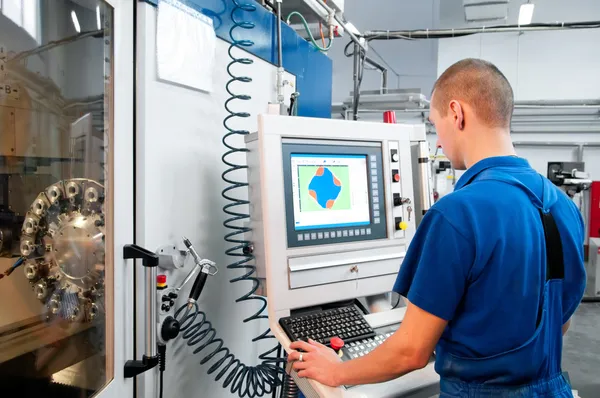
Some engineering mechanics courses involve significant lab work. While valuable for hands-on experience, it requires time management skills to balance with theory classes and other coursework.
Preparation can make the difference between struggling and excelling in an engineering mechanics course. Here’s how to get ready:
Focus on calculus, algebra, trigonometry, and vectors. These are essential for solving mechanics problems. Online platforms and textbooks can help you brush up before the course begins.
Make sure you understand Newton’s laws, forces, energy, and momentum. A solid physics foundation will make mechanics concepts easier to grasp.
Try solving sample mechanics problems in statics, dynamics, and material strength. The more practice you get, the more comfortable you’ll become with complex engineering problems.
Many mechanics problems involve visualising forces, motion, or structural components in 2D or 3D. Practice drawing diagrams and interpreting technical illustrations.
With theory, assignments, and lab work, staying organised is crucial. Create a study schedule, take thorough notes, and revisit difficult topics regularly.
Understanding how an engineering mechanics course applies to real-world situations can help you appreciate its value:
Completing an engineering mechanics course equips you with the ability to make decisions that directly impact safety, efficiency, and innovation in engineering projects.
Not all engineering mechanics courses are created equal. Here are factors to consider:
Some courses are introductory, while others are advanced. Determine whether you need a foundational understanding or a more specialised focus.
Check the reputation of the institution or platform offering the course. Accredited programmes or courses with positive reviews often provide better content and practical experience.
Ensure the course covers the topics you’re interested in, such as statics, dynamics, or strength of materials. Some courses may also include modern applications, such as computational mechanics.
If hands-on learning is important to you, verify whether the course includes lab sessions or practical projects.
Consider whether the course assessments (exams, projects, labs) align with your learning style. Some students excel in project-based evaluation, while others prefer traditional exams.
Success in an engineering mechanics course is achievable with the right approach. Here are practical tips:
If you’re interested in engineering but unsure about committing to a full engineering mechanics course, there are alternatives:

Ultimately, deciding whether an engineering mechanics course is right for you depends on your career goals, interests, and strengths:
An engineering mechanics course not only equips you with technical skills but also develops analytical thinking, problem-solving abilities, and practical understanding that will benefit your engineering career in the long term.
Choosing to take an engineering mechanics course is a significant decision that can impact your academic and professional trajectory. From foundational topics in statics and dynamics to advanced applications in material strength and design, the course prepares students for real-world engineering challenges. While it comes with demands in mathematics, physics, and problem-solving, the rewards—in skills, career opportunities, and practical knowledge—are substantial.
By evaluating your interests, strengths, and career aspirations, you can determine whether an engineering mechanics course aligns with your goals. If it does, you’ll be stepping into a world where physics meets engineering innovation, and theory transforms into practical solutions that shape the world around us.
So, is an engineering mechanics course right for you? If you are curious, analytical, and passionate about how things work, the answer is likely yes. Take the plunge, prepare diligently, and embrace the fascinating world of engineering mechanics.