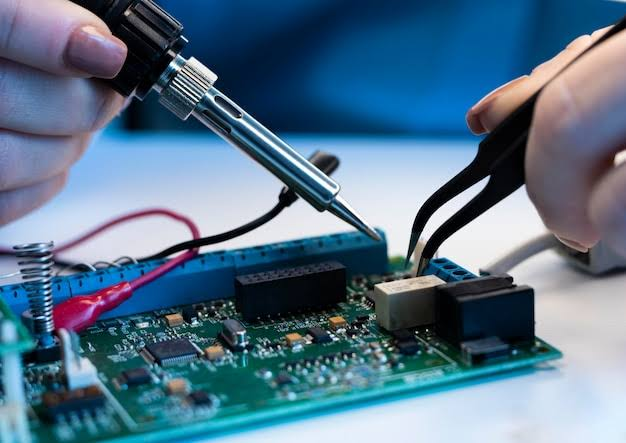


An engineering mechanics course is central to the foundation of engineering education, providing students with the analytical tools, logical reasoning, and practical approaches necessary to tackle complex engineering challenges. Engineering, at its core, is about solving real-world problems—whether it involves designing a bridge, developing a vehicle, or creating innovative machinery.
Quick Overview
An engineering mechanics course is essential for engineering students, providing the skills to analyse forces, motion, and materials while solving real-world problems. You’ll learn how the course develops problem-solving, analytical thinking, and practical application for professional and academic success.
Key Benefits:
✅ Mastering structured problem-solving with step-by-step approaches.
✅ Enhancing analytical thinking, quantitative reasoning, and intuition.
✅ Applying knowledge to real-world fields like structural, mechanical, automotive, aerospace, and robotics.
✅ Gaining hands-on experience through labs, simulations, and software tools like MATLAB, SolidWorks, and ANSYS.
✅ Developing creativity, collaboration, and preparation for advanced engineering studies.
In this blog post, we explore how an engineering mechanics course not only imparts essential technical knowledge but also significantly enhances problem-solving skills, preparing students to excel in both professional and academic environments.
An engineering mechanics course is foundational to engineering education, providing students with the knowledge and analytical skills required to understand forces, motion, and the behaviour of materials under various conditions. Engineering mechanics is a branch of physical science and applied mathematics, broadly divided into two main areas:

An engineering mechanics course typically integrates these topics through lectures, problem-solving sessions, laboratory experiments, and computational exercises. By mastering these principles, students develop the ability to translate real-world engineering problems into solvable mathematical models.
At its core, an engineering mechanics course emphasises structured problem-solving. Unlike rote memorisation, problem-solving in mechanics requires critical thinking, logical sequencing, and systematic approaches. The process typically involves several steps:
Through these steps, an engineering mechanics course trains students to think critically, approach problems systematically, and verify their solutions—skills that are transferable to any engineering discipline.
Analytical thinking is the backbone of effective problem-solving. In an engineering mechanics course, students routinely analyse forces, moments, and motions in multi-step problems, requiring precision, attention to detail, and the ability to predict outcomes based on limited information.

One of the primary benefits of an engineering mechanics course is that it teaches students how to break complex problems into manageable components. For instance, analysing a truss structure involves:
This decomposition mirrors real-world engineering tasks, where large, complicated systems need to be understood and solved piece by piece. By practising this method repeatedly, students develop an intuitive ability to dissect problems—a skill crucial for engineering design, troubleshooting, and innovation.
Quantitative reasoning is essential in engineering problem-solving. An engineering mechanics course teaches students to apply mathematics to quantify forces, stresses, and displacements. Examples include:
By connecting physical phenomena to numerical solutions, students enhance their ability to reason quantitatively—a skill that extends beyond mechanics to electronics, thermodynamics, and structural design.
The problem-solving skills developed in an engineering mechanics course have direct real-world applications. Engineers frequently encounter challenges that require mechanical analysis to ensure safety, efficiency, and functionality. Some practical applications include:
By connecting classroom exercises to real-world scenarios, students gain confidence in applying theoretical knowledge to practical problems.
Another significant advantage of an engineering mechanics course is the emphasis on laboratory and hands-on learning. Labs allow students to:
For example, a lab on beam bending may involve measuring deflection under different loads and comparing the results to calculations made using equations learned in class. This iterative process strengthens problem-solving skills by encouraging critical evaluation, experimentation, and adjustment of assumptions—practices that closely mirror professional engineering work.
Modern engineering increasingly relies on software tools for simulation and analysis. An engineering mechanics course often introduces students to programs such as MATLAB, SolidWorks Simulation, or ANSYS. These tools allow students to:
By combining theoretical knowledge with computational tools, students learn to approach problems from multiple angles, developing flexibility and adaptability—key aspects of expert problem-solving.
While mechanics is grounded in laws and principles, an engineering mechanics course also fosters creativity. Problem-solving in engineering is rarely linear; engineers often need to innovate solutions under constraints. For example:
Through assignments and projects, an engineering mechanics course encourages students to think outside the box while maintaining scientific rigour, combining analytical skills with creativity.
Engineering rarely happens in isolation. Many engineering mechanics courses incorporate group projects and peer discussions, teaching students how to:
These collaborative exercises mimic workplace environments, where engineers must work in teams to design, test, and implement solutions efficiently. The course thus hones both technical and interpersonal problem-solving skills.
Repeated exposure to mechanics problems helps students develop engineering intuition. As students progress through an engineering mechanics course, they begin to:
This intuition is invaluable in professional settings, allowing engineers to make rapid, informed decisions even when exact calculations are impractical.
Real-life examples illustrate how an engineering mechanics course translates to problem-solving expertise:
These examples highlight how mechanics serves as a toolkit for diagnosing problems, designing solutions, and preventing failures in engineering practice.
An engineering mechanics course is foundational for advanced engineering subjects. Students pursuing structural engineering, mechanical design, fluid dynamics, or robotics must rely on mechanics principles to succeed. Moreover, the problem-solving skills developed in mechanics are transferable to complex simulations, optimisation problems, and research projects.

For instance:
Thus, an engineering mechanics course serves not just as a stepping stone but as a skill accelerator for lifelong problem-solving in engineering.
To truly gain problem-solving mastery from an engineering mechanics course, students can adopt the following strategies:
An engineering mechanics course is far more than a requirement in an engineering curriculum; it is a fundamental platform for developing robust problem-solving skills. By teaching students how to analyse, model, calculate, and interpret mechanical systems, the course fosters critical thinking, analytical reasoning, and creative innovation. Whether applied to structural engineering, mechanical design, robotics, or advanced research, the skills cultivated in an engineering mechanics course prepare students to approach challenges systematically and confidently.
Ultimately, the discipline and rigour of an engineering mechanics course equip aspiring engineers with the mental tools they need to thrive in the complex, problem-rich world of engineering—turning theoretical knowledge into practical solutions and challenges into opportunities.