

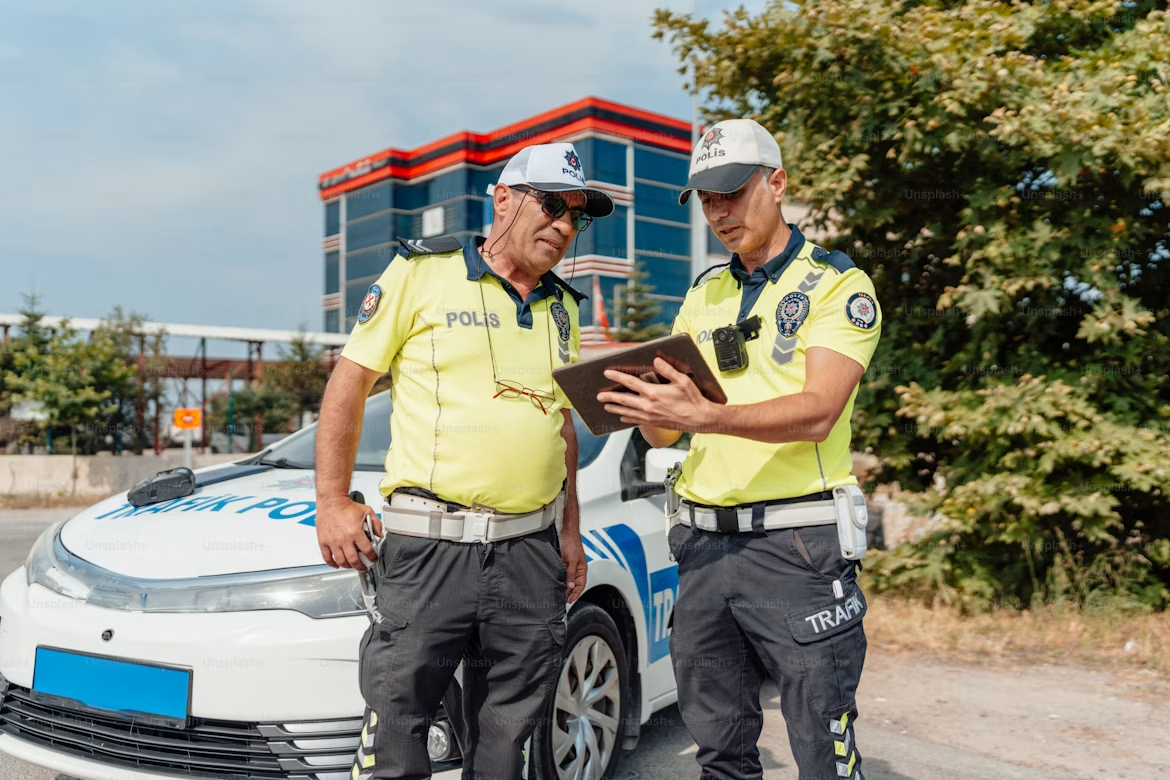
A traffic marshal course is one of the most commonly searched training programmes for anyone responsible for vehicle and plant safety on UK worksites.
| ⚡ At a Glance: What This Article Covers ✔ Why both terms exist and where they come from ✔ What a traffic marshal course covers vs. what a banksman course covers (spoiler: they're the same) ✔ The genuine differences between the roles in industry usage ✔ How to know which term your employer, site, or sector uses - and why it matters ✔ Specialist variations: signaller, vehicle marshal, and public highway banksman ✔ A definitive decision guide: which course do YOU need? ✔ Real-world examples from construction, warehousing, and events ✔ FAQs answered clearly |
If you have researched training in this area, you have almost certainly come across both terms: traffic marshal course and banksman course. They appear in job adverts, site induction packs, tender documents, and training catalogues—sometimes side by side, sometimes presented as entirely different qualifications, and sometimes used interchangeably.
If you are trying to determine which course you need, or whether they are actually the same qualification, this guide provides a clear, authoritative answer.
The short answer is that, in practice, a traffic marshal course and a banksman course are the same qualification. Both cover the same core knowledge and practical skills, lead to the same type of certificate, and are widely accepted by UK employers for the same workplace roles. However, there are some important distinctions in terminology that are worth understanding, particularly if your employer, client, or training provider uses one term rather than the other and you want to be confident that you are booking the correct course.
To understand why two terms exist for what is essentially the same role, it helps to look briefly at how the job evolved. A traffic marshal course may be marketed under different names, but the terminology has distinct historical origins.
The word 'banksman' is one of the oldest occupational terms in UK industry. It originated in the mining industry, where the banksman was the person stationed at the top of the mine shaft ('the bank') who was responsible for managing the movement of cages, materials, and workers up and down the shaft. Over time, the term migrated into construction, quarrying, and heavy engineering, where it came to describe anyone responsible for guiding the movement of vehicles and lifting equipment on site.
In traditional construction and civil engineering, 'banksman' remains the standard term. You will commonly hear it on groundworks sites, demolition projects, quarries, and in other environments where the language and culture of heavy industry have been established for decades.
'Traffic marshal' is a more modern term, reflecting the expansion of the role beyond its traditional industrial roots. As vehicle safety became a greater regulatory priority across a wider range of sectors—including warehousing, logistics, events, retail distribution, and utilities—the more descriptive term 'traffic marshal' became increasingly common. It clearly describes the role: marshalling (managing and directing) vehicle movements to help maintain a safe working environment.
Today, the term 'traffic marshal' is more frequently used in logistics and warehousing, the events industry, and formal traffic management documentation. As a result, many organisations now refer to the training as a traffic marshal course, even though the content is equivalent to traditional banksman training.
The simple answer is industry tradition. The construction sector has used the term 'banksman' for generations and continues to do so. By contrast, industries that adopted formal vehicle safety procedures more recently tend to prefer the term 'traffic marshal'.
To avoid confusion and ensure their training is easily recognised across different sectors, many providers describe their programme as a traffic marshal course while also referring to it as Banksman / Traffic Marshal training. It is therefore common for certificates to carry both titles, reflecting the fact that they refer to the same core role and training outcomes.
Yes—with very few exceptions.
In the UK training market, a traffic marshal course and a banksman course are functionally the same. Both cover the same core topics, including HSE hand signals, risk assessment, legal responsibilities, pedestrian segregation, communication techniques, and emergency procedures. Both lead to the same type of certificate and are widely accepted by UK employers, principal contractors, and safety accreditation schemes for the same workplace role.
This is not simply a matter of opinion or marketing terminology. There is no separate government-issued traffic marshal certificate or banksman certificate. Instead, reputable training providers deliver courses that are aligned with HSE guidance and recognised industry best practice. As a result, the course title may differ, but the expected learning outcomes and workplace competencies are essentially the same.
The most important consideration is not the course title but the quality of the training. Before booking a traffic marshal course, check that it is aligned with HSE guidance, delivered by a reputable training provider, and recognised by employers within your industry. Many principal contractors and organisations associated with schemes such as CHAS, SafeContractor, Constructionline, and SMAS expect evidence of appropriate training and competence rather than a specific course title.
Still not fully convinced? Below is a direct comparison of the topics typically covered in a traffic marshal course and a banksman course.
| Topic | Traffic Marshal Course | Banksman Course |
| Role definition and scope | ✔ Covered | ✔ Covered |
| HSE workplace transport statistics | ✔ Covered | ✔ Covered |
| UK legislation (HSW Act, CDM, PUWER, Safety Signs Regs) | ✔ Covered | ✔ Covered |
| Employer and employee legal duties | ✔ Covered | ✔ Covered |
| Hierarchy of vehicle safety controls | ✔ Covered | ✔ Covered |
| Vehicle types and blind spots | ✔ Covered | ✔ Covered |
| HSE-approved hand signals (full set) | ✔ Covered | ✔ Covered |
| Verbal codes and radio communication | ✔ Covered | ✔ Covered |
| Dynamic risk assessment | ✔ Covered | ✔ Covered |
| Exclusion zones and pedestrian segregation | ✔ Covered | ✔ Covered |
| Banksman positioning during manoeuvres | ✔ Covered | ✔ Covered |
| PPE and high-visibility clothing | ✔ Covered | ✔ Covered |
| Emergency stop procedures | ✔ Covered | ✔ Covered |
| Certificate type | Banksman / Traffic Marshal | Banksman / Traffic Marshal |
| Typical validity | 3 years | 3 years |
As the table makes clear, the content is identical. What differs is the label applied by the training provider and, in some cases, the sector-specific examples used in the course (a warehouse-focused provider might use forklift examples; a construction-focused provider might use HGVs and dumpers). The underlying competency standard, the hand signals taught, and the assessment criteria are the same.

Although the qualification is the same, the terms are not used consistently across every sector. Understanding which term your industry prefers will help you communicate clearly with employers, clients, and training providers, while ensuring you book the most appropriate traffic marshal course for your workplace requirements.
| Sector | Term Most Commonly Used |
|---|---|
| Construction (general) | Banksman - deeply embedded in site culture and documentation |
| Civil engineering and groundworks | Banksman - particularly for reversing vehicles and crane lifts |
| Demolition and quarrying | Banksman - traditional heavy industry usage |
| Warehousing and logistics | Traffic marshal - more common in modern distribution environments |
| Events and festivals | Traffic marshal or vehicle marshal - reflects public-facing context |
| Utilities (water, gas, electricity, telecoms) | Banksman or traffic marshal - varies by organisation |
| Manufacturing and industrial sites | Banksman - particularly in older, established operations |
| Retail distribution centres | Traffic marshal - reflects modern logistics culture |
| Local authority and highways | Traffic marshal - particularly in formal traffic management documentation |
| Rail industry | Signaller or lookout - distinct but related role with additional requirements |
Before booking a traffic marshal course, check the exact wording used in your employer's requirements, site rules, or tender documentation.
If the requirement specifies a banksman ticket, choose a banksman course. If it specifies a traffic marshal certificate, choose a traffic marshal course. In practice, both courses provide the same core training, but using the terminology your employer expects can help avoid unnecessary questions when presenting your certificate.
Although traffic marshal and banksman are generally interchangeable, several related roles require additional knowledge, competencies, or industry-specific qualifications.
In crane and lifting operations, the person directing the crane operator is often referred to as a signaller rather than a banksman. Although many hand signals are similar, crane signalling requires additional competencies, including an understanding of load weights, lifting plans, slinging techniques, and the signalling procedures used during complex lifting operations. Depending on the work being undertaken, further training or recognised qualifications may be required beyond a standard traffic marshal course.
Within the events industry, the term vehicle marshal is widely used for personnel managing vehicle movements in car parks, backstage areas, and loading or unloading zones. The role is broadly equivalent to that of a traffic marshal, and a standard traffic marshal course or banksman qualification is often suitable. However, event environments frequently involve members of the public, requiring additional planning, communication, and crowd management considerations.
A Public Highway Banksman operates where workplace vehicle movements interact with the public highway, such as construction site entrances, utility works, or temporary event access points.
These environments involve additional legal duties, including compliance with relevant highways legislation, traffic management requirements, and Chapter 8 guidance where applicable. Importantly, directing traffic on the public highway may require specific legal authority, depending on the circumstances.
| ⚠️ Key Distinction: Public Highway Banksman TrainingA standard banksman/traffic marshal certificate does NOT automatically authorise you to manage traffic on the public highway. If your role involves vehicle movements on or adjacent to public roads, you need specialist public highway banksman training in addition to (or as an extension of) your standard banksman certificate. This is one area where the terminology genuinely points to a different - and more extensive - training requirement. |
Within the construction plant sector, the Construction Plant Competence Scheme (CPCS) provides dedicated qualifications for Appointed Person and Slinger Signaller roles. These are specialist qualifications that extend well beyond the scope of a standard traffic marshal course or banksman course and are required for specific lifting operations on many construction projects.
Whether it is called a traffic marshal course or a banksman course, the purpose of the training is the same: reducing the risk of workplace transport accidents.
According to HSE guidance, workplace transport remains one of the leading causes of fatal and serious injuries across UK workplaces. Incidents involving reversing vehicles, pedestrians being struck by moving vehicles, and poor management of vehicle movements continue to be significant causes of workplace accidents. HSE guidance consistently identifies effective traffic management, clear segregation of vehicles and pedestrians, and competent traffic marshals or banksmen as key measures for reducing these risks.
Regardless of the job title used, the objective remains unchanged. Construction sites, warehouses, logistics centres, manufacturing facilities, and event venues all rely on trained personnel to manage vehicle movements safely.
Ultimately, the terminology is far less important than the quality of the training. A reputable traffic marshal course that follows HSE guidance and recognised industry best practice will equip delegates with the knowledge and practical skills required to carry out the role safely and competently.
To illustrate how a traffic marshal course and a banksman course are used across different industries, here are three realistic examples showing how the same qualification is described using different terminology.
A groundworks company in Glasgow is preparing to begin a major drainage project. The site manager emails all new operatives:
"You will need a banksman ticket before you can assist with excavator movements on site. Please arrange this before your start date."
Two of the new operatives search online and book a banksman course at a local training centre. A third, who is less familiar with construction terminology, searches for a traffic marshal course instead.
All three arrive on site with certificates titled Banksman / Traffic Marshal Training, and all are accepted without issue.
A large third-party logistics provider near Northampton updates its supplier requirements and requires all yard staff involved in vehicle manoeuvres to hold a valid traffic marshal certificate.
The company's safety manager enrols 25 employees on a traffic marshal course delivered online over a two-week period.
One employee already holds a Banksman / Traffic Marshal certificate from a previous construction role. After checking that it remains current and aligns with HSE guidance, the employer accepts the certificate without requiring additional training.
On a major infrastructure project in London, the principal contractor uses both terms in different contexts.
Operatives directing road vehicles within the site compound are referred to as traffic marshals, while those guiding plant movements near operational areas are referred to as banksmen.
Both roles require the same Banksman / Traffic Marshal certificate, although each role also includes additional site-specific induction training to address the particular hazards associated with that work area.
This reflects an important practical point: the certificate provides the core competence, while employers supplement it with site-specific training where necessary.
Now that you understand the relationship between a traffic marshal course and a banksman course, you may want to explore the wider role in more detail, including legal responsibilities, career progression, salary expectations, refresher training, and specialist qualifications.
| 📖 Go Deeper: The Definitive Traffic Marshal Guide This article answers the terminology question once and for all. If you want to go further - covering legal requirements, step-by-step qualification routes, salary, career progression, public highway training, and more - read our comprehensive pillar guide: 👉 How to Become a Traffic Marshal - The Definitive Guide |
Our comprehensive guide explains:
That guide covers everything from the HSE legislation underpinning the role, to how long your banksman ticket lasts, to what public highway banksman training involves and who needs it.
Whether your employer refers to it as a banksman course or a traffic marshal course, our training provides the knowledge and practical understanding needed to carry out the role safely and confidently.
✔ Combined Banksman / Traffic Marshal certificate
✔ Aligned with HSE guidance and the Health and Safety (Safety Signs and Signals) Regulations 1996
✔ Flexible online learning
✔ Suitable for construction, logistics, warehousing, manufacturing, events and utilities
✔ No previous experience required
✔ Certificate issued immediately upon successful completion
| 🎓 GET YOUR BANKSMAN / TRAFFIC MARSHAL CERTIFICATE One course. One certificate. Recognised across the UK - whatever your industry calls the role. Flexible online learning · Accredited certificate · No experience needed 👉 Enrol on the Banksman / Traffic Marshal Course → |
Yes. In the UK, a traffic marshal course and a banksman course cover the same core knowledge and practical competencies and usually result in the same type of certificate. Many providers issue a combined Banksman / Traffic Marshal certificate that is widely accepted across multiple industries.
In most cases, yes. A traffic marshal course and a banksman course are generally recognised as equivalent. Most certificates are titled Banksman / Traffic Marshal Training, making them suitable for employers using either term.
A standard traffic marshal course includes recognised hand signals used for directing vehicles and plant. However, formal crane signalling responsibilities may require additional specialist qualifications, such as the CPCS Slinger Signaller qualification. Always check the specific requirements of your employer or principal contractor.
Generally, yes. The principles taught on a traffic marshal course apply across construction, logistics, warehousing, manufacturing and many other workplaces. Employers may also require a site-specific induction covering local traffic management arrangements.
In many situations, yes. Standard traffic marshal course training focuses on managing workplace vehicle movements. Roles involving the public highway often require additional specialist training covering highways legislation, traffic management and employer-specific procedures.
A Slinger Signaller prepares and attaches loads for lifting operations and directs crane movements. A banksman or traffic marshal focuses on safely directing vehicle and plant movements. Although some responsibilities overlap, they are separate roles with different competency requirements.
There is no legislation requiring every workplace to have a traffic marshal or banksman. However, UK health and safety legislation requires employers to assess workplace transport risks and implement suitable control measures. Where a risk assessment identifies the need for a traffic marshal, employers should ensure that the person carrying out the role is properly trained and competent.
Many training providers recommend refresher training every three years, although employers may specify different intervals depending on their risk assessment, site conditions and company procedures. Additional refresher training may also be appropriate following a prolonged absence from the role or after a significant incident.
The debate over traffic marshal course versus banksman course is one of the most common sources of confusion in UK workplace transport safety training.
In practice, both terms refer to the same core role and the same workplace competencies. The title used usually depends on the industry, employer or longstanding workplace terminology rather than any meaningful difference in the training itself.
Ultimately, what matters is not the course title but the quality of the training. A traffic marshal course that follows HSE guidance and recognised industry best practice helps ensure that those responsible for directing vehicle movements have the knowledge and competence needed to reduce risk and contribute to a safer workplace.
Ready to get certified? Enrol on our Banksman / Traffic Marshal Training Course today.
- Training Station
Accredited Health & Safety Training for the Modern Workforce | trainingstation.org.uk