
Paediatric First Aid Training Course – UK

- Access
- Lifetime
- Assistance
- Expert Tutor Support
- Flexibility
- Learn Anytime, Anywhere
Overview
Paediatric First Aid Training Course – UK
Autism Awareness and Applied Behaviour Analysis Course – UK introduces learners to autism and the foundations of Applied Behaviour Analysis (ABA). The course explores behaviour assessment, intervention strategies, communication and social skills, academic and life skills development, and data collection and analysis. Learners also examine family and caregiver involvement, ethical and legal considerations, and advanced ABA applications. This autism awareness course is designed to build structured knowledge of autism support and behaviour-focused approaches. It can be useful for learners interested in education, social care, support services, or related settings where understanding behaviour, communication and individual development is important in settings.
- Introduction to autism and Applied Behaviour Analysis
- Behaviour assessment and intervention strategies
- Communication and social skills development
- Data collection and analysis
- Family involvement, ethics and advanced ABA applications
Course Overview
This autism awareness course provides foundational knowledge of autism alongside key concepts from Applied Behaviour Analysis. Learners progress from understanding autism and ABA principles to behaviour assessment, intervention strategies, communication, social skills, life skills, data collection, family involvement, and ethical considerations. These areas are relevant to education, social care, healthcare support and community services, where staff may work with autistic people or individuals who need structured support. It also introduces terminology and concepts that can support informed communication with families, carers and colleagues. The course may be useful for people exploring roles such as special educational needs teaching assistant, residential support worker, care worker, family support worker or speech and language therapy assistant. It does not itself qualify learners as regulated professionals or replace role-specific training, qualifications or registration. For career-focused learners, an autism training course can provide subject knowledge that complements further study, workplace experience and relevant professional development.
Description
This autism training course provides a clear progression from an introduction to autism and the foundations of Applied Behaviour Analysis through behaviour assessment and intervention strategies. Learners explore communication and social skills, academic and life skills development, and data collection and analysis. The curriculum then considers family and caregiver involvement, ethical and legal considerations, and advanced ABA applications. As an autism online course, it brings together core concepts for understanding behaviour, communication, development and structured support. It is relevant to learners seeking foundational knowledge for education, social care, healthcare support and related environments. It can complement further study and experience.
Course Curriculum
Module 1: Introduction to Autism
This module introduces autism and establishes the foundational knowledge needed to understand the subject throughout the course. It provides the starting point for exploring autism support and behaviour-focused approaches.
Main learning topics:
- Introduction to autism
- Autism awareness
- Understanding autism
- Foundations for autism support
Module 2: Foundations of Applied Behaviour Analysis
This module introduces the foundations of Applied Behaviour Analysis and establishes key concepts for understanding behaviour-focused approaches within the wider context of autism support.
Main learning topics:
- Applied Behaviour Analysis
- ABA foundations
- Behaviour-focused approaches
- Core ABA concepts
Module 3: Behaviour Assessment
This module focuses on behaviour assessment and its role in understanding behaviour. Learners develop foundational knowledge of assessing behaviour as part of structured support approaches.
Main learning topics:
- Behaviour assessment
- Understanding behaviour
- Behaviour-focused observation
- Assessment approaches
Module 4: Behaviour Intervention Strategies
This module explores behaviour intervention strategies and their place within Applied Behaviour Analysis. Learners consider structured approaches to supporting behaviour in relevant settings.
Main learning topics:
- Behaviour intervention
- Intervention strategies
- ABA-based approaches
- Behaviour support
Module 5: Communication and Social Skills
This module examines communication and social skills in the context of autism and behaviour support. It highlights these areas as important components of individual development and support.
Main learning topics:
- Communication skills
- Social skills
- Communication development
- Social development
Module 6: Academic and Life Skills Development
This module explores academic and life skills development, broadening the course beyond behaviour to consider skills that can support learning, development and everyday functioning.
Main learning topics:
- Academic skills
- Life skills
- Skills development
- Individual development
Module 7: Data Collection and Analysis
This module introduces data collection and analysis as important components of Applied Behaviour Analysis. Learners examine the role of structured information when considering behaviour and intervention approaches.
Main learning topics:
- Data collection
- Data analysis
- Behaviour data
- ABA data approaches
Module 8: Family and Caregiver Involvement
This module focuses on the involvement of families and caregivers in autism support. It recognises their role within approaches to communication, development and behaviour support.
Main learning topics:
- Family involvement
- Caregiver involvement
- Family support
- Collaborative support
Module 9: Ethical and Legal Considerations
This module introduces ethical and legal considerations associated with autism support and Applied Behaviour Analysis. Learners develop awareness of the importance of responsible approaches within relevant settings.
Main learning topics:
- Ethical considerations
- Legal considerations
- Responsible practice
- Autism and ABA
Module 10: Advanced ABA Applications
This module concludes the curriculum by exploring advanced ABA applications. It builds on the foundations introduced earlier and extends learners’ understanding of Applied Behaviour Analysis.
Main learning topics:
- Advanced ABA
- ABA applications
- Behaviour applications
- Applied Behaviour Analysis
Who Is This Course For?
This autism awareness course is suitable for learners who want to develop foundational knowledge of autism and Applied Behaviour Analysis. It may be particularly relevant to people interested in education, social care, healthcare support, community services and other environments where autism awareness and behaviour-focused knowledge can be useful.
Special educational needs teaching assistants may find the course relevant because the curriculum covers autism, communication, social skills, academic development, life skills and behaviour intervention. National Careers Service information describes SEN teaching assistants as supporting teachers working with children with disabilities and special educational needs.
Residential support workers and care workers may also find the subject relevant when supporting children or vulnerable adults. National Careers Service lists residential support work and care work within the wider care sector.
Family support workers may benefit from the focus on family and caregiver involvement, while learners interested in communication-focused support may find the communication and social skills content useful.
The course can also suit career changers, beginners and existing support staff seeking an autism online course to broaden their subject knowledge. It should not, however, be treated as a substitute for professional qualifications, registration or role-specific training where these are required.
Requirements
No formal entry requirements have been supplied for this course. The curriculum information does not specify GCSEs, A levels, previous qualifications, professional experience, registration or other mandatory prerequisites.
Learners should simply have an interest in autism awareness, Applied Behaviour Analysis, behaviour support, communication, social development or related areas. Any additional requirements for a specific employment role should be checked separately with the relevant employer, professional body or training provider.
Skills You Can Develop
Autism Awareness — Develop a structured understanding of autism and the subject areas explored throughout the course.
Applied Behaviour Analysis Knowledge — Build foundational knowledge of ABA and its applications.
Behaviour Assessment — Develop knowledge of approaches to understanding and assessing behaviour.
Behaviour Intervention Knowledge — Explore intervention strategies used within the curriculum’s behaviour-focused framework.
Communication and Social Skills Knowledge — Understand key areas of communication and social development.
Academic and Life Skills Development Knowledge — Develop awareness of academic and everyday life skills as areas of individual development.
Data Collection and Analysis — Build knowledge of collecting and analysing information relevant to behaviour-focused approaches.
Family and Caregiver Involvement — Understand the role of families and caregivers in autism support.
Ethical and Legal Awareness — Develop awareness of ethical and legal considerations associated with autism and ABA.
Advanced ABA Knowledge — Extend understanding through the study of advanced ABA applications.
Learning Outcomes
- Understand the foundational concepts associated with autism.
- Explain the foundations of Applied Behaviour Analysis.
- Identify the role of behaviour assessment in autism support.
- Describe key behaviour intervention strategies.
- Explain the importance of communication and social skills development.
- Identify areas of academic and life skills development.
- Describe the role of data collection in behaviour-focused approaches.
- Explain how data analysis relates to Applied Behaviour Analysis.
- Recognise the importance of family, caregiver, ethical and legal considerations.
- Describe advanced applications of Applied Behaviour Analysis.
Career Paths
Special Educational Needs (SEN) Teaching Assistant
Typical UK Salary: £19,000 to £27,000, according to current National Careers Service information.
How the course is relevant: The curriculum covers autism, behaviour intervention, communication and social skills, and academic and life skills development. These areas are relevant to supporting pupils with special educational needs. The course does not itself qualify someone as an SEN teaching assistant, and employers may have additional requirements.
Residential Support Worker
Typical UK Salary: £22,000 to £30,000.
How the course is relevant: Residential support workers may work with children and vulnerable adults, making knowledge of autism, behaviour, communication and life skills potentially relevant. The course can provide supporting subject knowledge but does not replace role-specific training or experience.
Care Worker
Typical UK Salary: £20,000 to £25,000.
How the course is relevant: The course explores autism awareness, behaviour intervention, communication, social skills and life skills, which can be useful knowledge in care environments where individuals may require tailored support.
Family Support Worker
Typical UK Salary: £24,000 to £36,000.
How the course is relevant: Module 8 specifically addresses family and caregiver involvement, while other modules cover autism, communication, behaviour and development. This combination can support foundational knowledge relevant to family-focused support environments.
Speech and Language Therapy Assistant
Typical UK Salary: £25,000 to £31,000.
How the course is relevant: The course includes communication and social skills alongside autism awareness and behaviour-focused content. This may be useful background knowledge for learners interested in communication support environments. Becoming a speech and language therapy professional requires a separate qualification and professional pathway.
Salary figures are indicative rather than guaranteed and can vary according to experience, location, employer, responsibilities and current UK labour-market conditions.
FAQs
What is an Autism Awareness and Applied Behaviour Analysis Course?
An Autism Awareness and Applied Behaviour Analysis Course introduces learners to autism alongside foundational Applied Behaviour Analysis concepts. This course covers behaviour assessment, intervention strategies, communication and social skills, academic and life skills development, data collection and analysis, family involvement, ethical considerations and advanced ABA applications.
Is this autism training course suitable for beginners?
The curriculum begins with an introduction to autism and the foundations of Applied Behaviour Analysis, making it suitable for learners seeking foundational knowledge. No formal entry requirements have been supplied for the course.
What does an applied behaviour analysis course cover?
This applied behaviour analysis course covers the foundations of ABA, behaviour assessment, behaviour intervention strategies, data collection and analysis, ethical and legal considerations, and advanced ABA applications. It also examines communication, social skills, academic development, life skills and family involvement.
What skills can I develop from this autism online course?
Learners can develop knowledge of autism, Applied Behaviour Analysis, behaviour assessment, intervention strategies, communication and social skills, academic and life skills development, data collection and analysis, family involvement, and ethical and legal considerations.
Who can benefit from an autism support course?
An autism support course may be useful for learners interested in education, social care, healthcare support, community services and related environments. It may also support existing or aspiring SEN teaching assistants, residential support workers, care workers and family support workers by developing relevant subject knowledge.
Can this ABA training course qualify me as a professional?
The course provides knowledge based on the supplied curriculum but does not itself establish professional registration, regulated status or qualification for a specific regulated profession. Learners should check the separate qualifications, experience, registration or training requirements associated with their intended career.
What careers are related to autism awareness training?
Relevant career areas include SEN teaching assistant, residential support worker, care worker, family support worker and speech and language therapy assistant. The course may provide useful foundational knowledge for these areas, but employment requirements vary by role and employer.
Curriculum
- Introduction to Paediatric First Aid
- Pediatric first aid box
- Roles of Paediatric First Aid
- Responsibilities of Paediatric First Aider
- First Aid Procedure
- Child and CPR infant
- Child Injuries
- About Bad Breath in Children
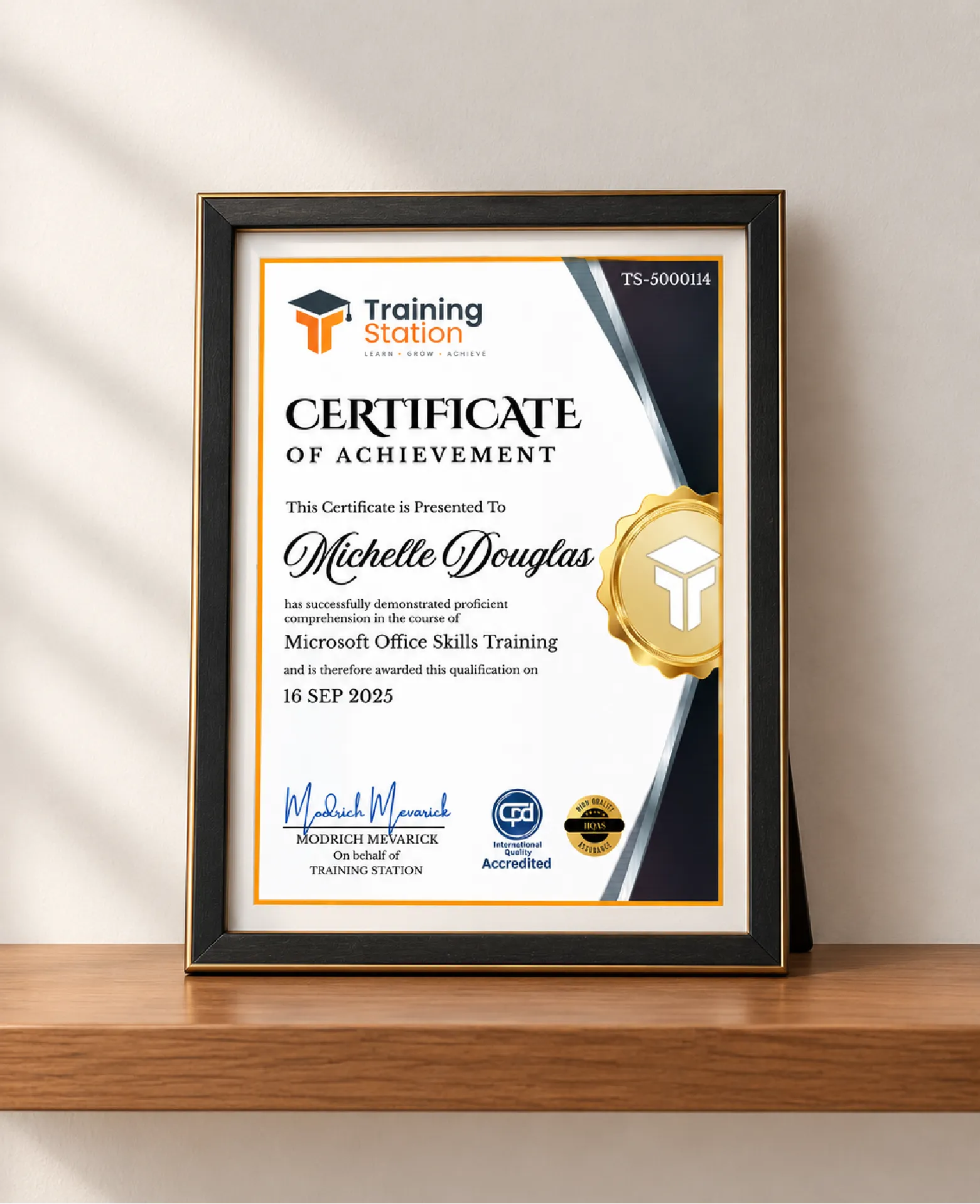
Celebrate your achievement with a CPD-IQ accredited certificate from Training Station! Perfect for showcasing your skills, boosting your career, and enhancing your professional profile.
Get this CourseOur Courses Accreditation





Frequently Asked Questions
Fully online through PDF materials and video lessons. Learn anytime, anywhere.
Self-paced: complete it in a week or spread it over months.
No. The course is beginner-friendly.
Yes. Instructor support is available Monday to Friday.
Yes. We offer a 14-day money-back guarantee.
 Access all courses for Only £99