
Certificate in OCD Management

- Access
- Lifetime
- Assistance
- Expert Tutor Support
- Flexibility
- Learn Anytime, Anywhere
Overview
Certificate in OCD Management
Overview
The Certificate in OCD Management is a comprehensive online training programme designed to provide learners with an in-depth understanding of Obsessive-Compulsive Disorder (OCD), one of the most misunderstood mental health conditions worldwide. Whether you are beginning your journey in mental health education or looking to expand your existing knowledge, this course offers a structured and evidence-informed learning experience that explores the causes, symptoms, assessment, treatment, and long-term management of OCD.
Obsessive-Compulsive Disorder can significantly affect a person’s thoughts, emotions, behaviours, relationships, education, and professional life. Despite growing awareness of mental health, misconceptions about OCD remain common. Many people mistakenly associate OCD solely with cleanliness or organisation, overlooking the complex neurological and psychological factors that contribute to the condition. The Certificate in OCD Management addresses these misconceptions by providing accurate, practical, and up-to-date knowledge that helps learners better understand the realities of living with OCD.
Throughout the course, you will explore the science behind obsessive thoughts and compulsive behaviours, examine the different types of OCD, understand how symptoms develop and persist, and discover the most effective approaches to assessment, diagnosis, treatment, and ongoing support. You will also gain valuable insights into Cognitive Behavioural Therapy (CBT), medication options, coping techniques, and practical strategies that promote long-term wellbeing.
Unlike introductory awareness courses that only provide a basic overview, the Certificate in OCD Management takes a comprehensive approach by combining theoretical knowledge with practical understanding. Every module has been carefully designed to help learners develop confidence in recognising symptoms, understanding treatment pathways, and supporting individuals affected by OCD in professional, educational, healthcare, or personal settings.
Whether your goal is career development, professional training, personal enrichment, or supporting someone living with OCD, this course provides valuable knowledge that can be applied in real-life situations.
Course Description
The Certificate in OCD Management is a professionally designed online course that offers a complete exploration of Obsessive-Compulsive Disorder from both psychological and practical perspectives. Built around current understanding of mental health, neuroscience, and evidence-based interventions, the course enables learners to develop a thorough understanding of OCD while learning effective strategies for assessment, management, treatment, and long-term support.
The programme begins by introducing the fundamentals of OCD, helping learners understand what the disorder is, how it differs from everyday habits or preferences, and why it affects people in different ways. As the course progresses, learners examine the neurological mechanisms involved in OCD, gaining insight into how the brain contributes to obsessive thinking and compulsive behaviours.
A significant focus is placed on understanding the various forms OCD can take. From contamination fears and checking compulsions to intrusive thoughts, relationship OCD, harm OCD, and perfectionism, learners discover that OCD is far more diverse than many people realise. The course also explores common triggers that activate symptoms and the behavioural cycles that maintain the disorder over time.
Assessment and diagnosis form another important part of the programme. Learners become familiar with recognised diagnostic criteria, clinical assessment methods, and the importance of accurate evaluation to distinguish OCD from other mental health conditions.
Treatment options are covered in depth, including psychological interventions, Cognitive Behavioural Therapy (CBT), Exposure and Response Prevention (ERP), medication, and holistic coping strategies that improve quality of life. Practical guidance is provided on supporting recovery while recognising that effective management often requires a personalised and long-term approach.
By the end of the Certificate in OCD Management, learners will possess a strong understanding of OCD that enables them to support individuals more effectively, improve their professional practice, enhance personal knowledge, or prepare for further study in psychology and mental health.
What You Will Learn in Certificate in OCD Management
Module 1: Introduction to OCD
The opening module establishes a solid foundation by introducing Obsessive-Compulsive Disorder and explaining its core characteristics. Learners explore common myths and misconceptions while gaining a clear understanding of what differentiates OCD from everyday worries, habits, or personality traits.
Topics include:
- Understanding obsessions and compulsions
- Common symptoms of OCD
- How OCD affects daily functioning
- The prevalence of OCD worldwide
- Emotional and social impact
- Dispelling common misconceptions
- Why early recognition matters
By completing this module, learners will have a clear understanding of OCD and appreciate the importance of accurate awareness.
Module 2: Understanding the Brain and OCD
This module explores the neurological and biological foundations of OCD. Learners discover how brain function, neurotransmitters, and neural pathways contribute to obsessive thinking and repetitive behaviours.
Key learning areas include:
- Brain regions associated with OCD
- The role of serotonin
- Neurobiological theories
- Genetic influences
- Environmental risk factors
- Brain-behaviour relationships
- Current scientific research
Understanding the science behind OCD enables learners to appreciate why the condition is a genuine mental health disorder rather than simply a behavioural choice.
Module 3: Types of OCD
OCD presents differently from one individual to another. This module examines the many forms the condition can take, helping learners recognise less obvious symptoms.
Topics include:
- Contamination OCD
- Checking OCD
- Symmetry and ordering OCD
- Intrusive thought OCD
- Harm OCD
- Relationship OCD
- Religious and moral OCD (Scrupulosity)
- Hoarding-related behaviours
- Perfectionism and uncertainty
Learners develop a broader understanding of OCD beyond common stereotypes.
Module 4: Triggers and Maintenance of OCD
Understanding what causes OCD symptoms to appear and persist is essential for effective management. This module examines the psychological processes that reinforce obsessive-compulsive cycles.
Learners explore:
- Internal and external triggers
- Anxiety cycles
- Reinforcement mechanisms
- Avoidance behaviours
- Safety behaviours
- Stress and symptom escalation
- Emotional regulation challenges
- Daily life influences
This knowledge helps learners understand why OCD often becomes self-perpetuating without appropriate intervention.
Module 5: Assessment and Diagnosis of OCD
Accurate assessment forms the basis of effective treatment. This module introduces learners to recognised diagnostic processes and professional evaluation methods.
Topics include:
- Diagnostic criteria
- Clinical interviews
- Assessment questionnaires
- Differential diagnosis
- Distinguishing OCD from anxiety disorders
- Identifying symptom severity
- Recognising co-occurring conditions
- Importance of professional assessment
Learners gain valuable insight into how healthcare professionals identify OCD accurately and ethically.
Module 6: Treatment of OCD
This module provides a broad overview of current evidence-based treatment options available for OCD.
Areas covered include:
- Psychological therapies
- Exposure and Response Prevention (ERP)
- Behavioural interventions
- Integrated treatment plans
- Lifestyle modifications
- Family involvement
- Long-term management
- Recovery expectations
Learners understand that successful OCD treatment often combines multiple approaches tailored to individual needs.
Module 7: Cognitive Behavioural Therapy (CBT) for OCD
CBT is widely recognised as one of the most effective psychological treatments for OCD. This module examines the principles behind CBT and how therapists use structured techniques to reduce obsessive-compulsive symptoms.
Topics include:
- Foundations of CBT
- Cognitive restructuring
- Identifying thinking patterns
- Behavioural experiments
- Exposure exercises
- Response prevention
- Building resilience
- Measuring progress
Learners gain valuable knowledge about one of the leading therapeutic approaches used in OCD management.
Module 8: Medications for OCD
Medication can play an important role in treatment for many individuals living with OCD. This module explores commonly prescribed medications, their benefits, limitations, and clinical considerations.
Topics include:
- Selective Serotonin Reuptake Inhibitors (SSRIs)
- Treatment expectations
- Side effects
- Medication monitoring
- Combining medication with therapy
- Long-term treatment considerations
- Working with healthcare professionals
The module encourages an informed understanding of medication as part of a wider treatment strategy.
Module 9: Coping Strategies for Living with OCD
Long-term wellbeing requires effective coping skills that support recovery and improve daily functioning. This practical module introduces learners to strategies that help individuals manage symptoms more effectively.
Topics include:
- Stress management
- Mindfulness techniques
- Building healthy routines
- Self-care strategies
- Family communication
- Relapse prevention
- Emotional resilience
- Seeking ongoing support
Learners discover practical approaches that can improve quality of life while supporting sustainable recovery.
Module 10: Conclusion and Resources for Further Support
The final module consolidates learning while introducing valuable resources for continued education and support.
Topics include:
- Reviewing key concepts
- Continuing professional development
- Support organisations
- Educational resources
- Self-help materials
- Professional referral pathways
- Future learning opportunities
This concluding module encourages lifelong learning and continued awareness of OCD management.
Who Is This Course For?
The Certificate in OCD Management is suitable for a broad range of learners interested in understanding Obsessive-Compulsive Disorder and improving their knowledge of mental health.
This course is particularly suitable for:
- Mental health support workers
- Healthcare assistants
- Care workers
- Psychology students
- Counsellors and therapists in training
- Teachers and education professionals
- Social care professionals
- Support workers
- Community workers
- Family members supporting loved ones with OCD
- Individuals living with OCD who wish to better understand their condition
- Anyone interested in mental health awareness and wellbeing
No previous experience is necessary, making the course equally valuable for beginners and professionals seeking additional knowledge.
Requirements
The Certificate in OCD Management has been designed to be accessible to learners from all educational and professional backgrounds.
To complete the course successfully, learners should ideally have:
- A basic understanding of English reading and writing.
- Access to a computer, tablet, or smartphone with an internet connection.
- A willingness to engage with mental health topics in a thoughtful and respectful manner.
- An interest in psychology, healthcare, education, or personal development.
No prior qualifications in psychology, counselling, healthcare, or mental health are required. The course starts with the fundamentals before progressing to more advanced concepts, making it suitable for complete beginners while remaining informative for experienced professionals.
Career Path
Completing the Certificate in OCD Management demonstrates your commitment to developing specialist knowledge in mental health awareness and support. While this course does not qualify learners to diagnose or independently treat OCD, it provides valuable knowledge that can strengthen both personal understanding and professional development.
Potential career pathways and roles that may benefit from this qualification include:
- Mental Health Support Worker
- Healthcare Assistant
- Care Worker
- Community Support Worker
- Wellbeing Practitioner
- Support Coordinator
- Youth Worker
- Teaching Assistant
- SEN Support Staff
- Residential Care Worker
- Charity and Non-Profit Support Worker
- Psychology Assistant
- Counselling Assistant
- Social Care Professional
The knowledge gained can also support progression into further education in psychology, counselling, psychotherapy, mental health nursing, social work, behavioural sciences, and related healthcare disciplines.
Frequently Asked Questions (FAQ)
1. What is the Certificate in OCD Management?
The Certificate in OCD Management is an online professional development course that provides comprehensive knowledge of Obsessive-Compulsive Disorder, including its causes, symptoms, assessment, treatment options, coping strategies, and evidence-based management approaches.
2. Do I need previous mental health experience?
No. The course is designed for complete beginners as well as professionals who want to expand their understanding of OCD.
3. Is this course suitable for healthcare professionals?
Yes. Healthcare assistants, support workers, educators, carers, and other professionals can benefit from the practical knowledge and evidence-based information presented throughout the course.
4. Will I learn about different types of OCD?
Absolutely. The course explores numerous forms of OCD, including contamination OCD, checking OCD, intrusive thoughts, relationship OCD, symmetry OCD, and several other recognised presentations.
5. Does the course explain CBT for OCD?
Yes. One of the core modules focuses entirely on Cognitive Behavioural Therapy (CBT), explaining how it helps individuals manage obsessive thoughts and compulsive behaviours, including the principles behind Exposure and Response Prevention (ERP).
6. Will medication be discussed?
Yes. The course provides an overview of medications commonly used to support OCD treatment, explaining how they work, their potential benefits, possible side effects, and the importance of medical supervision.
7. Is this course only for people with OCD?
No. The Certificate in OCD Management is suitable for professionals, students, carers, family members, and anyone interested in gaining a deeper understanding of OCD and supporting those affected by the condition.
8. How will this course help my career?
The course strengthens your understanding of mental health and demonstrates professional development, making it a valuable addition for careers in healthcare, education, social care, community services, and wellbeing support.
9. Can I study at my own pace?
Yes. The online format allows you to progress through each module at a pace that fits your schedule, making it easier to balance learning with work, family, or other commitments.
10. What skills will I gain after completing the Certificate in OCD Management?
By completing the Certificate in OCD Management, you will understand the psychology and neuroscience of OCD, recognise different symptom presentations, appreciate evidence-based assessment and treatment approaches, understand the role of CBT and medication, apply practical coping strategies, and develop greater confidence in supporting individuals affected by Obsessive-Compulsive Disorder in both personal and professional settings.
Curriculum
- Transcript of Introduction to OCD
- Introduction to OCD
- Transcript of Understanding the Brain and OCD
- Understanding the Brain and OCD
- Transcript of Types of OCD
- Types of OCD
- Transcript of Triggers and Maintenance of OCD
- Triggers and Maintenance of OCD
- Transcript of Assessment and Diagnosis of OCD
- Assessment and Diagnosis of OCD
- Transcript of Treatment of OCD
- Treatment of OCD
- Transcript of Cognitive Behavioral Therapy (CBT) for OCD
- Cognitive Behavioral Therapy (CBT) for OCD
- Transcript of Medications for OCD
- Medications for OCD
- Transcript of Coping Strategies for Living with OCD
- Coping Strategies for Living with OCD
- Transcript of Conclusion and Resources for Further Support
- Conclusion and Resources for Further Support
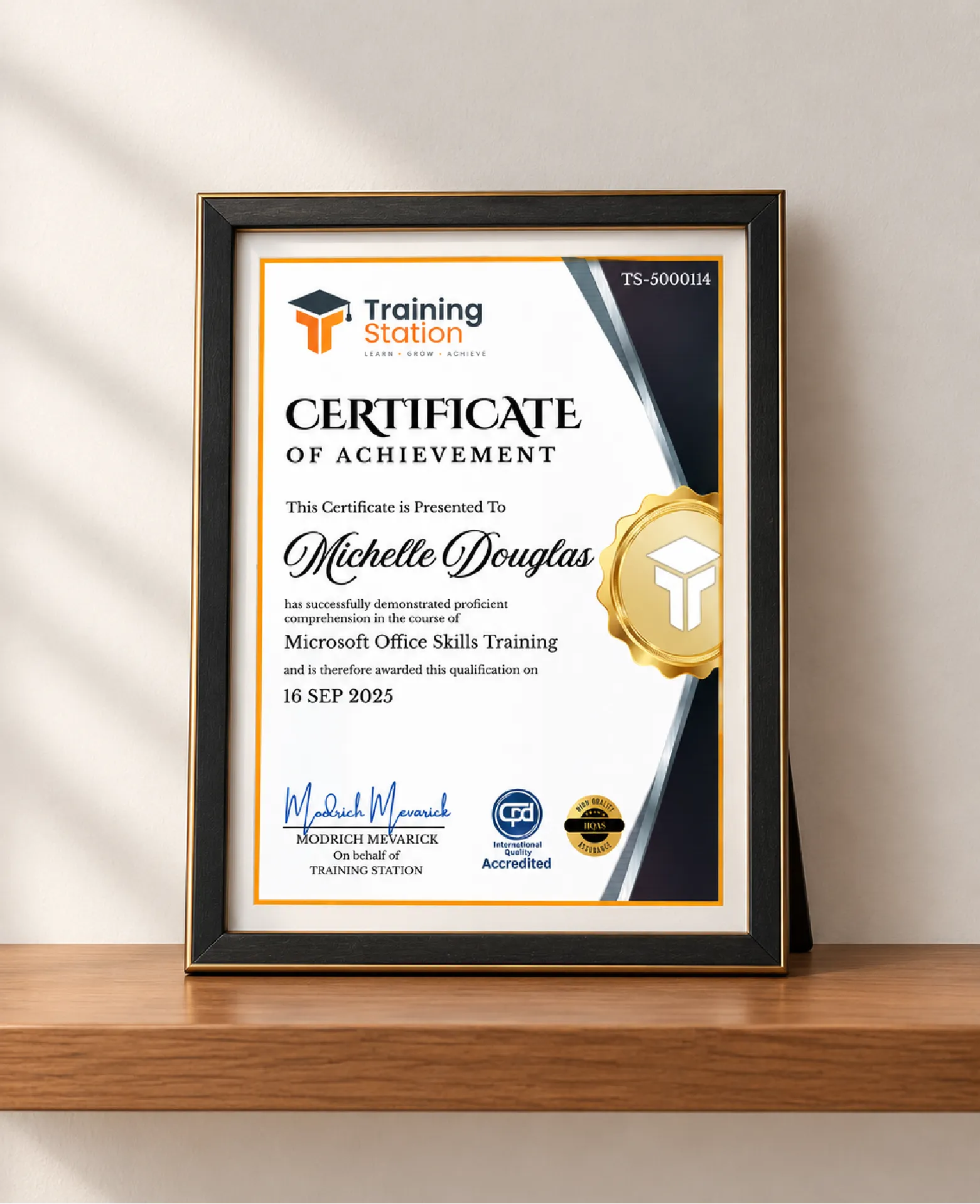
Celebrate your achievement with a CPD-IQ accredited certificate from Training Station! Perfect for showcasing your skills, boosting your career, and enhancing your professional profile.
Get this CourseOur Courses Accreditation



Frequently Asked Questions
Fully online through PDF materials and video lessons. Learn anytime, anywhere.
Self-paced: complete it in a week or spread it over months.
No. The course is beginner-friendly.
Yes. Instructor support is available Monday to Friday.
Yes. We offer a 14-day money-back guarantee.
 Access all courses for Only £99