
Motorcycle Maintenance Course: Servicing, Inspection and Care

- Access
- Lifetime
- Assistance
- Expert Tutor Support
- Flexibility
- Learn Anytime, Anywhere
Overview
The Motorcycle Maintenance Course is designed to help you understand how to care for a motorcycle, identify common maintenance requirements and recognise the importance of regular inspections. Whether you own a motorcycle, enjoy learning about vehicle mechanics or want to develop knowledge relevant to motorcycle workshops, this course introduces the essential principles of motorcycle care and preventive maintenance.
A motorcycle contains numerous components that need to remain in suitable condition for reliable operation. Tyres, brakes, chains, engine oil, cooling systems, lights and electrical components all require attention. Understanding what these parts do and why they need maintenance can help you make more informed decisions about motorcycle care.
Throughout this course, you will explore the key areas of motorcycle maintenance, from routine visual checks to understanding common mechanical and electrical issues. You will learn about the purpose of servicing schedules, the importance of following manufacturer recommendations and how regular inspections can help identify developing problems.
You will also explore motorcycle cleaning, storage, fluid checks, tyre care, chain maintenance and general component inspections. These topics will help you understand the different factors that contribute to motorcycle condition and long-term reliability.
The course introduces the principles of preventive maintenance, helping you understand why identifying wear and potential faults early can be preferable to waiting until a component fails. You will also learn why some maintenance tasks require professional tools, technical knowledge or qualified assistance.
By the end of the course, you will have developed a stronger understanding of motorcycle maintenance requirements and the practical considerations involved in keeping a motorcycle in good condition. You will be better equipped to recognise maintenance needs, communicate concerns to a mechanic and understand the importance of safe and responsible vehicle care.
What You Will Learn
-
The fundamentals of motorcycle maintenance.
-
The importance of regular servicing and inspections.
-
Motorcycle maintenance schedules and manufacturer recommendations.
-
Tyre condition, pressure and wear awareness.
-
Chain, sprocket and drivetrain maintenance principles.
-
Engine oil and essential fluid checks.
-
Brake inspection and maintenance awareness.
-
Battery care and electrical system checks.
-
Motorcycle cleaning and corrosion prevention.
-
Common mechanical and electrical warning signs.
-
Seasonal motorcycle care and storage.
-
Basic maintenance planning and record keeping.
-
Workshop safety and maintenance precautions.
-
When to seek professional motorcycle servicing.
Who Is This For?
Motorcycle Owners: If you own a motorcycle, this course can help you understand its maintenance requirements and recognise common signs that may indicate a need for inspection or servicing.
New Motorcycle Riders: New riders can develop a better understanding of motorcycle care, helping them become more aware of important maintenance areas before and during ownership.
Motorcycle Enthusiasts: If you enjoy motorcycles and want to learn more about their components, this course provides an introduction to routine maintenance and vehicle care.
Aspiring Motorcycle Mechanics: Individuals considering a future in motorcycle servicing can use this course to develop foundational knowledge of maintenance schedules, component inspections and preventive care.
Workshop Support Staff: People interested in working in motorcycle maintenance environments can become familiar with common servicing tasks and mechanical terminology.
Career Changers: If you are exploring opportunities in vehicle maintenance, this course can help you understand the basic responsibilities associated with motorcycle care.
Independent Learners: Anyone interested in understanding how to maintain motorcycles more responsibly can benefit from learning about routine inspections and common maintenance requirements.
Requirements / Prerequisites
No previous motorcycle maintenance experience is required. The course is suitable for beginners and motorcycle owners who want to improve their understanding of vehicle care.
You should have:
-
An interest in motorcycles and their maintenance.
-
Basic reading and computer skills.
-
Access to a computer or suitable learning device.
-
An internet connection.
-
A willingness to learn technical terms and maintenance principles.
Access to a motorcycle is not essential for studying the course. However, practical familiarity with motorcycle components may help you connect the learning material with real-world examples.
This course provides educational knowledge. It does not replace manufacturer instructions, professional inspections or supervised practical training. Safety-critical repairs should be carried out by appropriately competent individuals.
Course Content and Learning Journey
1. Introduction to Motorcycle Maintenance
Understand what motorcycle maintenance involves and why it is essential for vehicle reliability and safe operation. Explore the difference between routine maintenance, preventive servicing and corrective repairs.
You will learn how regular attention to motorcycle components can help identify developing problems and support better vehicle care.
2. Understanding Motorcycle Components
Become familiar with the main parts of a motorcycle, including the engine, tyres, brakes, suspension, transmission and electrical systems.
You will understand the purpose of each system and why different components require different inspection and maintenance approaches.
3. Motorcycle Maintenance Schedules
Explore the importance of manufacturer-recommended maintenance schedules. Learn why service intervals can vary depending on motorcycle design, usage and operating conditions.
You will understand how maintenance records help track servicing activities and why following technical recommendations is important.
4. Tyre Inspection and Care
Learn about tyre condition, pressure, tread depth and visible damage. Understand how tyre maintenance contributes to handling, grip and road safety.
You will develop awareness of common tyre problems and why appropriate inspection and replacement decisions are important.
5. Chain and Sprocket Maintenance
Explore the function of motorcycle chains and sprockets. Understand why chain condition, lubrication and correct tension are important for reliable power transmission.
You will also learn to recognise general signs of chain wear and understand why manufacturer guidance should be followed when maintenance or adjustment is required.
6. Engine Oil and Fluid Maintenance
Understand the role of engine oil and other essential motorcycle fluids. Explore why appropriate oil levels and fluid condition matter for engine protection and system operation.
You will learn about the importance of following manufacturer specifications and recognising signs that may indicate a fluid leak or maintenance concern.
7. Brake System Inspection
Explore the main components of motorcycle braking systems and understand the importance of their condition. Learn about brake pads, discs, fluid and visible warning signs.
You will develop awareness of why braking components require careful inspection and why suspected brake problems should be assessed by a competent professional.
8. Battery and Electrical Maintenance
Understand the purpose of the motorcycle battery and charging system. Explore general battery care, electrical connections, lights, fuses and common signs of electrical problems.
You will learn why electrical inspections are an important part of overall motorcycle maintenance.
9. Motorcycle Cleaning and Corrosion Prevention
Discover how regular cleaning can help maintain motorcycle appearance and make it easier to notice leaks, damage or worn components.
Explore the importance of suitable cleaning products, careful handling of sensitive components and measures that can help reduce corrosion.
10. Cooling System Maintenance
Learn about the purpose of motorcycle cooling systems and the importance of maintaining suitable operating temperatures. Explore general cooling system components and the importance of checking for leaks or visible damage.
You will understand why cooling problems should be investigated promptly to help prevent potential engine damage.
11. Identifying Common Maintenance Problems
Develop awareness of common motorcycle warning signs, including unusual sounds, vibration, starting difficulties, fluid leaks and changes in performance.
You will learn how recognising these symptoms can help you decide when further inspection or professional assistance may be needed.
12. Seasonal Motorcycle Care and Storage
Explore how weather and storage conditions can affect motorcycle condition. Understand general considerations for preparing a motorcycle for periods of limited use, including cleanliness, battery care and protection from moisture.
You will also learn why manufacturer guidance should inform longer-term storage arrangements.
13. Preventive Maintenance Planning
Understand how to organise routine maintenance and keep track of important servicing activities. Explore maintenance checklists, service records and the benefits of planning inspections.
You will develop a more structured approach to motorcycle care and understand how consistent maintenance habits can support vehicle reliability.
14. Workshop Safety and Responsible Maintenance
Learn about general safety considerations when carrying out motorcycle maintenance. Explore appropriate equipment, protective clothing, stable vehicle positioning and safe handling of workshop materials.
You will understand why maintenance should never be attempted without suitable knowledge, tools and working conditions.
15. Professional Servicing and Further Development
Explore when professional motorcycle servicing may be necessary and how to communicate maintenance concerns effectively. Understand the value of qualified inspections, technical documentation and continued learning.
You will identify opportunities to develop further knowledge of motorcycle mechanics and specialist maintenance.
Career Path
The knowledge developed through this course may support further learning and exploration of roles in motorcycle maintenance and vehicle servicing. Career opportunities will depend on practical competence, experience and relevant qualifications.
Motorcycle Maintenance Assistant: Assistants may support basic maintenance activities and workshop organisation under appropriate supervision.
Motorcycle Workshop Assistant: Workshop assistants help with equipment preparation, component organisation and general support tasks in servicing environments.
Motorcycle Service Technician: With suitable practical training and experience, you may work towards servicing motorcycles and carrying out inspections.
Motorcycle Mechanic: Further technical education and hands-on experience can support progression towards motorcycle repair and maintenance work.
Motorcycle Parts Assistant: Understanding motorcycle components can be useful when identifying parts and supporting customers in parts departments.
Motorcycle Accessories Retail Assistant: Knowledge of motorcycle maintenance products and accessories may support opportunities in motorcycle retail environments.
Independent Motorcycle Care Services: With appropriate experience, equipment and business preparation, you may explore providing motorcycle cleaning or other suitable care services.
Skills You Can Develop
-
Motorcycle maintenance awareness.
-
Understanding of servicing schedules.
-
Tyre inspection knowledge.
-
Chain and sprocket maintenance awareness.
-
Understanding of engine oil and fluid requirements.
-
Brake and electrical system awareness.
-
Motorcycle cleaning and corrosion prevention.
-
Recognition of common maintenance warning signs.
-
Maintenance planning and record keeping.
-
Workshop safety awareness.
-
Understanding when professional assistance is required.
Your Next Steps After the Course
Continue developing your knowledge by exploring manufacturer maintenance manuals and learning about the servicing requirements of different motorcycle models. If you own a motorcycle, use the information gained to become more familiar with its maintenance schedule and inspection requirements.
Consider gaining supervised practical experience or pursuing further training in motorcycle mechanics, electrical systems, engine maintenance and diagnostic procedures.
You can also develop a personal maintenance record to understand how servicing activities are documented and why accurate information matters when maintaining a vehicle.
Conclusion
The Motorcycle Maintenance Course provides a foundation for understanding how motorcycles should be inspected, cared for and maintained. By exploring tyres, brakes, chains, fluids, batteries, cleaning and preventive servicing, you can develop knowledge that supports more informed motorcycle ownership and further technical learning.
Whether you want to care for your own motorcycle, explore motorcycle workshop opportunities or build a foundation for advanced mechanical training, this course can help you understand the principles of responsible motorcycle maintenance.
Curriculum
- Introduction to Motorbike Maintenance
- Know Your Motorbike Engines
- Engine Cooling and Lubrication
- Module 4 Ignition
- Suspension
- Intake, Fuel, & Exhaust Systems
- Fuel Injectors on a Motorcycle
- Motorcycle Tires and Sizing
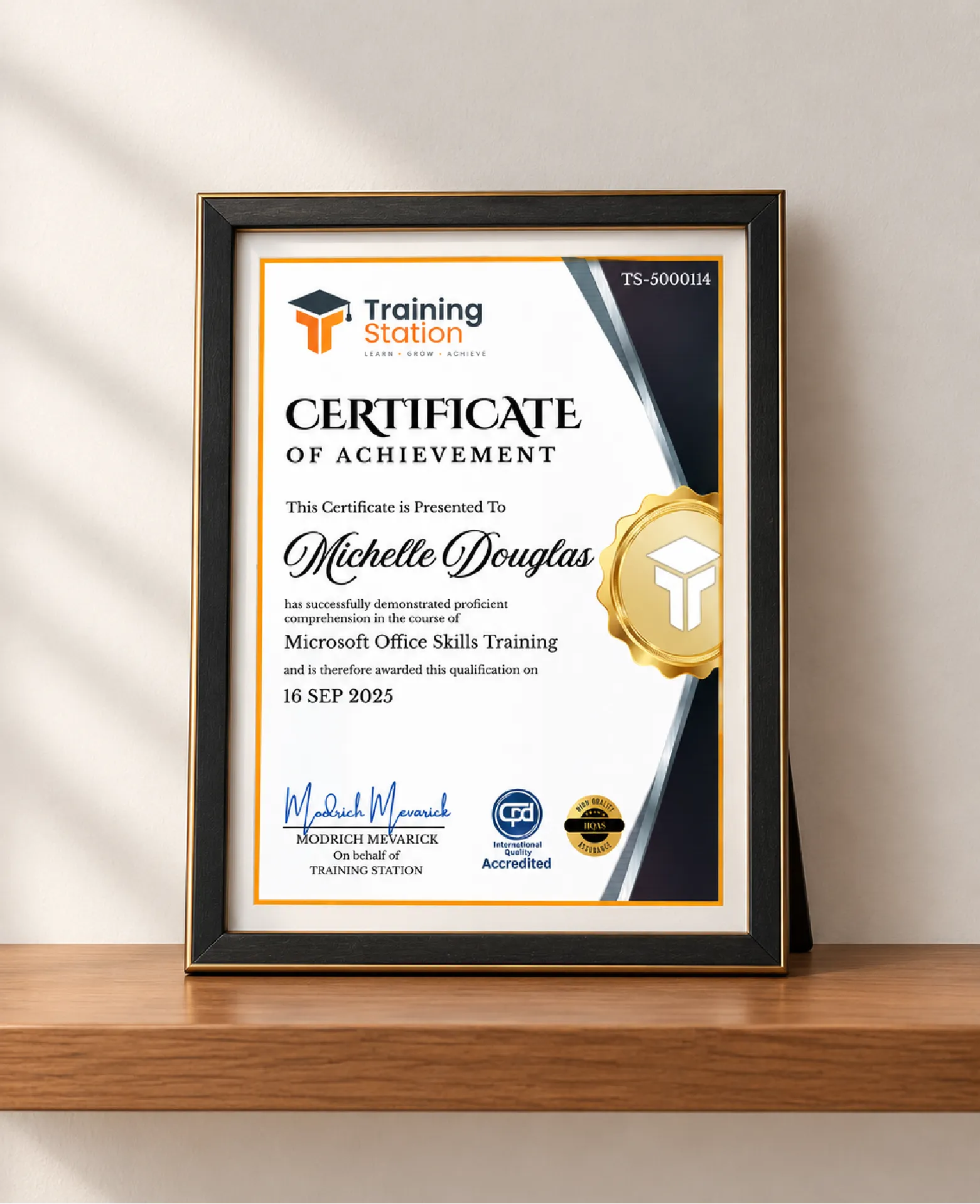
Celebrate your achievement with a CPD-IQ accredited certificate from Training Station! Perfect for showcasing your skills, boosting your career, and enhancing your professional profile.
Get this CourseOur Courses Accreditation





Frequently Asked Questions
Fully online through PDF materials and video lessons. Learn anytime, anywhere.
Self-paced: complete it in a week or spread it over months.
No. The course is beginner-friendly.
Yes. Instructor support is available Monday to Friday.
Yes. We offer a 14-day money-back guarantee.
 Access all courses for Only £99