
KYC & Customer Due Diligence Training

- Access
- Lifetime
- Assistance
- Expert Tutor Support
- Flexibility
- Learn Anytime, Anywhere
Overview
KYC & Customer Due Diligence Training
1. Overview
The KYC & Customer Due Diligence Training course is a comprehensive professional programme designed to help learners understand the essential principles of identity verification, customer screening, compliance procedures, and financial crime prevention. In today’s highly regulated business environment, organisations across banking, finance, fintech, insurance, property, and professional services rely on effective Know Your Customer (KYC) and Customer Due Diligence (CDD) processes to protect their operations and maintain regulatory compliance.
This course provides a complete introduction to KYC frameworks, UK compliance expectations, AML practices, verification methods, and risk-based approaches used by modern organisations. Whether you are starting your career in compliance or looking to strengthen your existing knowledge, the KYC & Customer Due Diligence Training course equips you with practical knowledge and industry-relevant skills to confidently support customer onboarding and regulatory processes.
Throughout the course, learners will explore how businesses identify customers, assess risks, collect documentation, monitor relationships, and implement effective compliance procedures. By completing this training, you will gain the confidence to understand how KYC and CDD work together to prevent fraud, money laundering, and other financial crimes.
2. Course Description
The KYC & Customer Due Diligence Training course has been developed to provide learners with a strong foundation in compliance operations and customer verification practices. The course covers the complete lifecycle of KYC processes, from initial customer identification through ongoing monitoring and regulatory reporting.
You will learn why KYC procedures are essential, how businesses apply due diligence measures, and how compliance teams use structured processes to reduce risk. The course explores UK-specific KYC requirements, AML regulations, verification techniques, and practical methods for collecting and validating customer information.
The training also explains the relationship between KYC and Anti-Money Laundering (AML), helping learners understand how these two areas combine to create a secure compliance framework. Through detailed modules, you will develop the ability to recognise risks, follow verification procedures, and contribute effectively to compliance-focused roles.
The KYC & Customer Due Diligence Training course is suitable for beginners and professionals who want to improve their understanding of financial compliance, customer onboarding, and regulatory responsibilities.
3. What You Will Learn in KYC & Customer Due Diligence Training
Module 1 – Introduction to KYC
This module introduces the fundamentals of Know Your Customer (KYC) and explains why customer identification is a critical part of modern business operations. Learners will understand the purpose behind KYC frameworks and how organisations use them to establish trust and reduce exposure to risks.
You will explore:
- The meaning and purpose of KYC
- Why customer verification is important
- The role of KYC in preventing fraud and financial crime
- The importance of accurate customer information
- How KYC supports business security and compliance
- The responsibilities of organisations during customer onboarding
By completing this module, learners will understand the foundations of KYC and its importance across regulated industries.
Module 2 – KYC Requirements in the UK
This module focuses on the KYC expectations and compliance practices followed within the UK. Learners will gain insight into how organisations manage customer verification while meeting legal and regulatory obligations.
You will learn about:
- UK customer identification requirements
- Customer information collection procedures
- Verification standards and documentation
- Compliance responsibilities for businesses
- The importance of maintaining accurate records
- Risk-based approaches to customer checks
This module helps learners understand how UK businesses apply KYC principles in real-world situations.
Module 3 – Customer Due Diligence
Customer Due Diligence (CDD) is one of the most important elements of financial compliance. This module explains how organisations assess customers, evaluate risks, and make informed decisions before establishing business relationships.
You will explore:
- The purpose of Customer Due Diligence
- Standard CDD procedures
- Customer risk assessment methods
- Identifying customer profiles
- Collecting and reviewing customer information
- The importance of ongoing customer monitoring
By the end of this module, learners will understand how CDD helps organisations identify and manage potential risks.
Module 4 – KYC Process & Procedures Guide
This module provides a practical overview of the complete KYC workflow. Learners will discover how businesses structure their verification processes and maintain effective compliance systems.
Topics include:
- Step-by-step KYC procedures
- Customer onboarding processes
- Identity verification stages
- Document review methods
- Maintaining customer records
- Common KYC challenges and solutions
This module prepares learners to understand and support practical KYC operations within professional environments.
Module 5 – AML (Anti-Money Laundering)
This module introduces Anti-Money Laundering (AML) principles and explains how businesses prevent illegal financial activities. Learners will understand the connection between customer verification and financial crime prevention.
You will learn:
- What money laundering is
- The purpose of AML controls
- Common money laundering risks
- AML compliance responsibilities
- Suspicious activity awareness
- The importance of reporting procedures
This knowledge helps learners recognise how AML measures protect organisations and customers.
Module 6 – KYC and AML – Key Differences and How They Work Together
KYC and AML are closely connected but serve different purposes. This module explains the differences between them and shows how they combine to create effective compliance systems.
You will understand:
- The purpose of KYC compared to AML
- How customer verification supports AML efforts
- The relationship between identification and risk management
- How compliance teams integrate both processes
- The importance of combined compliance strategies
This module gives learners a clear understanding of the complete compliance framework.
Module 7 – KYC and AML Regulations in the UK
This module explores the regulatory environment surrounding KYC and AML practices in the UK. Learners will develop awareness of the expectations placed on businesses operating in regulated sectors.
You will learn about:
- UK compliance principles
- Regulatory responsibilities
- Importance of following AML requirements
- Compliance documentation
- Risk management expectations
- Consequences of poor compliance practices
This module strengthens your understanding of professional compliance standards.
Module 8 – Reasonable Methods in KYC Verification
The final module focuses on practical verification methods used by organisations to confirm customer identities. Learners will explore how businesses choose appropriate verification techniques based on risk levels.
Topics covered include:
- Customer identity verification methods
- Document-based verification
- Digital verification approaches
- Assessing verification reliability
- Choosing suitable verification methods
- Maintaining effective verification standards
This module helps learners apply KYC knowledge in practical workplace scenarios.
4. Who Is This Course For?
The KYC & Customer Due Diligence Training course is designed for anyone who wants to understand compliance, customer verification, and financial risk management.
This course is ideal for:
- Compliance officers
- Banking and finance professionals
- Customer onboarding teams
- Risk management professionals
- Fraud prevention specialists
- Fintech employees
- Business owners
- Administrative professionals
- Students interested in compliance careers
- Anyone looking to develop financial crime prevention skills
No previous compliance experience is required, making this course suitable for beginners as well as professionals seeking to expand their knowledge.
5. Requirements
There are no specific entry requirements for the KYC & Customer Due Diligence Training course.
Learners should have:
- Basic understanding of business operations
- Interest in compliance and customer management
- A willingness to learn regulatory processes
- Basic computer and internet skills
This course is suitable for complete beginners and professionals who want to build practical knowledge in KYC, CDD, and AML practices.
6. Career Path
Completing the KYC & Customer Due Diligence Training course can support career development in several compliance and business-related fields.
Potential career opportunities include:
- KYC Analyst
- Compliance Assistant
- AML Compliance Officer
- Risk Analyst
- Customer Verification Specialist
- Financial Crime Prevention Officer
- Banking Operations Specialist
- Regulatory Compliance Professional
As organisations continue to strengthen customer verification and financial crime prevention processes, professionals with KYC and AML knowledge are increasingly valuable across many industries.
This training can help learners build confidence, improve workplace performance, and develop skills relevant to compliance-focused career paths.
7. FAQ
1. What is KYC & Customer Due Diligence Training?
KYC & Customer Due Diligence Training is a professional course that teaches learners how organisations verify customers, assess risks, and follow compliance procedures to prevent fraud and financial crime.
2. Is this course suitable for beginners?
Yes. The course is designed for beginners and professionals. It starts with the fundamentals of KYC and gradually introduces advanced compliance concepts.
3. What will I learn from this course?
You will learn KYC principles, customer verification, CDD procedures, AML concepts, UK compliance requirements, and practical verification methods.
4. Why is KYC important for businesses?
KYC helps businesses confirm customer identities, reduce fraud risks, prevent illegal activities, and meet regulatory obligations.
5. What is the difference between KYC and AML?
KYC focuses on identifying and understanding customers, while AML focuses on preventing and detecting money laundering activities. Both work together as part of compliance management.
6. Do I need previous compliance experience?
No. This course is suitable for learners with no previous compliance background and provides a complete introduction to the subject.
7. Can this course help with a compliance career?
Yes. The knowledge gained can support roles in compliance, banking, risk management, customer verification, and financial crime prevention.
8. What industries use KYC procedures?
KYC is widely used in banking, finance, fintech, insurance, real estate, investment services, and many regulated industries.
9. Will I learn practical KYC procedures?
Yes. The course explains practical KYC workflows, verification methods, customer onboarding processes, and risk assessment approaches.
10. Why should I take the KYC & Customer Due Diligence Training course?
This course helps you develop essential compliance skills, understand modern verification practices, and build knowledge that supports professional growth in regulated industries.
Curriculum
- Introduction to KYC
- KYC Requirements in the UK
- Customer Due Diligence
- KYC Process Procedures Guide
- AML (Anti-Money Laundering)
- KYC and AML – Key Differences and How They Work Together
- KYC and AML Regulations in the UK
- Reasonable Methods in KYC Verification
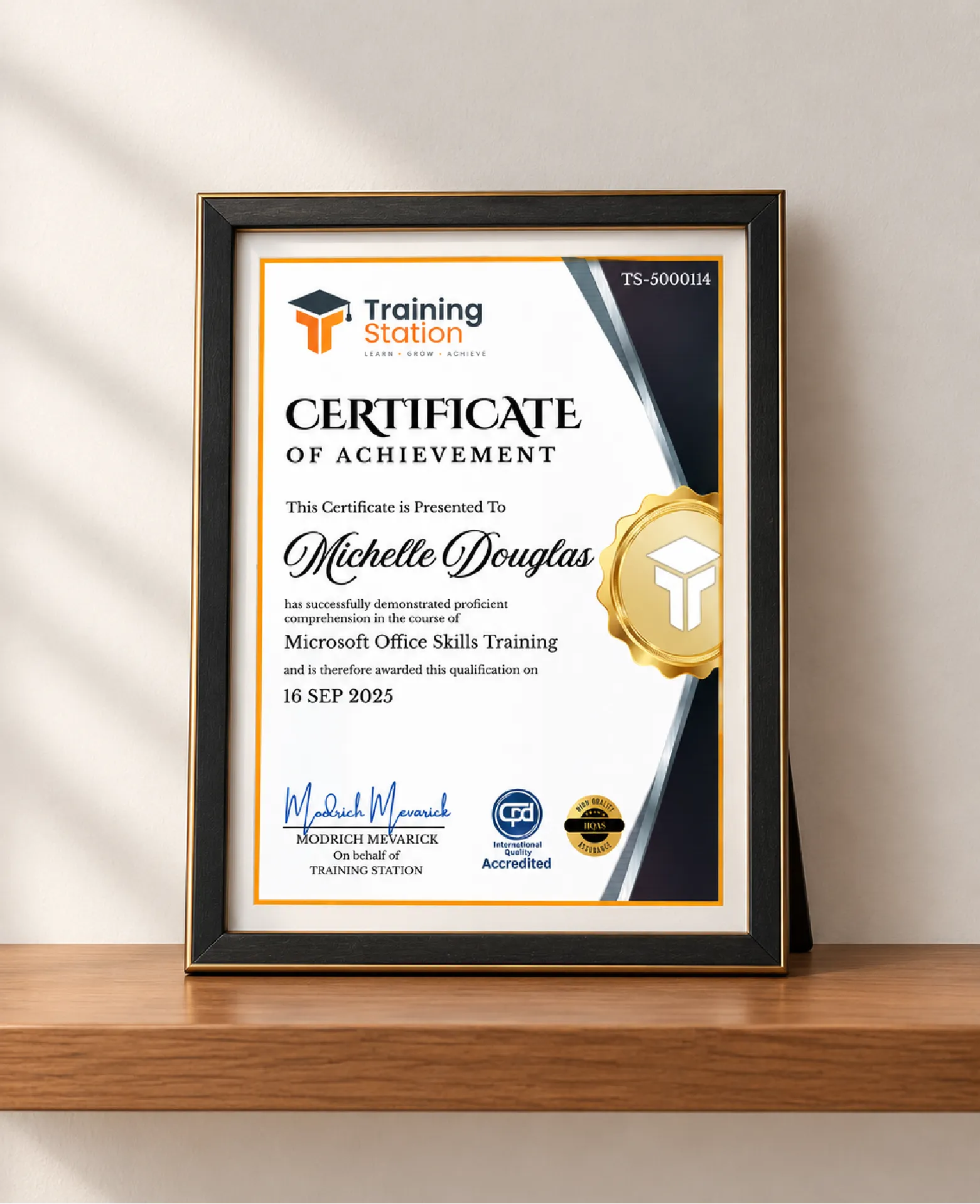
Celebrate your achievement with a CPD-IQ accredited certificate from Training Station! Perfect for showcasing your skills, boosting your career, and enhancing your professional profile.
Get this CourseOur Courses Accreditation




Frequently Asked Questions
Fully online through PDF materials and video lessons. Learn anytime, anywhere.
Self-paced: complete it in a week or spread it over months.
No. The course is beginner-friendly.
Yes. Instructor support is available Monday to Friday.
Yes. We offer a 14-day money-back guarantee.
 Access all courses for Only £99