
Diploma in Industrial Design

- Access
- Lifetime
- Assistance
- Expert Tutor Support
- Flexibility
- Learn Anytime, Anywhere
Overview
Diploma in Industrial Design
Overview
The Diploma in Industrial Design is a comprehensive and professionally structured training programme designed to equip learners with the creative, technical, and strategic skills required to design innovative products for modern industries. Industrial design plays a crucial role in shaping the products people use every day, combining functionality, aesthetics, usability, and manufacturing feasibility into a single design solution.
Whether you aspire to become a professional industrial designer, product developer, design consultant, entrepreneur, or creative innovator, this diploma provides a strong foundation in industrial design principles, design thinking methodologies, visual communication techniques, computer-aided design technologies, and manufacturing processes.
Throughout the Diploma in Industrial Design, learners will explore the complete product design journey—from identifying user needs and generating creative concepts to visualizing ideas, creating digital models, and understanding production methods. The course blends creativity with practical application, helping students develop the skills needed to create products that are both functional and commercially successful.
By the end of the programme, you will have developed a professional understanding of industrial design workflows, enabling you to confidently contribute to product development projects across multiple industries including consumer goods, furniture, automotive design, technology, manufacturing, and sustainable product innovation.
Course Description
The Diploma in Industrial Design has been carefully developed to provide a balanced combination of creative exploration and technical expertise. Modern industrial designers are expected to understand user behaviour, solve complex design challenges, communicate ideas effectively, and collaborate with engineers and manufacturers throughout the product development process.
This course begins with an introduction to industrial design, helping learners understand the history, significance, and professional responsibilities of industrial designers. You will then progress into design thinking methodologies that support innovation and user-centred problem solving.
As the course advances, you will develop professional sketching and visualization skills that allow you to rapidly communicate concepts and refine product ideas. You will then explore 3D modeling and CAD tools that are widely used in professional design environments to create accurate digital product representations.
Finally, the course examines materials and manufacturing processes, providing practical knowledge about how products are produced, assembled, and brought to market. Understanding production constraints and material properties enables designers to create products that are not only visually appealing but also manufacturable and cost-effective.
The Diploma in Industrial Design serves as an ideal stepping stone for individuals seeking a rewarding career in product design, innovation, manufacturing, and creative technology industries.
What You Will Learn in Diploma in Industrial Design
Module 1: Introduction to Industrial Design
This foundational module introduces learners to the world of industrial design and its influence on modern society. You will gain a clear understanding of the industrial design profession, its history, evolution, and role in product innovation.
Topics Covered:
-
Fundamentals of industrial design
-
History and evolution of product design
-
Design principles and aesthetics
-
User-centred product development
-
Functionality versus appearance
-
Product lifecycle considerations
-
Design ethics and sustainability
-
Industrial design career opportunities
Learning Outcomes:
By completing this module, you will:
-
Understand the core purpose of industrial design
-
Recognize how design influences user experience
-
Identify key industrial design disciplines
-
Understand the relationship between design, engineering, and manufacturing
-
Develop a strong foundation for advanced design concepts
Module 2: Design Thinking
Innovation begins with understanding people and solving real-world problems. This module introduces the powerful design thinking framework used by leading organizations worldwide to drive product innovation.
You will learn how designers approach complex challenges through empathy, research, ideation, prototyping, and testing.
Topics Covered:
-
Introduction to design thinking methodology
-
Human-centred design principles
-
Understanding user needs and behaviours
-
Problem identification and framing
-
Creative brainstorming techniques
-
Idea generation methods
-
Prototyping fundamentals
-
User testing and feedback analysis
-
Iterative design improvement
Learning Outcomes:
Upon completion, you will be able to:
-
Apply design thinking to real-world challenges
-
Conduct user-focused research
-
Generate innovative design solutions
-
Evaluate ideas through structured testing
-
Improve products through iterative design processes
Module 3: Sketching and Visualization Techniques
Industrial designers must communicate ideas quickly and effectively. This module focuses on developing professional sketching and visualization abilities used during concept development and product presentation.
You will learn techniques for translating ideas into visual representations that can be understood by clients, stakeholders, engineers, and manufacturing teams.
Topics Covered:
-
Freehand sketching fundamentals
-
Perspective drawing techniques
-
Product concept sketching
-
Form exploration methods
-
Visual communication principles
-
Rendering techniques
-
Marker and digital visualization methods
-
Presentation drawing skills
-
Design storytelling through visuals
Learning Outcomes:
After completing this module, you will:
-
Create professional product sketches
-
Communicate concepts clearly and effectively
-
Develop visual confidence during ideation
-
Present design ideas with greater impact
-
Improve concept development efficiency
Module 4: 3D Modeling and CAD
Modern product development relies heavily on digital design tools. This module introduces learners to 3D modeling and Computer-Aided Design (CAD), which are essential skills for industrial designers in today’s workplace.
You will explore how digital models are created, modified, visualized, and prepared for manufacturing and prototyping.
Topics Covered:
-
Introduction to CAD software
-
3D modeling fundamentals
-
Parametric design concepts
-
Digital product development workflows
-
Surface and solid modeling techniques
-
Design refinement processes
-
Product visualization and rendering
-
Preparing models for prototyping
-
Industry-standard CAD practices
Learning Outcomes:
By the end of this module, you will:
-
Understand professional CAD workflows
-
Create accurate digital product models
-
Develop products using 3D design tools
-
Produce realistic product visualizations
-
Prepare designs for manufacturing and prototyping
Module 5: Materials and Manufacturing Processes
A successful industrial designer must understand how products are manufactured and how materials influence design decisions. This module explores common materials and production methods used across modern industries.
You will learn how material selection impacts durability, sustainability, performance, cost, and user experience.
Topics Covered:
-
Material properties and characteristics
-
Metals, plastics, wood, composites, and advanced materials
-
Manufacturing process fundamentals
-
Injection molding techniques
-
Casting and forming methods
-
Machining processes
-
Assembly considerations
-
Material sustainability and environmental impact
-
Design for manufacturing principles
Learning Outcomes:
Upon completion, you will:
-
Select appropriate materials for products
-
Understand manufacturing limitations and opportunities
-
Design products with production efficiency in mind
-
Evaluate sustainability considerations
-
Create more practical and manufacturable product designs
Who Is This Course For?
The Diploma in Industrial Design is suitable for a wide range of learners, including:
-
Aspiring industrial designers
-
Product design enthusiasts
-
Engineering students
-
Creative professionals
-
Design consultants
-
Product developers
-
Entrepreneurs creating physical products
-
Manufacturing professionals
-
Innovation managers
-
Students seeking design-related careers
No prior industrial design experience is required, making this course accessible to beginners while still offering valuable insights for experienced professionals.
Requirements
The Diploma in Industrial Design has been designed to be accessible to learners from diverse educational and professional backgrounds.
Requirements:
-
No prior industrial design experience required
-
Basic computer literacy
-
Interest in product development and design
-
Passion for creativity and innovation
-
Willingness to learn visualization and design techniques
-
Access to a computer with internet connectivity
A background in art, engineering, architecture, or product development may be helpful but is not essential.
Career Path
Completing the Diploma in Industrial Design can open doors to numerous creative and technical career opportunities.
Potential career paths include:
-
Industrial Designer
-
Product Designer
-
Product Development Specialist
-
Design Consultant
-
CAD Designer
-
Concept Designer
-
Manufacturing Design Coordinator
-
Innovation Specialist
-
Consumer Product Designer
-
Furniture Designer
-
Packaging Designer
-
Design Researcher
-
Creative Product Developer
The knowledge gained through this diploma can also support entrepreneurial ventures, enabling learners to develop, prototype, and launch their own product ideas.
Frequently Asked Questions (FAQ)
1. What is industrial design?
Industrial design is the process of creating products that are functional, aesthetically pleasing, user-friendly, and suitable for manufacturing.
2. Do I need drawing skills before joining the course?
No. The course begins with foundational concepts and gradually develops your sketching and visualization abilities.
3. Is the Diploma in Industrial Design suitable for beginners?
Yes. The programme is specifically designed to accommodate learners with no previous industrial design experience.
4. Will I learn CAD and 3D modeling?
Yes. The course includes dedicated training on 3D modeling and Computer-Aided Design (CAD) concepts used in modern product development.
5. How does design thinking help industrial designers?
Design thinking helps designers understand user needs, generate innovative solutions, and improve products through structured problem-solving methods.
6. Why are materials and manufacturing processes important?
Understanding materials and manufacturing helps designers create products that are practical, durable, cost-effective, and manufacturable.
7. Can this course help me start a design career?
Yes. The Diploma in Industrial Design provides foundational knowledge and practical skills that support entry into industrial design and product development careers.
8. Is industrial design a growing profession?
Yes. As companies continue developing innovative products, demand for professionals with industrial design expertise remains strong across multiple industries.
9. Can entrepreneurs benefit from this course?
Absolutely. Entrepreneurs can use industrial design principles to create, refine, and commercialize new product ideas successfully.
10. What skills will I have after completing the Diploma in Industrial Design?
You will understand industrial design principles, design thinking, product visualization, CAD fundamentals, material selection, and manufacturing processes, enabling you to contribute effectively to product development projects.
Curriculum
- Introduction to Industrial Design.
- Design Thinking.
- Sketching and Visualization Techniques.
- 3D Modeling and CAD.
- Materials and Manufacturing Processes.
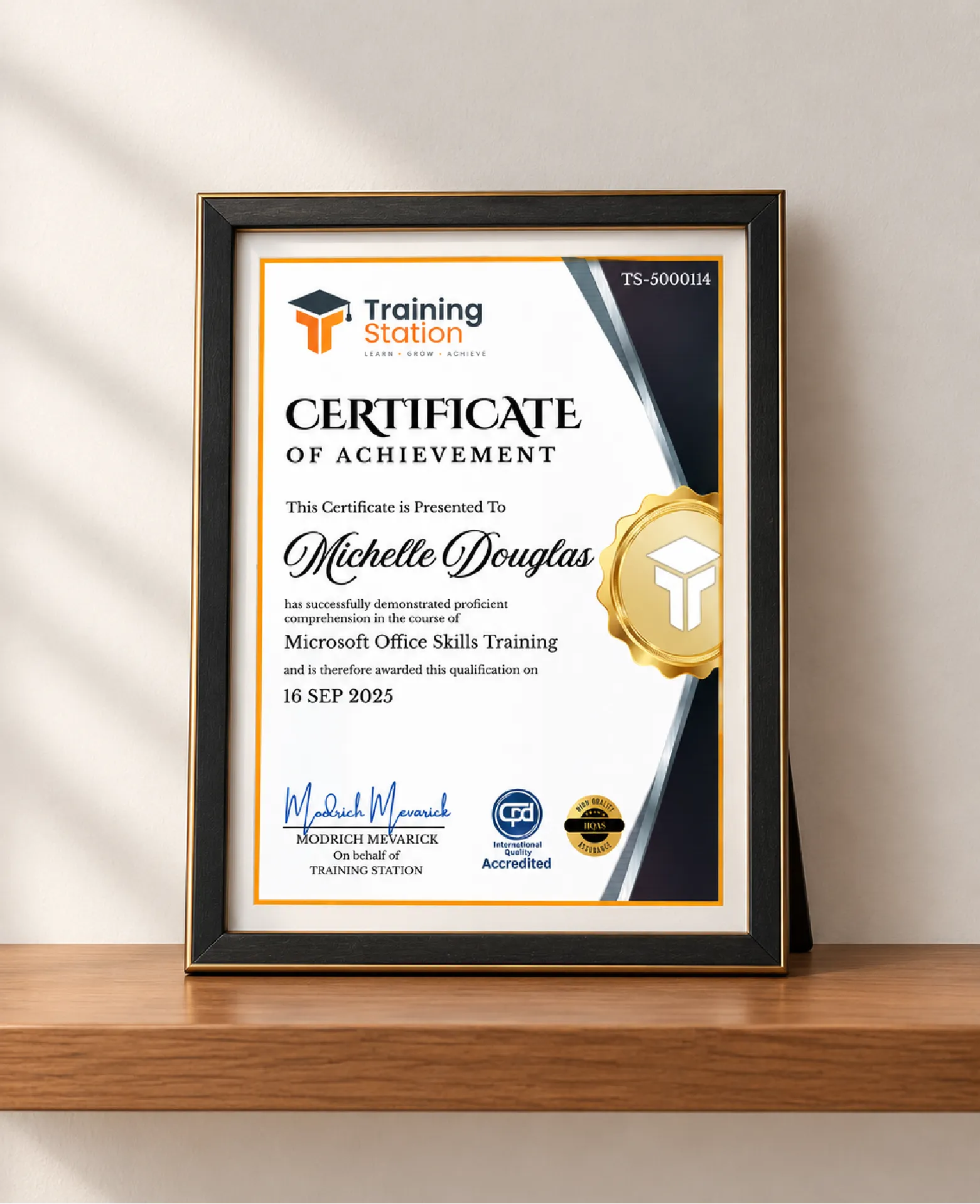
Celebrate your achievement with a CPD-IQ accredited certificate from Training Station! Perfect for showcasing your skills, boosting your career, and enhancing your professional profile.
Get this CourseOur Courses Accreditation



Frequently Asked Questions
Fully online through PDF materials and video lessons. Learn anytime, anywhere.
Self-paced: complete it in a week or spread it over months.
No. The course is beginner-friendly.
Yes. Instructor support is available Monday to Friday.
Yes. We offer a 14-day money-back guarantee.
 Access all courses for Only £99