
Skills that Improve Hiring Rates

- Access
- Lifetime
- Assistance
- Expert Tutor Support
- Flexibility
- Learn Anytime, Anywhere
Overview
Skills that Improve Hiring Rates
Overview
In today’s highly competitive job market, possessing technical knowledge alone is no longer enough to secure career opportunities and stand out from other candidates. Employers increasingly prioritize candidates who demonstrate strong interpersonal abilities, leadership potential, adaptability, problem-solving capabilities, and effective communication skills. The Skills that Improve Hiring Rates course is designed to help learners develop the essential professional competencies that employers actively seek across industries.
This comprehensive training program equips individuals with the practical skills necessary to increase employability, strengthen workplace performance, and accelerate career growth. Whether you are entering the workforce for the first time, changing careers, seeking promotions, or aiming to become a more valuable employee, this course provides a structured pathway to developing the personal and professional qualities that hiring managers value most.
Through carefully designed modules, learners will gain confidence, improve decision-making abilities, master communication techniques, develop leadership capabilities, enhance teamwork skills, and cultivate a growth-oriented mindset that supports long-term career success. By the end of this course, you will possess a toolkit of highly transferable skills that can significantly improve your hiring prospects and workplace effectiveness.
Course Description
The Skills that Improve Hiring Rates course is a complete professional development program focused on building the soft skills and workplace competencies that modern employers demand. While qualifications and technical expertise may help candidates secure interviews, it is often professional skills, emotional intelligence, adaptability, and leadership potential that determine hiring decisions and career advancement opportunities.
This course explores the foundations of self-improvement and personal growth before progressing into critical workplace skills such as communication, teamwork, negotiation, leadership, conflict resolution, critical thinking, time management, and creativity. Each module combines practical concepts with actionable strategies that learners can immediately implement in both professional and personal settings.
The Skills that Improve Hiring Rates course is suitable for learners from all backgrounds and industries. Whether you are a student preparing for your first job, a professional seeking advancement, an entrepreneur managing teams, or an individual looking to improve workplace performance, this course provides the essential knowledge and confidence needed to succeed in today’s evolving employment landscape.
By completing the Skills that Improve Hiring Rates course, learners will become more confident, employable, adaptable, and prepared to thrive in modern workplaces.
What You Will Learn in Skills that Improve Hiring Rates
Module 1: Introduction to Self-Improvement
This foundational module introduces the principles of continuous personal development and self-growth. Learners will understand why self-improvement is critical for career success and how personal development directly influences employability.
Key learning outcomes:
-
Understanding the importance of lifelong learning
-
Developing self-awareness and personal accountability
-
Identifying strengths and improvement areas
-
Setting meaningful personal and professional goals
-
Creating a roadmap for continuous development
Module 2: How to Motivate Yourself
Motivation plays a critical role in achieving professional goals and maintaining career momentum. This module teaches proven techniques for building and sustaining motivation.
Key learning outcomes:
-
Understanding intrinsic and extrinsic motivation
-
Overcoming procrastination
-
Developing positive habits
-
Building self-discipline
-
Maintaining motivation during challenges
Module 3: Grow Assertiveness
Assertiveness is a highly valued workplace skill that helps individuals communicate effectively while maintaining respect for others.
Key learning outcomes:
-
Understanding assertive communication
-
Setting healthy boundaries
-
Expressing opinions confidently
-
Managing workplace interactions professionally
-
Building stronger professional relationships
Module 4: Self Confidence and Self Esteem
Confidence significantly impacts interview performance, workplace effectiveness, and career progression. This module helps learners develop genuine confidence and positive self-belief.
Key learning outcomes:
-
Building self-confidence professionally
-
Improving self-esteem
-
Managing self-doubt
-
Presenting yourself effectively
-
Developing a positive mindset
Module 5: Improve Your Communication Skills
Communication is one of the most sought-after skills by employers. This module teaches learners how to communicate clearly, professionally, and persuasively.
Key learning outcomes:
-
Verbal communication techniques
-
Active listening skills
-
Non-verbal communication awareness
-
Professional writing practices
-
Building stronger workplace communication
Module 6: Manage Your Time Properly
Time management directly affects productivity, efficiency, and workplace success. This module provides practical methods for maximizing performance.
Key learning outcomes:
-
Prioritization techniques
-
Productivity improvement methods
-
Managing competing responsibilities
-
Avoiding common time-wasting habits
-
Achieving work-life balance
Module 7: Cultivate Growth Mindset
A growth mindset allows individuals to embrace challenges, learn from failures, and continuously improve.
Key learning outcomes:
-
Understanding fixed vs growth mindset
-
Embracing learning opportunities
-
Developing resilience
-
Improving adaptability
-
Achieving continuous personal growth
Module 8: All about Leadership Skills
Leadership skills are valuable regardless of job title. This module explores how effective leaders inspire, influence, and guide others.
Key learning outcomes:
-
Leadership fundamentals
-
Different leadership styles
-
Building trust and credibility
-
Inspiring team performance
-
Leading by example
Module 9: Think Critically and Solve Problem
Employers highly value individuals who can analyze situations and solve problems effectively.
Key learning outcomes:
-
Critical thinking frameworks
-
Root cause analysis
-
Creative problem-solving techniques
-
Decision-making models
-
Evaluating solutions effectively
Module 10: Learn Teamwork and Collaboration
Modern workplaces rely heavily on teamwork. This module teaches learners how to work effectively with diverse teams.
Key learning outcomes:
-
Team dynamics
-
Collaborative problem-solving
-
Building trust within teams
-
Managing group projects
-
Supporting team success
Module 11: Negotiate Effectively
Negotiation skills help professionals achieve better outcomes in workplace discussions and business interactions.
Key learning outcomes:
-
Negotiation principles
-
Preparing for negotiations
-
Managing objections
-
Creating win-win outcomes
-
Building negotiation confidence
Module 12: Stress Management
Managing stress is essential for maintaining productivity, health, and professional performance.
Key learning outcomes:
-
Understanding workplace stress
-
Stress reduction techniques
-
Building emotional resilience
-
Maintaining focus under pressure
-
Preventing burnout
Module 13: Being Competent to Decide Yourself
Strong decision-making skills help professionals act confidently and responsibly in workplace situations.
Key learning outcomes:
-
Decision-making processes
-
Evaluating alternatives
-
Managing uncertainty
-
Increasing decision confidence
-
Learning from decisions
Module 14: Influencing and Persuasion Skills
Influence and persuasion are essential skills for leadership, sales, customer service, and teamwork.
Key learning outcomes:
-
Ethical persuasion principles
-
Building credibility
-
Influencing stakeholders
-
Effective communication strategies
-
Developing professional influence
Module 15: Adaptability and Flexibility
Today’s workplaces change rapidly. Adaptability enables professionals to thrive in evolving environments.
Key learning outcomes:
-
Embracing change
-
Developing flexibility
-
Managing workplace transitions
-
Learning new skills quickly
-
Building career resilience
Module 16: Know How to Resolve Conflicts
Conflict resolution skills help maintain positive workplace relationships and productive teams.
Key learning outcomes:
-
Understanding workplace conflict
-
Managing disagreements professionally
-
Conflict resolution techniques
-
Building positive relationships
-
Creating collaborative solutions
Module 17: Planning and Organizing Skills
Organization and planning are critical for achieving goals efficiently and effectively.
Key learning outcomes:
-
Strategic planning methods
-
Goal setting frameworks
-
Project organization techniques
-
Resource management
-
Improving productivity and efficiency
Module 18: Being Creative and Innovative
Creativity and innovation help professionals identify opportunities, solve problems, and contribute new ideas.
Key learning outcomes:
-
Creative thinking techniques
-
Innovation strategies
-
Generating new ideas
-
Encouraging workplace innovation
-
Applying creativity to business challenges
Who Is This Course For?
The Skills that Improve Hiring Rates course is ideal for:
-
Students preparing to enter the workforce
-
Job seekers looking to improve employability
-
Graduates seeking competitive advantages
-
Professionals aiming for promotion opportunities
-
Team leaders and supervisors
-
Managers seeking stronger leadership skills
-
Entrepreneurs and business owners
-
Career changers entering new industries
-
Freelancers seeking professional growth
-
Anyone committed to personal and professional development
Requirements
There are no formal prerequisites for enrolling in the Skills that Improve Hiring Rates course.
Learners simply need:
-
A desire to improve career prospects
-
Interest in personal and professional development
-
Basic English comprehension
-
Access to a computer, tablet, or smartphone
-
Commitment to applying the concepts learned throughout the course
This course is designed to accommodate complete beginners while also providing valuable insights for experienced professionals.
Career Path
Completing the Skills that Improve Hiring Rates course can support career progression across a wide range of industries and professions, including:
-
Administrative Assistant
-
Customer Service Representative
-
Team Leader
-
Project Coordinator
-
Office Manager
-
Human Resources Assistant
-
Recruitment Coordinator
-
Business Development Executive
-
Sales Professional
-
Operations Coordinator
-
Supervisor
-
Training and Development Assistant
-
Entrepreneur
-
Management Trainee
-
Corporate Professional
The transferable skills developed throughout this course can significantly improve interview performance, workplace effectiveness, leadership potential, and long-term career advancement opportunities.
Frequently Asked Questions (FAQ)
1. What is the Skills that Improve Hiring Rates course?
The Skills that Improve Hiring Rates course is a professional development program designed to build the workplace skills employers value most, including communication, leadership, teamwork, problem-solving, confidence, and adaptability.
2. Is this course suitable for beginners?
Yes. The course is specifically designed for learners of all experience levels, including complete beginners.
3. How can this course improve my hiring prospects?
Employers consistently seek candidates with strong soft skills. This course helps develop the professional competencies that can make candidates more attractive during recruitment processes.
4. Will I learn practical workplace skills?
Absolutely. The course focuses on practical, real-world skills that can be applied immediately in professional environments.
5. Is leadership experience required?
No. The leadership module is suitable for individuals with or without prior leadership experience.
6. Can this course help with interviews?
Yes. Improved confidence, communication, critical thinking, and decision-making skills can significantly enhance interview performance.
7. Is this course useful for career advancement?
Yes. The skills covered are highly transferable and support promotion opportunities, leadership development, and increased workplace effectiveness.
8. How does the course address teamwork?
The course includes dedicated training on collaboration, communication, trust-building, and effective team participation.
9. Will I learn how to manage workplace stress?
Yes. The stress management module provides practical techniques for maintaining productivity and resilience under pressure.
10. Why are soft skills important in today’s job market?
Soft skills are increasingly recognized as critical indicators of workplace success. Employers value professionals who can communicate, collaborate, solve problems, adapt to change, and lead effectively.
Curriculum
- Introduction to Self-Improvement
- How to Motivate Yourself
- Grow Assertiveness
- Self Confidence and Self Esteem
- Improve Your Communication Skills
- Manage Your Time Properly
- Cultivate Growth Mindset
- All about Leadership Skills
- Think Critically and Solve Problem
- Learn Teamwork and Collaboration
- Negotiate Effectively
- Stress Management
- Being Competent to Decide Yourself
- Influencing and Persuasion Skills
- Adaptability and Flexibility
- Know How to Resolve Conflicts
- Planning and Organizing Skills
- Being Creative and Innovative
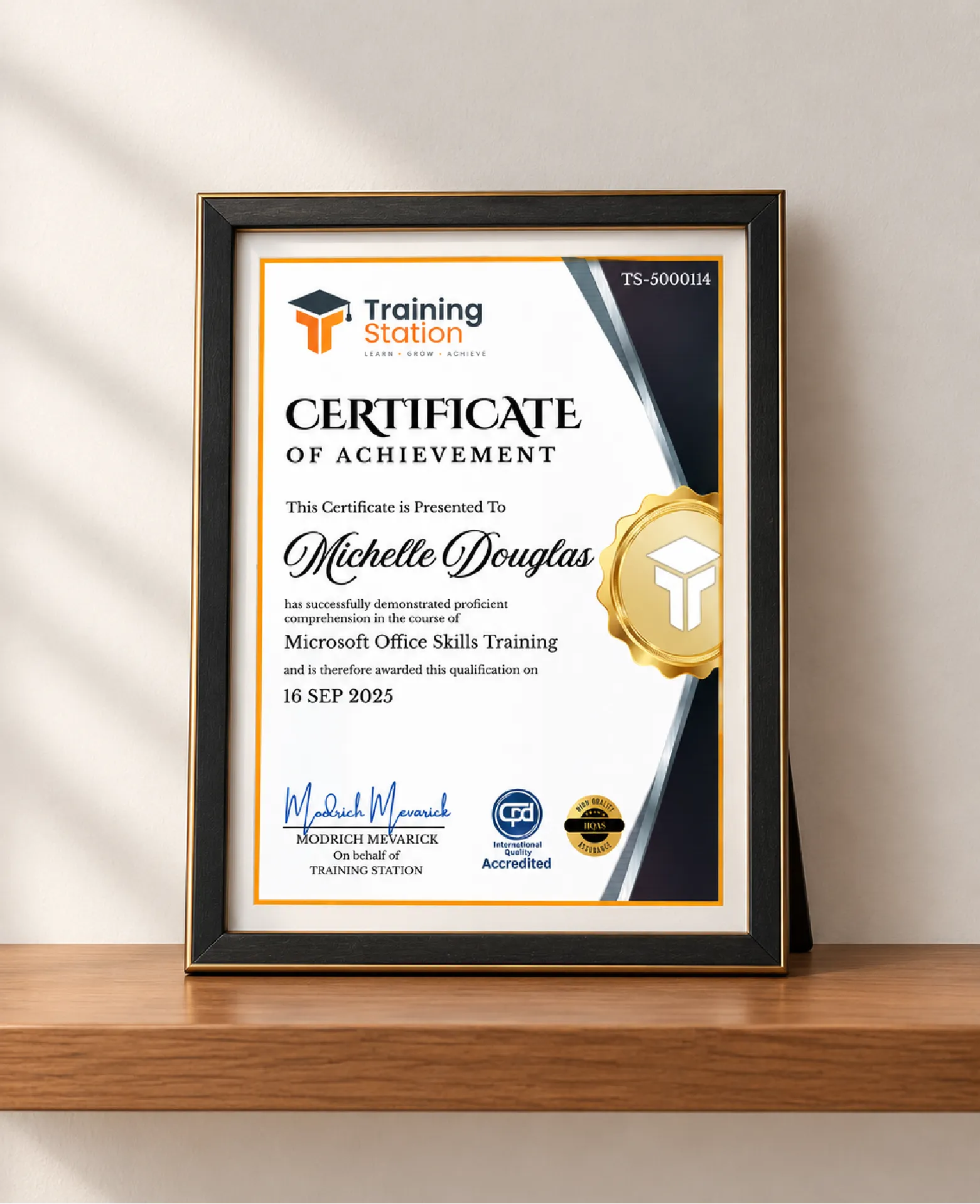
Celebrate your achievement with a CPD-IQ accredited certificate from Training Station! Perfect for showcasing your skills, boosting your career, and enhancing your professional profile.
Get this CourseOur Courses Accreditation



Frequently Asked Questions
Fully online through PDF materials and video lessons. Learn anytime, anywhere.
Self-paced: complete it in a week or spread it over months.
No. The course is beginner-friendly.
Yes. Instructor support is available Monday to Friday.
Yes. We offer a 14-day money-back guarantee.
 Access all courses for Only £99