
Level 1, 2, 3 Anti-Money Laundering (AML) Certificate

- Access
- Lifetime
- Assistance
- Expert Tutor Support
- Flexibility
- Learn Anytime, Anywhere
Overview
Level 1, 2, 3 Anti-Money Laundering (AML) Certificate
Get Ready to Build a Career in Anti-Money Laundering (AML) & Financial Compliance in the UK
Gain essential anti-money laundering knowledge, understand financial crime risks and compliance procedures, and build a strong foundation for career opportunities in the UK’s financial services and regulated business sectors!
✅ Master Anti-Money Laundering Fundamentals — Learn essential AML principles, money laundering risks, financial crime prevention concepts, and the core responsibilities involved in regulatory compliance.
✅ Develop Customer Due Diligence & Risk Assessment Knowledge — Explore customer due diligence procedures, risk-based approaches, customer verification checks, and methods used to assess and manage money laundering risks.
✅ Build Suspicious Activity & AML Compliance Knowledge — Understand suspicious transaction identification, internal reporting procedures, record keeping, AML controls, and the responsibilities of a Money Laundering Reporting Officer (MLRO).
✅ Explore Career Opportunities — Build industry-relevant knowledge to support your journey toward AML compliance assistant, financial crime support, compliance administration, and regulatory support roles across financial services, property businesses, professional services, and other regulated organisations.
Course Overview
Explore the principles of anti-money laundering compliance and the procedures used to identify and address financial crime risks with this Level 1, 2, 3 Anti-Money Laundering (AML) Certificate course.
The programme introduces money laundering risks and the responsibilities associated with AML compliance. You will examine the role of the Money Laundering Reporting Officer (MLRO), risk-based approaches to compliance and the principles of customer due diligence.
Further topics include record keeping, recognising suspicious activity and transactions, and the importance of staff awareness in supporting organisational AML procedures. Together, these subjects provide an understanding of how financial crime prevention measures are incorporated into relevant workplace practices.
Designed for learners interested in compliance, financial services and other sectors subject to AML requirements, the course provides foundational knowledge of anti-money laundering principles and responsibilities.
Key Curriculum Topics
-
Introduction to Money Laundering: Explore the nature of money laundering and the importance of AML measures.
-
Role of the Money Laundering Reporting Officer: Understand the responsibilities associated with AML oversight and reporting arrangements.
-
Risk-Based Approach: Examine how money laundering risks influence compliance measures.
-
Customer Due Diligence: Explore the principles involved in identifying and verifying customers.
-
Suspicious Activity and Transactions: Understand considerations involved in recognising and reporting suspicious activity.
-
Record Keeping and Staff Awareness: Examine the importance of maintaining relevant records and supporting staff understanding of AML responsibilities.
Course Curriculum
Module 1: Introduction to Money Laundering
This module introduces the subject of money laundering and establishes the foundational knowledge needed to understand AML compliance. Learners explore the nature of money laundering and why organisations need appropriate controls and awareness.
Main learning topics:
- Money laundering
- AML fundamentals
- Money laundering risks
- Importance of prevention and awareness
Module 2: The Role of the Money Laundering Reporting Officer
This module examines the responsibilities associated with the Money Laundering Reporting Officer role. Learners develop an understanding of how the role fits within an organisation’s AML arrangements and reporting responsibilities.
Main learning topics:
- Money Laundering Reporting Officer
- AML responsibilities
- Internal reporting
- Suspicious activity reporting
Module 3: Risk-Based Approach to Money Laundering
This module introduces a risk-based approach to managing money laundering risks. Learners consider how identifying and assessing risk supports appropriate AML controls and decision-making.
Main learning topics:
- Risk-based approach
- Money laundering risk
- Risk identification
- Risk management
Module 4: Customer Due Diligence
This module focuses on customer due diligence, an important component of AML compliance. Learners explore the purpose of customer checks and how due diligence contributes to identifying and managing potential risks.
Main learning topics:
- Customer due diligence
- Customer identification
- Customer risk
- AML checks
UK government guidance describes customer due diligence as checks used to identify customers and, where applicable, beneficial owners, with the level of due diligence reflecting the degree of risk.
Module 5: Record Keeping
This module examines the importance of maintaining appropriate records within an AML framework. Learners consider how accurate documentation supports compliance processes and provides evidence of procedures and controls.
Main learning topics:
- AML record keeping
- Customer records
- Compliance documentation
- Training records
HMRC guidance states that businesses subject to the Money Laundering Regulations need to retain records of customer due diligence, risk assessments, policies, controls, procedures and training.
Module 6: Suspicious Conduct and Transactions
This module focuses on recognising suspicious conduct and transactions within an AML context. Learners develop knowledge of reporting responsibilities and the importance of responding appropriately to potential money laundering concerns.
Main learning topics:
- Suspicious conduct
- Suspicious transactions
- Internal reporting
- AML reporting responsibilities
Current HMRC guidance states that staff should understand how and when to make internal disclosures and how suspicious activity should be reported through the appropriate processes.
Module 7: Staff Training Awareness and Training
This module explores the importance of staff awareness and training in maintaining effective AML procedures. Learners consider how training helps employees understand money laundering risks, reporting responsibilities and organisational controls.
Main learning topics:
- Staff AML awareness
- Employee training
- AML responsibilities
- Training procedures
HMRC’s current guidance identifies staff training as a core component of effective AML compliance and states that relevant employees should receive appropriate training on applicable risks, laws and procedures.
Who Is This Course For?
This course is suitable for beginners, employees and professionals who want to develop foundational knowledge of anti-money laundering and AML compliance. It may be useful for learners interested in compliance officer roles, AML support positions, financial crime prevention, compliance administration and regulated business environments.
It can also be relevant to people working in financial services, property, professional services, money services and other sectors where AML procedures and customer due diligence are important. Existing employees may find the course useful for improving their awareness of suspicious conduct, reporting responsibilities, record keeping and risk-based approaches.
Businesses may also consider online anti-money laundering training for companies as part of broader staff awareness and compliance development. However, organisations remain responsible for ensuring that their workplace training is appropriate to their own activities and regulatory obligations.
Requirements
No formal entry requirements have been supplied for this course. The curriculum begins with an introduction to money laundering, making the subject accessible to learners seeking foundational AML knowledge.
Specific employers, regulated organisations or professional roles may have additional qualification, experience or training requirements. Learners should check the requirements of their intended role separately, particularly where AML responsibilities form part of a regulated position.
Skills You Can Develop
AML Awareness — Develop a structured understanding of money laundering and the purpose of anti-money laundering controls.
Risk Assessment Awareness — Build knowledge of a risk-based approach to identifying and managing money laundering risks.
Customer Due Diligence Knowledge — Understand the role of customer due diligence within AML compliance and customer risk management.
Reporting Awareness — Develop knowledge of responsibilities surrounding suspicious conduct, transactions and internal reporting.
Record Keeping — Understand why accurate AML records and compliance documentation are important.
MLRO Role Awareness — Develop knowledge of the responsibilities associated with the Money Laundering Reporting Officer.
Staff Training Awareness — Understand how staff awareness and training contribute to effective AML procedures.
Learning Outcomes
- Understand the fundamental principles of money laundering and AML.
- Explain the purpose of anti-money laundering compliance.
- Describe the role and responsibilities of a Money Laundering Reporting Officer.
- Explain the purpose of a risk-based approach to money laundering.
- Recognise the importance of identifying and managing AML risks.
- Describe the purpose of customer due diligence.
- Explain the importance of appropriate AML record keeping.
- Recognise examples of suspicious conduct and transactions within an AML context.
- Describe the importance of reporting suspicious activity through appropriate procedures.
- Explain the role of staff awareness and training in supporting AML compliance.
Career Paths
Compliance Officer
Typical UK Salary: £27,000–£46,000 typically, with senior compliance officers and managers potentially earning more.
How This Course May Be Relevant: The course covers AML compliance, risk-based approaches, customer due diligence, record keeping, suspicious transactions and staff training, all of which are relevant areas within compliance work. A compliance officer role may also require additional qualifications, experience and sector-specific knowledge.
AML Compliance Support / AML Analyst
Typical UK Salary: Salary varies significantly by employer, sector, location and experience; specialist AML roles should be checked against current UK vacancies.
How This Course May Be Relevant: The curriculum provides foundational knowledge of AML, customer due diligence, risk-based approaches and suspicious conduct, which can be relevant to entry-level or support work connected with financial crime prevention.
Compliance Administrator
Typical UK Salary: Salary varies by employer, location, sector and experience.
How This Course May Be Relevant: Record keeping, customer due diligence, reporting awareness and staff training are relevant to administrative activities within compliance-focused teams.
Risk and Compliance Roles
Typical UK Salary: Salary varies according to seniority, sector, location, qualifications and experience.
How This Course May Be Relevant: The risk-based approach module introduces learners to the importance of identifying and managing money laundering risks, providing useful foundational knowledge for broader risk and compliance career development.
Compliance professionals work across sectors including banking and financial services, insurance, property, retail, technology, health and social care, manufacturing and transport.
FAQs
What is AML training?
AML training is education that helps learners understand money laundering risks, relevant controls, customer due diligence, reporting responsibilities and staff awareness. This course provides foundational knowledge across these areas.
What does an anti-money laundering course cover?
This course covers seven areas: introduction to money laundering, the Money Laundering Reporting Officer role, risk-based approaches, customer due diligence, record keeping, suspicious conduct and transactions, and staff awareness and training.
Is online anti-money laundering training suitable for beginners?
Yes. The curriculum starts with an introduction to money laundering before progressing into AML responsibilities, risk, customer due diligence, record keeping and suspicious transactions. No formal entry requirements have been supplied.
What is AML compliance?
AML compliance refers to the policies, procedures, controls and responsibilities used by relevant organisations to manage money laundering risks and meet applicable legal and regulatory obligations. The course introduces several core areas of AML compliance.
Can this course support a career in AML or compliance?
The course can provide foundational knowledge relevant to AML and compliance-related roles. It does not automatically qualify learners for a specific regulated profession or replace additional qualifications, workplace experience or role-specific training where these are required.
Curriculum
- Introduction to Money Laundering
- The Role of The Money Laundering Reporting Officer
- Risk-based Approach to Money Laundering
- Customer Due Diligence
- Record Keeping
- Suspicious Conduct and Transactions
- Staff Training Awareness and Training
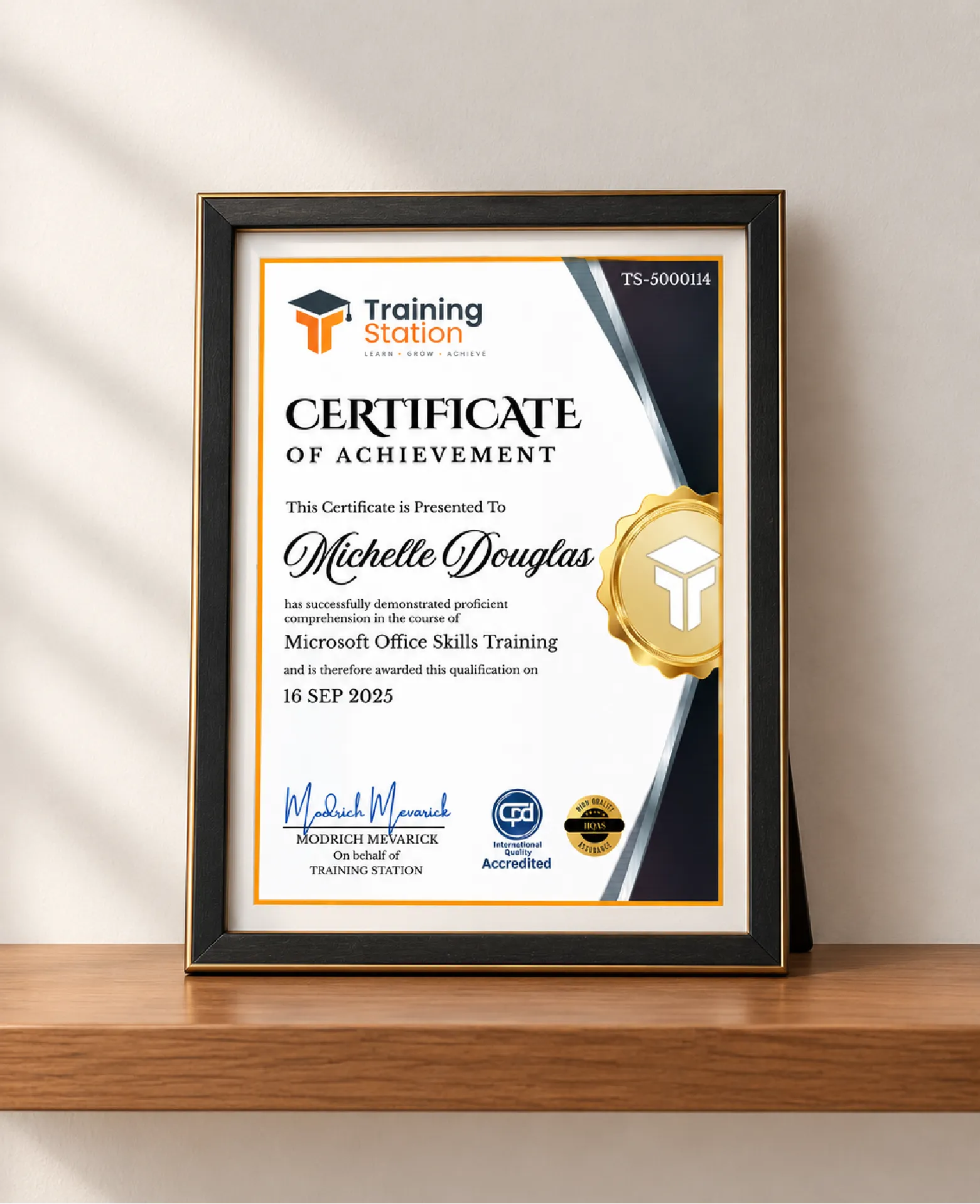
Celebrate your achievement with a CPD-IQ accredited certificate from Training Station! Perfect for showcasing your skills, boosting your career, and enhancing your professional profile.
Get this CourseOur Courses Accreditation





Frequently Asked Questions
Fully online through PDF materials and video lessons. Learn anytime, anywhere.
Self-paced: complete it in a week or spread it over months.
No. The course is beginner-friendly.
Yes. Instructor support is available Monday to Friday.
Yes. We offer a 14-day money-back guarantee.
 Access all courses for Only £99