
Construction, Design and Management Training

- Access
- Lifetime
- Assistance
- Expert Tutor Support
- Flexibility
- Learn Anytime, Anywhere
Overview
Construction, Design and Management Training
1. Overview
The Construction, Design and Management Training course is a comprehensive professional development programme designed to provide learners with an in-depth understanding of Construction (Design and Management) Regulations and their practical application across construction projects. Whether you are involved in project planning, design, construction management, site supervision, or health and safety compliance, this course delivers the essential knowledge needed to understand legal obligations, manage risks, and promote safer construction environments.
The construction industry remains one of the most heavily regulated sectors due to the inherent risks associated with design, planning, and site operations. Effective implementation of CDM principles helps ensure that health and safety considerations are integrated throughout every phase of a project, from initial concept and design through construction and final handover.
This Construction, Design and Management Training course provides a structured learning pathway covering CDM regulations, legal requirements, duty holder responsibilities, construction phase planning, welfare provisions, health and safety documentation, project planning periods, and buildability considerations. By the end of the course, learners will possess the confidence and competence required to contribute effectively to safer, legally compliant, and more efficient construction projects.
Whether you are new to the industry or looking to strengthen your professional expertise, this course offers valuable insights that can be immediately applied within real-world construction environments.
2. Course Description
The Construction, Design and Management Training course has been carefully developed to help construction professionals understand and apply CDM principles throughout the project lifecycle. The programme explores how legislation influences construction activities, why effective planning is essential, and how different stakeholders contribute to creating safer workplaces.
Throughout the course, learners will gain practical knowledge of the responsibilities assigned to duty holders under CDM regulations and understand how collaboration between clients, designers, principal designers, principal contractors, and contractors contributes to project success. The training also examines critical documentation such as Construction Phase Plans and Health and Safety Files, ensuring participants understand their purpose, content, and importance.
In addition, the course explores welfare facilities, project planning periods, and design considerations that improve construction buildability while reducing health and safety risks. Learners will develop a strong foundation in legal compliance, risk management, and project coordination, enabling them to support safer and more productive construction operations.
The Construction, Design and Management Training programme combines regulatory knowledge with practical applications, making it suitable for a wide range of construction and design professionals seeking to improve compliance standards and professional performance.
3. What You Will Learn in Construction, Design and Management Training
Module 1 – Introduction to Construction, Design, and Management (CDM) Regulations
This introductory module provides a comprehensive overview of CDM Regulations and their significance within the construction industry. Learners will gain an understanding of why CDM was introduced, the objectives behind the regulations, and how they contribute to improving health and safety performance throughout construction projects.
Topics covered include:
-
The purpose and scope of CDM Regulations
-
The importance of health and safety management
-
The evolution of CDM legislation
-
Key principles underlying CDM compliance
-
Benefits of integrating safety into project planning
-
Understanding risk reduction through proactive management
By completing this module, learners will understand the fundamental role CDM plays in modern construction management and project delivery.
Module 2 – Regulations and Legislation
This module explores the legal framework that governs construction activities and examines how legislation influences decision-making across construction projects.
Learners will develop knowledge of:
-
Core legislation affecting construction projects
-
Legal duties imposed by CDM Regulations
-
Employer and employee responsibilities
-
Regulatory enforcement mechanisms
-
Compliance requirements and legal consequences
-
Documentation and record-keeping obligations
The module helps learners build confidence in navigating complex legal requirements while ensuring projects remain compliant with current regulations.
Module 3 – Key Roles and Responsibilities of Duty Holders
Understanding duty holder responsibilities is critical for successful CDM implementation. This module examines the various stakeholders involved in construction projects and outlines their legal obligations.
Key learning areas include:
-
Responsibilities of clients
-
Duties of principal designers
-
Duties of designers
-
Responsibilities of principal contractors
-
Contractor obligations
-
Worker responsibilities
-
Coordination and communication requirements
-
Managing cooperation among project participants
Upon completion, learners will understand how effective collaboration between duty holders contributes to safer and more efficient project delivery.
Module 4 – Construction Phase Plan (CPP)
The Construction Phase Plan is one of the most important documents within CDM compliance. This module provides detailed guidance on developing, implementing, and managing an effective CPP.
Topics include:
-
Purpose of the Construction Phase Plan
-
Legal requirements relating to CPPs
-
Essential components of a compliant plan
-
Site-specific risk management procedures
-
Emergency arrangements and response planning
-
Monitoring and updating project documentation
-
Best practices for implementation
Learners will gain practical knowledge that enables them to contribute to the preparation and maintenance of robust construction phase plans.
Module 5 – Welfare Facilities on Construction Sites
Adequate welfare facilities are essential for worker health, wellbeing, and productivity. This module explores the standards and requirements relating to welfare provision on construction sites.
Areas covered include:
-
Legal requirements for welfare facilities
-
Sanitary and washing facilities
-
Drinking water provisions
-
Rest areas and welfare accommodation
-
Changing facilities and storage areas
-
Welfare management responsibilities
-
Inspection and maintenance considerations
By understanding welfare requirements, learners will be better equipped to help create healthier and safer working environments.
Module 6 – CDM Health and Safety File Contents
The Health and Safety File serves as a crucial source of information for future maintenance, refurbishment, and demolition activities. This module explains the purpose, structure, and management of this important document.
Key topics include:
-
Purpose of the Health and Safety File
-
Information required within the file
-
Asset-specific safety information
-
Design and construction records
-
Maintenance and operational considerations
-
Responsibilities for preparation and management
-
Updating and transferring documentation
Learners will understand how accurate and comprehensive health and safety records support long-term risk management.
Module 7 – CDM Planning Period and How Much Time You Need
Effective planning forms the foundation of safe construction projects. This module examines the planning period requirements under CDM and explores how adequate preparation contributes to successful project outcomes.
Topics covered include:
-
Importance of pre-construction planning
-
Determining appropriate planning timescales
-
Risk assessment during project planning
-
Resource allocation considerations
-
Coordination between stakeholders
-
Preventing delays through proactive planning
-
Balancing project schedules with safety requirements
Learners will gain insight into how realistic planning periods help reduce risks and improve project performance.
Module 8 – Considering Construction Buildability in CDM Design
The final module focuses on buildability and the integration of construction considerations during the design phase. Learners will explore how design decisions influence construction safety, efficiency, and project outcomes.
Topics include:
-
Principles of buildability in construction design
-
Designing out risks where possible
-
Improving construction efficiency through design
-
Collaboration between designers and contractors
-
Minimising hazards during construction
-
Long-term maintenance considerations
-
Practical examples of buildable design solutions
This module equips learners with the knowledge required to support safer, smarter, and more practical design decisions throughout construction projects.
4. Who Is This Course For?
The Construction, Design and Management Training course is suitable for a wide range of professionals involved in construction, design, project management, and health and safety functions.
This course is ideal for:
-
Construction managers
-
Site supervisors
-
Project managers
-
Principal contractors
-
Contractors and subcontractors
-
Designers and architects
-
Civil engineers
-
Quantity surveyors
-
Health and safety professionals
-
Facilities managers
-
Building consultants
-
Construction administrators
-
Property developers
-
Individuals seeking a career in construction management
It is equally valuable for both newcomers to the construction industry and experienced professionals wishing to strengthen their understanding of CDM compliance.
5. Requirements
The Construction, Design and Management Training course has no formal entry requirements.
Learners simply need:
-
An interest in construction health and safety
-
Basic literacy and communication skills
-
Access to a computer, tablet, or smartphone
-
Internet connectivity for online learning
-
Motivation to develop professional construction knowledge
No prior experience in construction management or CDM regulations is required, making the course accessible to beginners while remaining highly beneficial for experienced industry professionals.
6. Career Path
Completing the Construction, Design and Management Training course can support progression into various construction and health and safety-related roles.
Potential career opportunities include:
-
Construction Manager
-
Site Manager
-
Project Manager
-
Principal Contractor
-
Construction Supervisor
-
Health and Safety Coordinator
-
Health and Safety Advisor
-
Principal Designer Support Officer
-
Building Inspector
-
Facilities Manager
-
Construction Consultant
-
Property Development Manager
-
Compliance Officer
-
Construction Planning Coordinator
The knowledge gained through this course can also contribute to professional development and support individuals seeking greater responsibilities within construction project management and compliance roles.
7. FAQ
1. What is Construction, Design and Management Training?
Construction, Design and Management Training provides learners with knowledge of CDM Regulations, legal responsibilities, health and safety requirements, and best practices for managing construction projects safely and efficiently.
2. Do I need previous construction experience to take this course?
No. The course is designed for both beginners and experienced professionals. All topics are introduced clearly and progressively, making the training accessible to learners with varying levels of experience.
3. What are CDM Regulations?
CDM Regulations are legal requirements designed to improve health, safety, and welfare throughout construction projects by defining responsibilities and promoting effective risk management.
4. Who should complete this training?
The course is suitable for construction managers, contractors, designers, project managers, health and safety professionals, and anyone involved in construction project planning or delivery.
5. Why is CDM compliance important?
CDM compliance helps reduce workplace accidents, improves project coordination, ensures legal compliance, protects workers, and contributes to successful project outcomes.
6. What is a Construction Phase Plan?
A Construction Phase Plan is a document outlining health and safety arrangements, site rules, risk management procedures, and project-specific safety measures during construction activities.
7. What is included in a Health and Safety File?
The Health and Safety File contains information required for future maintenance, refurbishment, operation, and demolition activities, helping manage risks throughout a building’s lifecycle.
8. How long does it take to complete the course?
The completion time varies depending on individual learning pace. Most learners can progress through the course modules flexibly according to their schedule.
9. Will this course help my career progression?
Yes. The knowledge gained can support career development in construction management, project management, site supervision, compliance, and health and safety roles.
10. What skills will I gain from Construction, Design and Management Training?
You will develop knowledge of CDM Regulations, legal compliance, duty holder responsibilities, construction planning, welfare requirements, health and safety documentation, buildability considerations, and risk management practices that are highly valuable within the construction industry.
Curriculum
- Introduction to Construction, Design, and Management (CDM) Regulations
- Regulations and Legislation
- Key Roles and Responsibilities of Duty Holders
- Construction Phase Plan (CPP)
- Welfare Facilities on Construction Sites
- CDM Health And Safety File Contents
- CDM Planning Period and How Much Time You Need
- Considering Construction Buildability in CDM Design
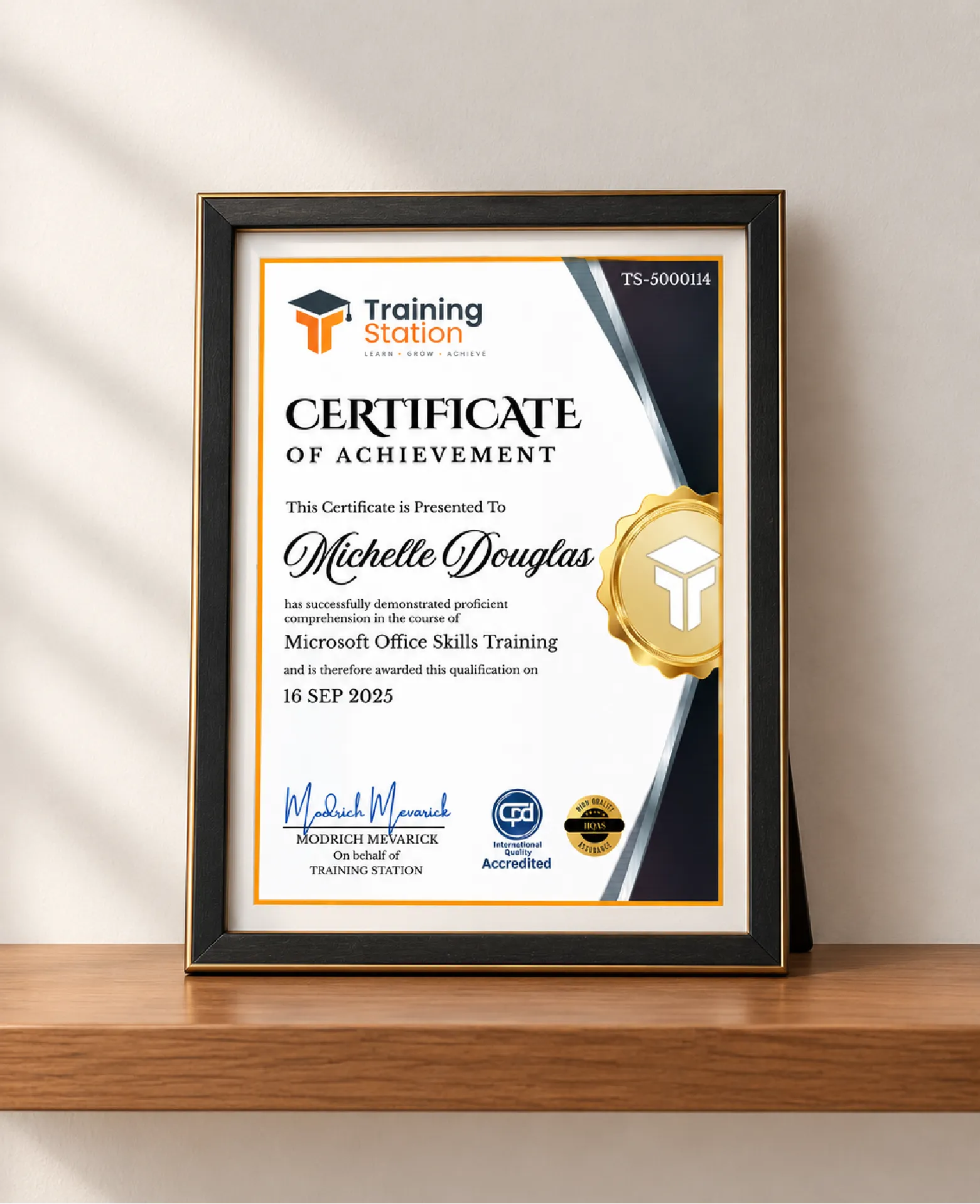
Celebrate your achievement with a CPD-IQ accredited certificate from Training Station! Perfect for showcasing your skills, boosting your career, and enhancing your professional profile.
Get this CourseOur Courses Accreditation


Frequently Asked Questions
Fully online through PDF materials and video lessons. Learn anytime, anywhere.
Self-paced: complete it in a week or spread it over months.
No. The course is beginner-friendly.
Yes. Instructor support is available Monday to Friday.
Yes. We offer a 14-day money-back guarantee.
 Access all courses for Only £99