
Car Mechanic and Repair Training Diploma
- Access
- Lifetime
- Assistance
- Expert Tutor Support
- Flexibility
- Learn Anytime, Anywhere
Overview
Car Mechanic and Repair Training Diploma
Get Ready to Build a Career as a Car Mechanic in the UK
Develop essential car mechanic knowledge, understand vehicle maintenance principles, and build a strong foundation for exciting career opportunities in the UK’s automotive servicing and repair industry!
✅ Understand Car Mechanic Fundamentals — Learn how car engines operate, explore essential automotive components, and understand basic vehicle maintenance principles.
✅ Develop Engine & Automotive Systems Knowledge — Explore drivetrain operations, fuel and ignition systems, cooling mechanisms, and essential automotive electrical components.
✅ Build Vehicle Servicing & Maintenance Awareness — Understand braking systems, steering and suspension, air conditioning, exhaust systems, and key vehicle maintenance considerations.
✅ Explore Career Opportunities — Build foundational knowledge relevant to car mechanics, vehicle servicing, automotive maintenance, and repair support roles in garages, dealerships, MOT centres, and automotive workshops.
Course Overview
Explore the mechanical and electrical systems involved in vehicle operation and maintenance with this Car Mechanic and Repair Training Diploma. The programme introduces automotive components and the principles relevant to understanding car maintenance and servicing.
The curriculum begins with car maintenance fundamentals and preparation, providing an overview of the considerations involved in vehicle upkeep. It also examines engines and drivetrain systems, exploring how these components contribute to vehicle operation.
Further topics include fuel delivery, ignition and cooling systems, alongside air conditioning, exhaust and electrical components. Learners also examine braking, steering and suspension, introducing the functions of systems that influence vehicle control and operation.
Designed for car enthusiasts and learners interested in automotive maintenance, the course provides introductory knowledge of vehicle systems and their relevance to servicing, repair-related study and further technical training.
Key Curriculum Topics
-
Car Maintenance Fundamentals and Preparation: Explore introductory maintenance principles and preparation considerations.
-
Engine and Drivetrain Systems: Understand the functions of engines and drivetrain components.
-
Fuel, Ignition and Cooling Systems: Examine how these systems support engine operation.
-
Air Conditioning, Exhaust and Electrical Systems: Explore the functions of additional vehicle systems.
-
Braking, Steering and Suspension: Understand the roles of systems involved in vehicle control and handling.
Course Curriculum
Module 1: Introduction to Car Maintenance
Explore the fundamentals of car maintenance and become familiar with the importance of understanding vehicle systems and their upkeep.
Main learning topics:
-
Car maintenance fundamentals
-
Vehicle components
-
Maintenance principles
-
Introduction to automotive systems
Module 2: Being Prepared
Learn about preparation in the context of car maintenance. This module introduces the importance of being prepared before approaching vehicle maintenance tasks.
Main learning topics:
-
Preparation for car maintenance
-
Maintenance readiness
-
Awareness of vehicle requirements
-
Preparing for maintenance tasks
Module 3: The Engine
Study the car engine and its role in vehicle operation. This module introduces a central automotive system and provides a foundation for understanding other vehicle components.
Main learning topics:
-
Engine fundamentals
-
Engine components
-
Engine operation
-
Engine maintenance awareness
Module 4: The Drivetrain
Explore the drivetrain and its role in transmitting power to move a vehicle. Develop introductory knowledge of this important group of automotive components.
Main learning topics:
-
Drivetrain fundamentals
-
Drivetrain components
-
Power transmission
-
Drivetrain maintenance awareness
Module 5: The Fuel System
Learn about the fuel system and its role in supplying fuel for engine operation. This module introduces an essential area of automotive maintenance.
Main learning topics:
-
Fuel system fundamentals
-
Fuel delivery
-
Fuel system components
-
Fuel system maintenance awareness
Module 6: The Ignition System
Explore the ignition system and its relationship with engine operation. This module introduces the purpose of ignition components within a vehicle’s mechanical systems.
Main learning topics:
-
Ignition system fundamentals
-
Ignition components
-
Ignition and engine operation
-
Ignition system maintenance awareness
Module 7: The Cooling System
Study the vehicle cooling system and its role in managing engine temperature during operation.
Main learning topics:
-
Cooling system fundamentals
-
Engine temperature management
-
Cooling system components
-
Cooling system maintenance awareness
Module 8: The Air Conditioning System
Explore the air conditioning system and its role in providing cabin climate control. Become familiar with this area of vehicle technology and maintenance.
Main learning topics:
-
Automotive air conditioning
-
Air conditioning system components
-
Cabin climate control
-
Air conditioning maintenance awareness
Module 9: The Exhaust System
Learn about the exhaust system and its place within the overall operation of a vehicle.
Main learning topics:
-
Exhaust system fundamentals
-
Exhaust system components
-
Exhaust system function
-
Exhaust system maintenance awareness
Module 10: The Electrical System
Explore the electrical system and its importance to vehicle operation. This module introduces another major area of automotive technology.
Main learning topics:
-
Automotive electrical systems
-
Electrical system components
-
Electrical system functions
-
Electrical maintenance awareness
Module 11: The Braking System
Study the braking system and its essential role in controlling vehicle speed and stopping safely.
Main learning topics:
-
Braking system fundamentals
-
Brake components
-
Braking system function
-
Brake maintenance awareness
Module 12: Steering and Suspension
Explore steering and suspension systems and their contributions to vehicle control, handling and stability.
Main learning topics:
-
Steering system fundamentals
-
Suspension system fundamentals
-
Vehicle handling and stability
-
Steering and suspension maintenance awareness
Who Is This Course For?
The Car Mechanic and Repair Training Diploma may suit learners who want to build foundational knowledge of vehicle systems before pursuing further technical education or practical experience.
-
Aspiring car mechanics: Explore engines, drivetrains, fuel systems, brakes and other topics relevant to automotive repair.
-
Automotive service assistant applicants: Become familiar with vehicle components and maintenance terminology that may complement entry-level workplace learning.
-
Garage and workshop trainees: Build introductory knowledge of the systems they may encounter during supervised practical training.
-
Car enthusiasts: Understand the main systems that contribute to vehicle operation and maintenance.
-
People considering a career change: Explore automotive maintenance before deciding whether to pursue vocational training or workshop employment.
-
Vehicle servicing staff: Revisit foundational knowledge of engines, cooling, electrical systems, brakes and suspension.
-
Automotive students: Use the curriculum as an introduction or revision resource alongside any formal training they undertake.
-
Learners researching a Level 2 car mechanic course: Explore the subject areas involved in automotive maintenance before comparing recognised vocational qualifications and their entry requirements.
The course is an introduction to automotive systems. Learners who want to perform professional repairs should pursue suitable practical instruction and check the qualifications required by employers.
Requirements
No formal entry requirements have been supplied for the Car Mechanic and Repair Training Diploma.
-
No previous automotive work experience has been specified as mandatory.
-
No GCSEs, A-levels or other academic qualifications have been listed.
-
No professional registration or licence requirements have been provided for enrolment.
The course may interest beginners who want an introduction to car maintenance. Previous mechanical knowledge may be helpful, but it has not been stated as a formal requirement.
If your goal is to work as a professional car mechanic, check the requirements of relevant employers and vocational training providers. Practical experience and additional training may be necessary to develop the competence required for vehicle servicing, diagnostics and repairs.
Skills You Can Develop
-
Automotive maintenance awareness — Develop an understanding of car maintenance principles and the importance of preparing for maintenance tasks.
-
Engine system knowledge — Become familiar with the engine’s role and its main components.
-
Drivetrain awareness — Understand the drivetrain’s function in transmitting power through a vehicle.
-
Fuel system knowledge — Explore the purpose of the fuel system and its contribution to engine operation.
-
Ignition system awareness — Develop introductory knowledge of ignition systems and their relationship with engine operation.
-
Cooling system knowledge — Understand why engine temperature management is important.
-
Air conditioning system awareness — Become familiar with automotive air conditioning and cabin climate control.
-
Exhaust system knowledge — Explore the purpose and main functions of the exhaust system.
-
Electrical system awareness — Develop introductory knowledge of automotive electrical systems and their functions.
-
Braking system awareness — Understand the role of the braking system in vehicle control and stopping.
-
Steering and suspension knowledge — Explore the systems associated with vehicle handling and stability.
-
Automotive terminology — Become familiar with technical terms relating to the 12 areas covered by the curriculum.
These skills describe foundational knowledge rather than proven hands-on repair abilities. Practical competence requires appropriate training and experience.
Learning Outcomes
By the end of the course, learners should be able to:
-
Explain the fundamentals of car maintenance and the importance of preparation.
-
Describe the role of the engine in vehicle operation.
-
Identify the purpose of the drivetrain and its contribution to power transmission.
-
Explain the function of the fuel system.
-
Describe the role of the ignition system in engine operation.
-
Explain the importance of the cooling system in managing engine temperature.
-
Identify the purpose of the air conditioning system in vehicle climate control.
-
Describe the function of the exhaust and electrical systems.
-
Explain the importance of the braking system in vehicle control and stopping.
-
Describe the roles of steering and suspension in vehicle handling and stability.
Career Paths
The course introduces automotive systems that may be relevant to learners exploring vehicle maintenance careers. The salary figures below are broad, indicative UK estimates rather than guaranteed earnings. Actual pay depends on location, employer, experience, specialisation and qualifications.
Car Mechanic
Typical UK Salary: Approximately £24,000–£36,000 per year.
How This Course May Be Relevant: The engine, drivetrain, fuel, ignition, cooling, braking and electrical modules introduce subjects relevant to car mechanics. Professional work usually requires practical repair experience and may require recognised vocational qualifications. This course alone does not establish professional competence.
Vehicle Service Technician
Typical UK Salary: Approximately £25,000–£38,000 per year.
How This Course May Be Relevant: Knowledge of vehicle systems, including engines, brakes, steering and suspension, can provide useful background for further technician training. Employers may require practical servicing skills, diagnostic abilities and relevant qualifications.
Automotive Workshop Assistant
Typical UK Salary: Approximately £21,000–£28,000 per year.
How This Course May Be Relevant: The course introduces automotive terminology and major vehicle components that may help learners prepare for entry-level workshop opportunities. Duties and supervision requirements vary by employer.
Vehicle Maintenance Technician
Typical UK Salary: Approximately £25,000–£38,000 per year.
How This Course May Be Relevant: The curriculum covers several systems relevant to vehicle maintenance, including cooling, fuel, exhaust, electrical and braking systems. Further training and hands-on experience are important for carrying out maintenance work safely and competently.
Automotive Parts Adviser
Typical UK Salary: Approximately £22,000–£30,000 per year.
How This Course May Be Relevant: Familiarity with vehicle systems and component terminology may support work involving automotive parts and customer enquiries. Product knowledge, inventory systems and customer service skills may require additional workplace training.
Garage Service Adviser
Typical UK Salary: Approximately £23,000–£32,000 per year.
How This Course May Be Relevant: Understanding the basic functions of engines, brakes, cooling systems and other vehicle components can provide useful technical background when communicating about vehicle servicing. The role may also require customer service, administrative and workshop coordination skills.
Career guidance: A car mechanic diploma course can help learners explore automotive subjects, but the title alone does not establish an accredited or regulated qualification. Anyone planning to enter the industry should check the specific training and experience required for their preferred role.
FAQs
1. What is the Car Mechanic and Repair Training Diploma?
The Car Mechanic and Repair Training Diploma is a course introducing 12 areas of automotive maintenance, including engines, drivetrains, fuel systems, ignition, cooling, air conditioning, exhausts, electrical systems, brakes, steering and suspension.
2. What will I learn in an online car mechanic course in the UK?
You will explore the main systems found in cars and their functions. The curriculum covers car maintenance, engine operation, power transmission, fuel delivery, ignition, cooling, air conditioning, exhausts, electrical systems, braking, steering and suspension.
3. Is this course equivalent to a Level 2 car mechanic course?
The supplied information does not establish that this diploma is equivalent to a regulated or recognised Level 2 car mechanic qualification. If you need a formal vocational qualification for employment or further study, check the awarding organisation, qualification level, accreditation and practical assessment requirements before enrolling.
4. Is this car repair training course suitable for beginners?
The course begins with an introduction to car maintenance and progresses through major automotive systems. It may therefore be suitable for learners seeking foundational knowledge. No formal entry requirements have been supplied, although professional repair work requires appropriate practical training and experience.
5. What are the main car maintenance systems covered in the course?
The curriculum covers the engine, drivetrain, fuel system, ignition system, cooling system, air conditioning system, exhaust system, electrical system, braking system, steering and suspension. It also introduces maintenance fundamentals and preparation.
6. Can I become a car mechanic after completing this diploma?
The course may provide useful introductory knowledge for someone considering a career as a car mechanic. However, completing it alone does not demonstrate practical repair competence or guarantee employment. Employers may require recognised vocational qualifications, workshop experience and additional technical training.
7. What is the difference between a car mechanic diploma and practical car repair training?
A car mechanic diploma course may introduce automotive systems and their functions, while practical car repair training develops hands-on abilities such as inspecting, servicing, diagnosing and repairing vehicles. The supplied curriculum focuses on automotive subject knowledge and does not specify practical assessments. Check the course details and any additional training requirements before deciding whether it meets your career goals.
Curriculum
- Introduction to Car Maintenance
- Being Prepared
- The Engine
- The Drivetrain
- The Fuel System
- The Ignition System
- The Cooling System
- The Air Conditioning System
- The Exhaust System
- The Electrical System
- The Braking System
- Steering And Suspension
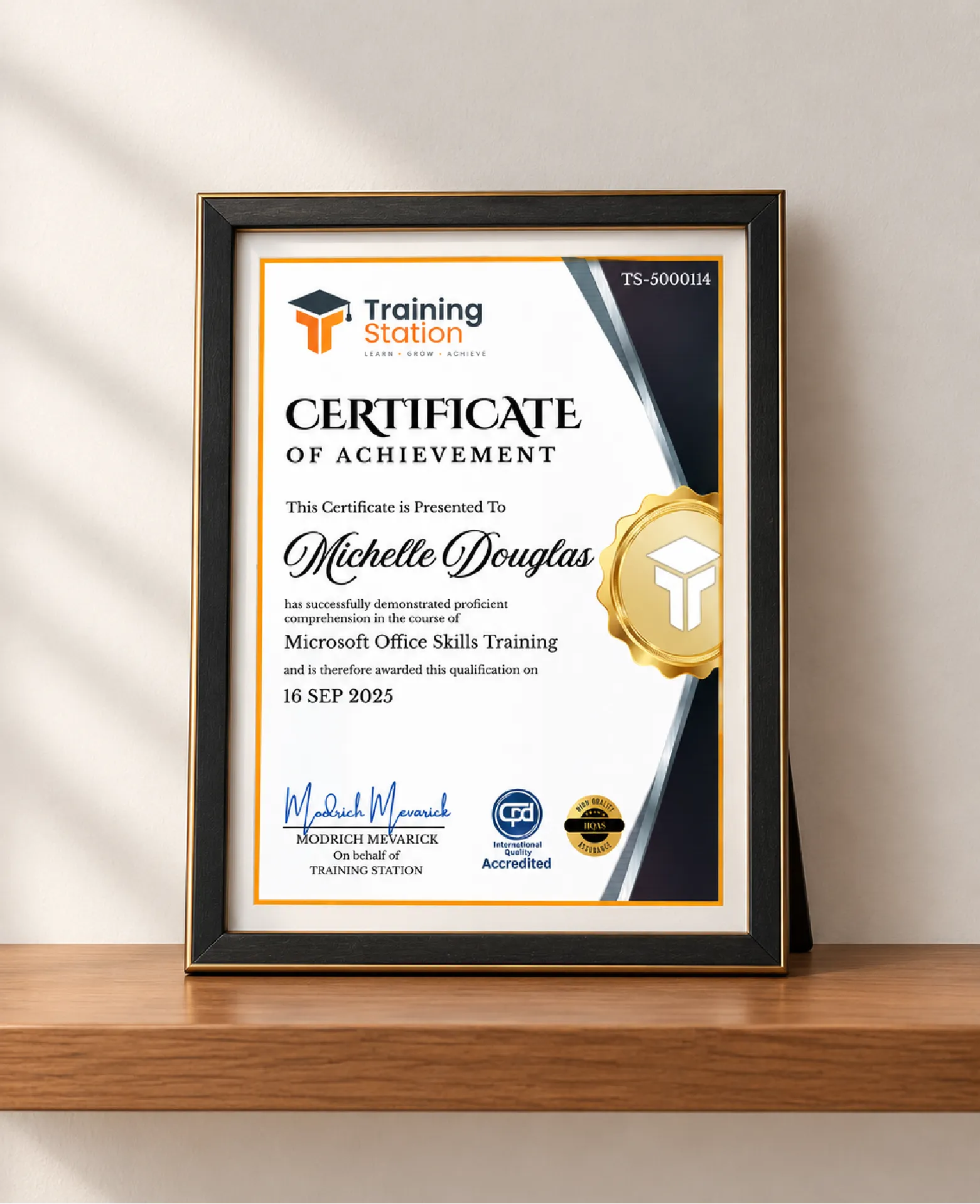
Celebrate your achievement with a CPD-IQ accredited certificate from Training Station! Perfect for showcasing your skills, boosting your career, and enhancing your professional profile.
Get this CourseOur Courses Accreditation





Frequently Asked Questions
Fully online through PDF materials and video lessons. Learn anytime, anywhere.
Self-paced: complete it in a week or spread it over months.
No. The course is beginner-friendly.
Yes. Instructor support is available Monday to Friday.
Yes. We offer a 14-day money-back guarantee.
 Access all courses for Only £99