

Can you reheat scrambled eggs? Yes, you can reheat scrambled eggs safely—but only if you've stored them correctly and use the right technique. Scrambled eggs are a high-protein food that can harbour harmful bacteria if they're left at room temperature for too long. How and when you reheat them matters.
Quick Overview
This guide explains can you reheat scrambled eggs safely and why proper storage and reheating are essential to reduce the risk of foodborne illness. It highlights that the biggest food safety risk is not reheating the eggs itself, but how they are cooled, stored, and handled before being reheated.
Whether you are reheating leftover scrambled eggs from breakfast or preparing them in advance for meal prep, this guide covers:
✅ How to cool and store scrambled eggs safely before reheating
✅ The safest ways to reheat scrambled eggs, including the microwave, hob, oven, and air fryer
✅ When reheated scrambled eggs are safe to eat and when they should be discarded
✅ Food safety advice for babies and other high-risk groups
✅ UK Food Standards Agency (FSA) and NHS guidance on reheating, storage, and safe temperatures
This guide follows current guidance from the UK Food Standards Agency (FSA) and the NHS. It explains safe storage times, every recommended reheating method, and important exceptions, including advice for babies and other vulnerable groups.
Important: This article provides general food safety guidance only and should not replace professional medical advice. If you suspect food poisoning, contact NHS 111 or your GP. For infant feeding advice, consult your health visitor or a registered dietitian.
Can you reheat scrambled eggs? Yes—with conditions. Store scrambled eggs in an airtight container in the fridge within two hours of cooking. Use them within two days, and reheat them to a core temperature of 75°C (167°F)—or 82°C in Scotland, in line with NHS Scotland guidance—before eating. Reheat only the portion you plan to consume, and never reheat the same eggs a second time.
If you're wondering, can you reheat scrambled eggs in the microwave? Yes, provided the eggs have been stored safely, are reheated until steaming hot all the way through, and reach the recommended internal temperature.
The primary food safety risk with reheated eggs is bacterial contamination—particularly Salmonella enteritidis and Salmonella typhimurium, both associated with eggs in the UK. These bacteria can multiply rapidly when food remains in the "danger zone" between 8°C and 63°C.
The UK Food Standards Agency (FSA) advises keeping your fridge at or below 5°C and ensuring reheated food is steaming hot throughout before serving. If scrambled eggs have been left at room temperature for more than two hours, the FSA recommends discarding them rather than risking foodborne illness.
UK food safety legislation, including the Food Safety Act 1990, together with Food Standards Agency guidance, classifies eggs as a high-risk food. The following principles apply to all reheated egg dishes:
If you're wondering, can you reheat scrambled eggs, safe storage is the most important step. Store scrambled eggs in a sealed, airtight container in the fridge within two hours of cooking. They will keep safely for up to two days. For longer storage, freeze them in individual portions for up to three months. Always label containers with the date.
If you're asking can you reheat scrambled eggs the next day, the answer depends on how they were stored. Allow scrambled eggs to cool slightly after cooking, but do not leave them on the counter. Transfer them to a clean, airtight container and refrigerate promptly. Spreading the eggs in a shallow container (no more than 5 cm deep) speeds up cooling and reduces the time spent in the food safety danger zone.
Can you reheat scrambled eggs after refrigerating them? Yes, provided they have been stored at 5°C or below and are eaten within two days, in line with UK food safety guidance. If your fridge does not have a built-in thermometer, an inexpensive fridge thermometer is a worthwhile investment, as many UK household fridges operate at temperatures warmer than recommended.
Can you reheat scrambled eggs after freezing them? Yes. Scrambled eggs can be frozen, although the texture may change slightly after thawing because of moisture loss. Freeze them in individual portions and use them within three months. Thaw overnight in the fridge—never at room temperature, as this allows the eggs to return to the bacterial danger zone.
Whether you're asking can you reheat scrambled eggs the next day or after freezing, once they have been reheated they should be eaten immediately. Never refrigerate or reheat the same eggs a second time. This follows NHS guidance that cooked food should only be reheated once.
If you're wondering can you reheat scrambled eggs, the best methods are the stovetop for the best texture, the microwave for speed, the oven for larger batches, and the air fryer for convenience. Whichever method you choose, ensure the eggs reach a core temperature of 75°C throughout before eating, and avoid excessive heat, which can make them rubbery.
Can you reheat scrambled eggs on the hob? Yes. Reheating on the hob provides the greatest control and produces a texture closest to freshly cooked scrambled eggs.
Why low heat matters: High temperatures cause egg proteins to tighten further and release moisture, which is the main reason reheated scrambled eggs become rubbery or watery.
Many people ask, can you reheat scrambled eggs in the microwave? Yes. The microwave is the quickest method and works well for individual portions.
Safety note: Microwave ovens often heat food unevenly, creating hot and cold spots. Stirring between heating intervals helps distribute the heat evenly and reduces the risk of cold areas where bacteria could survive.
Can you reheat scrambled eggs in the oven? Yes. If you're reheating a larger batch, the oven is a practical choice.
Keeping the dish covered with foil helps retain moisture and prevents the eggs from drying out or forming a skin.
Can you reheat scrambled eggs in an air fryer? Yes, although it requires a little more care than the other methods.
Note: Air fryers circulate hot air at high speed, which can dry out scrambled eggs quickly. Covering the dish and using a lower temperature helps preserve moisture and texture.
Can you reheat scrambled eggs using sous vide? Yes. This technique is commonly used by professional chefs because it preserves texture exceptionally well, although it requires a sous vide immersion circulator.
Because this method maintains the eggs at a precise temperature, it reheats them thoroughly without overcooking. Although it is not the most practical option for everyday cooking, it produces the best texture.
| Method | Time | Best For | Texture Result | Difficulty |
| Stovetop | 2–3 mins | Everyday reheating | Soft, close to fresh | Easy |
| Microwave | 1–2 mins | Speed and convenience | Can be slightly rubbery | Very Easy |
| Oven | 10–15 mins | Larger portions | Good if covered with foil | Easy |
| Air Fryer | 4–5 mins | Convenience | Can dry out — cover with foil | Easy |
| Sous Vide | 15–20 mins | Best texture preservation | Closest to freshly made | Moderate |
If you're wondering, can you reheat scrambled eggs straight from the fridge, the answer is yes. It is safe provided they have been stored in an airtight container at 5°C or below and are used within two days of cooking.
Before reheating, always check that:
If any of these conditions are not met, discard the eggs. Improperly stored scrambled eggs may contain Salmonella or other harmful bacteria, even if there are no obvious signs of spoilage. When in doubt, throw them out. This advice is consistent with guidance from the UK Food Standards Agency (FSA) and the NHS.
If you're asking, can you reheat scrambled eggs in the air fryer, you can, provided the eggs have been stored safely and are reheated until they are steaming hot throughout. Using a covered oven-safe dish helps prevent the eggs from drying out.
If you're wondering, can you reheat scrambled eggs with cottage cheese, the answer is also yes. The same food safety rules apply. Store the cooked eggs promptly in the fridge, use them within two days, and reheat thoroughly before eating. Because cottage cheese adds moisture, stir the eggs during reheating to help them heat evenly.
Yes. Can you reheat scrambled eggs the next day? Absolutely, provided they were refrigerated within two hours of cooking, stored in a sealed container at 5°C or below, and reheated to a core temperature of 75°C before serving. Eat them immediately after reheating and never reheat the same portion more than once.
Many people also ask, can you reheat scrambled eggs for baby? Extra care is needed. Reheated scrambled eggs should only be offered if they have been stored safely, reheated until piping hot throughout, and then allowed to cool to a safe eating temperature before serving. Follow current NHS infant feeding guidance, and never serve eggs that have been left at room temperature for too long or reheated more than once.
Preparing scrambled eggs in advance as part of meal prep can be a practical option when these food safety guidelines are followed. For busy mornings, the microwave is often the most convenient reheating method. Use medium power and stir regularly to ensure the eggs heat evenly throughout.
Some situations require extra care when reheating scrambled eggs, particularly for babies or recipes containing additional ingredients such as cottage cheese.
If you're wondering, can you reheat scrambled eggs for a baby, the answer is yes—but with extra care. Babies and young children are among the groups most vulnerable to foodborne illness, alongside pregnant women, older adults, and people with weakened immune systems.
The NHS advises that babies can begin eating eggs from around six months of age as part of weaning, provided they are British Lion eggs, which come from hens vaccinated against Salmonella. If you are using eggs without the British Lion mark, both the white and yolk should be cooked until fully solid before serving.
Key rules for reheating scrambled eggs for babies include:
For personalised weaning advice, consult your health visitor or a registered dietitian rather than relying solely on online information.
Can you reheat scrambled eggs made with cottage cheese? Yes. They can be reheated safely using the same food safety principles as plain scrambled eggs.
Because cottage cheese contains more moisture than eggs alone, it may release liquid during reheating, making the eggs appear watery if they are heated too quickly or at too high a temperature. Reheat gently on the hob over low heat, stirring regularly, or use medium power if you're wondering can you reheat scrambled eggs in the microwave the next day. As long as the eggs were refrigerated within two hours of cooking, stored at 5°C or below, and used within two days, microwave reheating the following day is considered safe when they are heated until piping hot throughout.
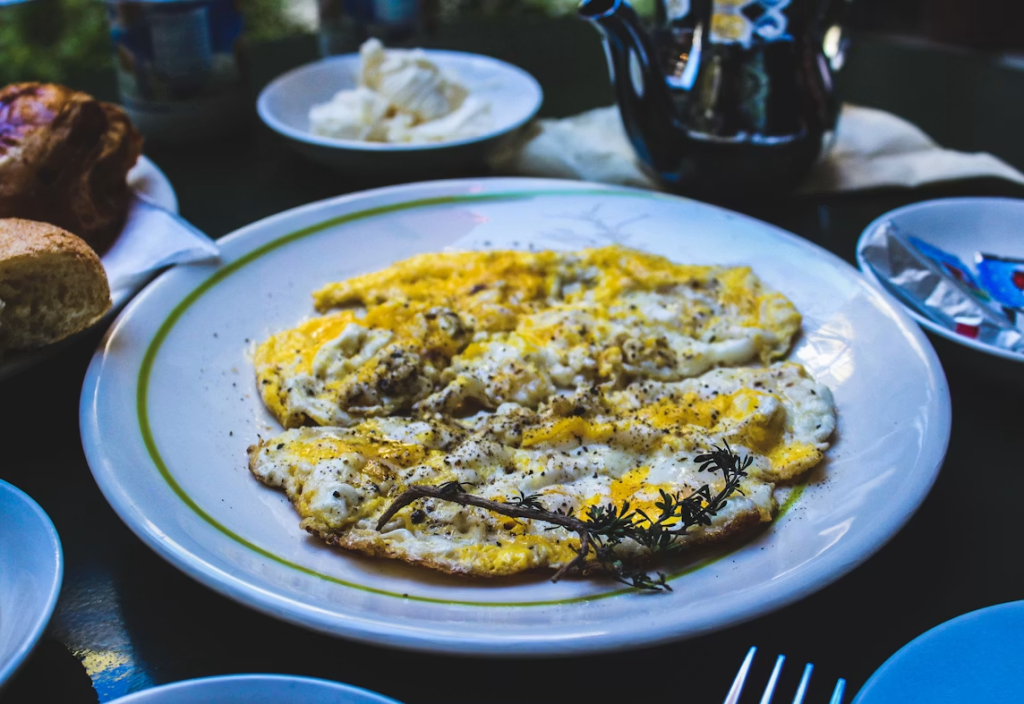
If you're asking, can you reheat scrambled eggs in the oven, the answer is yes. Cover the eggs with foil and reheat them gently at a low temperature to help retain moisture and ensure even heating.
Some people also ask, can you reheat scrambled eggs in a crock pot. While it is possible, it is generally not recommended. Slow cookers are designed for prolonged cooking rather than reheating small portions, and they may take too long to bring the eggs to a safe temperature. Faster methods, such as the hob, microwave, or oven, are more reliable for reheating scrambled eggs safely and in line with UK food safety guidance.
| What to Avoid | Why It Matters |
| Reheating more than once | Each cooling and reheating cycle increases bacterial risk (NHS guidance) |
| Leaving eggs at room temperature for more than 2 hours | Bacteria multiply rapidly in the danger zone (8°C–63°C) |
| Full microwave power | Causes uneven heating — cold spots allow bacteria to survive |
| Using eggs stored beyond two days | Beyond this window, bacterial levels may be unsafe regardless of appearance |
| Thawing frozen eggs at room temperature | Returns eggs to the danger zone; always thaw in the fridge |
| Serving to babies without temperature checking | Babies are high-risk; the inside must be thoroughly hot, then cooled |
| Reheating eggs that smell or look off | Spoilage or contamination may be present even without obvious signs |
Yes. Store them in an airtight container in the fridge within two hours of cooking, use them within two days, and reheat them to a core temperature of 75°C throughout. Reheat only once and eat immediately.
Yes. Can you reheat scrambled eggs from the fridge? Absolutely, provided they have been stored in an airtight container at 5°C or below and are used within two days of cooking. Reheat them until piping hot throughout before serving, and never reheat the same portion more than once.
Yes. It's the quickest reheating method. Use medium power (600–700W) and heat in 30-second intervals, stirring between each burst. Cover the dish with a microwave-safe lid or damp kitchen paper to help retain moisture. Always check that the centre is piping hot before eating.
Yes, provided they were refrigerated within two hours of cooking and stored in a sealed container at 5°C or below. Reheat them until steaming hot throughout, eat them immediately, and do not reheat them a second time.
Yes, although the hob or microwave usually produces a better texture. Place the eggs in a heatproof ramekin, cover with foil, and heat at 150°C for 4–5 minutes, stirring once halfway through. Ensure they are piping hot throughout before serving.
Yes. Follow the same food safety guidance as for plain scrambled eggs. Reheat gently to help prevent the mixture from becoming watery, stir regularly, and avoid using high heat.
Yes, but with extra care. Use British Lion eggs where possible, reheat the eggs to a core temperature of 75°C, then allow them to cool to a safe serving temperature before offering them to your baby. Do not add salt. For personalised weaning advice, consult your health visitor or a registered dietitian.
Yes. Preheat the oven to 150°C (fan 130°C) / Gas Mark 2, cover the eggs with foil, and heat them for 10–15 minutes, stirring halfway through. This method works well for larger portions. Ensure the eggs are steaming hot throughout before serving.
Only once. The NHS advises reheating cooked food only once. Reheat only the portion you intend to eat and keep any remaining refrigerated until needed.
Reheated scrambled eggs should reach a core temperature of 75°C in England, Wales, and Northern Ireland, or 82°C in Scotland, in line with NHS Scotland guidance. A food thermometer is the most reliable way to confirm this, particularly when preparing food for babies or other high-risk groups.
Contact NHS 111 or your GP if you suspect food poisoning. Symptoms of Salmonella infection, including diarrhoea, vomiting, stomach cramps, and fever, typically develop between 12 and 72 hours after eating contaminated food. Babies, older adults, pregnant women, and people with weakened immune systems should seek medical advice promptly if symptoms are severe or persistent.
Can you reheat scrambled eggs? Yes. Reheating scrambled eggs is safe and straightforward when you follow good food safety practices. The key points to remember are:
Sources: UK Food Standards Agency | NHS – Food Safety | NHS Scotland | Food Safety Act 1990