
The Complete Guide to Light Low-Carb Meals & Salads
- Access
- Lifetime
- Assistance
- Expert Tutor Support
- Flexibility
- Learn Anytime, Anywhere
Overview
Enrollment Guide & Course Foundation
1. Overview
The Complete Guide to Light Low-Carb Meals & Salads is a practical, beginner-friendly course designed to help learners discover fresh, satisfying and versatile meal ideas built around lower-carbohydrate ingredients. For people who want lighter meals without sacrificing flavour, salads can offer far more variety than a simple bowl of vegetables. With the right combination of protein, healthy fats, vegetables, herbs and dressings, they can become substantial everyday meals.
The course explores a range of appealing salad combinations featuring ingredients such as shrimp, salmon, tuna, chicken, avocado, kale, broccoli and cucumber. Learners are introduced to different flavour profiles, including creamy ranch-style, curry-inspired, Thai-inspired and bacon-based options. This variety demonstrates how simple ingredients can be combined in different ways to create meals suitable for different tastes and occasions.
A practical focus runs throughout the course. Learners can develop useful skills in ingredient preparation, combining textures, creating balanced flavour profiles and assembling meals efficiently. The recipes also provide inspiration for lunches, lighter dinners, meal preparation and convenient everyday eating.
By completing The Complete Guide to Light Low-Carb Meals & Salads, learners will have greater confidence preparing fresh, protein-rich salad meals and adapting ingredients to suit their preferences. They will also have a broader understanding of how to make lower-carb meals interesting, satisfying and practical for everyday life.
2. Description
Eating lighter does not have to mean eating bland or repetitive food. The Complete Guide to Light Low-Carb Meals & Salads provides an accessible introduction to preparing flavourful salad-based meals that can fit into a lower-carbohydrate lifestyle. The course is designed for home cooks who want practical meal inspiration while exploring different proteins, vegetables, dressings and flavour combinations.
Salads are among the most adaptable meals available to a home cook. They can be served cold, warm or at room temperature, and they can be transformed simply by changing the protein, vegetables, dressing or seasoning. A well-prepared salad can also be convenient for busy schedules because many ingredients can be prepared in advance and assembled when needed.
The course introduces learners to a broad selection of meal ideas based around seafood, poultry, vegetables and other complementary ingredients. Shrimp, salmon and tuna provide seafood-focused options, while chicken-based salads offer familiar and versatile alternatives. Kale, broccoli and cucumber contribute different textures and flavours, helping learners understand how vegetables can form the foundation of satisfying meals.
One of the key advantages of exploring salad preparation is learning how different textures work together. Crisp vegetables can contrast with tender proteins, creamy avocado can add richness, while dressings can bring acidity, herbs, spice or savoury depth. Understanding these combinations can help learners move beyond simply following recipes and begin creating their own meal ideas.
The course also explores a variety of flavour directions. A Thai-inspired salad bowl can introduce contrasting sweet, savoury, spicy and fresh elements. Curry-inspired tuna and avocado offers a different profile, while ranch and bacon combinations demonstrate how familiar flavours can be incorporated into a substantial salad. These examples encourage learners to experiment responsibly while maintaining an overall lower-carbohydrate approach.
Kale-based salads can also introduce learners to a heartier style of salad. Unlike delicate leafy salads, kale can provide a robust base that works well with stronger dressings and savoury ingredients. Learning how to prepare and combine kale effectively can give learners another useful option for lunches and dinners.
Protein is particularly important when creating a salad intended to function as a complete meal. Chicken, fish and shrimp can provide substantial components, while ingredients such as avocado can contribute richness and texture. The aim is not simply to add ingredients but to understand how different components complement one another.
You’ll discover how to use The Complete Guide to Light Low-Carb Meals & Salads for:
- Preparing garlic butter shrimp salad meals
- Creating Thai-inspired low-carb salad bowls
- Preparing warm kale salads
- Combining kale with savoury bacon dressing
- Creating broccoli and crispy bacon salads
- Preparing ranch-style bacon salad bowls
- Combining tuna with curry-inspired flavours
- Pairing tuna and avocado effectively
- Preparing fresh salmon salad bowls
- Creating deli-style salad combinations
- Preparing chicken salad lettuce cups
- Combining chicken with fresh cucumber
- Building protein-rich salad meals
- Creating contrasting textures in salads
- Preparing simple homemade salad dressings
- Organising ingredients for efficient meal preparation
- Adapting salads to personal preferences
- Creating greater variety in lower-carb meal planning
A successful salad begins with ingredient preparation. Fresh vegetables should be washed and prepared appropriately, while seafood and poultry should be handled and cooked safely. Organising ingredients before assembly can make the process faster and help ensure that textures remain appealing.
Best practice involves considering balance. A satisfying salad generally benefits from a combination of textures, flavours and substantial ingredients rather than relying on one component alone. Crisp vegetables, tender protein, creamy ingredients and a well-matched dressing can create a more enjoyable eating experience.
Dressings can have a particularly strong effect on the finished dish. A dressing should complement rather than overwhelm the main ingredients. Learners can explore how acidity, herbs, spices and savoury elements affect the overall flavour while being mindful of the ingredients used in prepared sauces and dressings.
Another useful skill is learning how to adapt recipes. Not every learner will enjoy the same vegetables, seafood or seasonings. Suitable substitutions can help make meals more appealing and practical, provided that the replacement ingredients remain appropriate for the intended style of meal.
Common mistakes include adding dressing too early, overloading a salad with ingredients, failing to dry washed vegetables properly or allowing cooked proteins to become overcooked. Timing can also matter when combining warm and cold ingredients. Understanding these small details can significantly improve the finished result.
Hands-on practice is central to the course. Learners can prepare individual salads, compare different combinations and identify which textures and flavours they enjoy most. Repeating recipes also provides an opportunity to improve knife skills, ingredient preparation, portioning and presentation.
Meal preparation is another practical application. Many salad components can be prepared separately and stored appropriately before assembly. Vegetables, cooked proteins and dressings can often be organised in advance, helping learners create convenient meals during busy periods. Proper food storage and safe handling remain essential, particularly when working with seafood, chicken, eggs or dairy-based ingredients.
The course’s real-world applications extend beyond individual recipes. A salmon salad can provide a fresh lunch or dinner option, chicken lettuce cups can offer a convenient alternative to bread-based meals, and cucumber and chicken can form the basis of a simple, refreshing combination. These examples demonstrate how a few familiar ingredients can be used in multiple ways.
The deli-style salad concept also illustrates the importance of flexibility. A selection of prepared ingredients can be combined according to preference, making it easier to create meals from what is already available. This can reduce food waste and make weekly meal planning more efficient.
Responsible use is important when following any lower-carbohydrate eating approach. Individual nutritional needs vary, and a general cooking course cannot provide personalised medical or dietary advice. Learners with medical conditions, allergies or specific nutritional requirements should seek appropriate advice from a qualified healthcare or nutrition professional.
It is also important not to assume that every product labelled “keto” or “low-carb” is automatically suitable for every person. Reading ingredient and nutrition labels can help learners make informed choices. Fresh, minimally processed ingredients can provide useful building blocks for many home-prepared meals.
Continuous improvement comes through experimentation and observation. Learners can gradually develop their own dressing combinations, discover preferred proteins, adjust vegetable choices and refine their meal-preparation workflow. Keeping a selection of dependable ingredients available can make it easier to create quick meals without extensive planning.
Ultimately, The Complete Guide to Light Low-Carb Meals & Salads is about making lighter meal preparation more interesting, practical and enjoyable. Through a diverse collection of salad ideas, learners can explore seafood, poultry, vegetables, dressings and flavour combinations while developing useful kitchen habits. The course provides a foundation for creating fresh meals that can be adapted to different preferences and everyday routines.
3. Course Modules
Module 1: Garlic Butter Shrimp Keto Salad
- Preparing shrimp safely and effectively
- Creating a garlic butter flavour base
- Preparing fresh salad vegetables
- Combining warm shrimp with fresh ingredients
- Balancing rich and fresh flavours
- Creating an appealing salad texture
- Choosing suitable dressings and seasonings
- Assembling and serving the finished salad
Module 2: Keto Thai-Inspired Tom Yao Salad Bowl
- Understanding Thai-inspired flavour combinations
- Preparing fresh salad ingredients
- Exploring savoury and aromatic components
- Balancing spicy, fresh and savoury flavours
- Preparing suitable protein ingredients
- Creating an appealing salad bowl
- Combining contrasting textures
- Adjusting flavours to personal preference
Module 3: Warm Keto Kale Salad with Bacon Dressing
- Preparing kale for a warm salad
- Understanding hearty leafy vegetables
- Preparing crispy bacon
- Creating a savoury dressing
- Combining warm and fresh ingredients
- Balancing textures and flavours
- Preventing over-dressing
- Serving a satisfying warm salad
Module 4: Keto Broccoli and Crispy Bacon Salad
- Preparing fresh broccoli
- Creating appealing vegetable textures
- Preparing crispy bacon
- Combining broccoli and savoury ingredients
- Developing a complementary dressing
- Balancing rich and fresh flavours
- Preparing the salad efficiently
- Storing and serving the finished dish
Module 5: Keto Ranch Bacon Salad Bowl
- Preparing ingredients for a substantial salad bowl
- Understanding ranch-style flavours
- Preparing crispy bacon
- Combining fresh vegetables and protein
- Creating balanced textures
- Using dressing appropriately
- Building an attractive salad presentation
- Adapting the bowl to personal preferences
Module 6: Keto Curried Tuna and Avocado Salad
- Preparing tuna for salad meals
- Exploring curry-inspired flavours
- Preparing ripe avocado
- Combining creamy and savoury ingredients
- Balancing seasonings
- Creating a satisfying texture
- Preparing the salad efficiently
- Serving and adapting the finished dish
Module 7: Fresh Keto Salmon Salad Bowl
- Preparing salmon appropriately
- Creating fresh vegetable combinations
- Combining cooked fish with salad ingredients
- Balancing textures and flavours
- Choosing complementary dressings
- Building a complete salad bowl
- Improving presentation
- Storing ingredients safely
Module 8: Classic Keto Deli-Style Salad
- Understanding deli-style salad concepts
- Selecting complementary ingredients
- Preparing vegetables efficiently
- Combining protein and fresh ingredients
- Creating a suitable dressing
- Balancing contrasting textures
- Preparing portions for convenience
- Adapting the salad to individual preferences
Module 9: Keto Chicken Salad Lettuce Cups
- Preparing chicken for salad filling
- Selecting fresh lettuce leaves
- Creating a suitable chicken salad mixture
- Balancing creamy and fresh textures
- Preparing individual lettuce cups
- Managing portions
- Improving presentation
- Serving and storing ingredients appropriately
Module 10: Keto Chicken and Fresh Cucumber Salad
- Preparing chicken safely
- Preparing fresh cucumber
- Combining chicken and vegetables
- Creating a light flavour profile
- Balancing textures
- Choosing complementary herbs and seasonings
- Preparing the salad for convenient meals
- Serving and adapting the finished dish
Requirements, Career Path & Final Thoughts
4. Who Is This Course For
The Complete Guide to Light Low-Carb Meals & Salads is suitable for beginners, home cooks and anyone looking for practical inspiration for fresh, lighter meals. It is designed to make salad preparation more interesting while helping learners develop confidence with proteins, vegetables, dressings and meal assembly.
This course is particularly suitable for:
- Beginners exploring low-carb meal ideas
- Home cooks seeking fresh recipe inspiration
- Busy professionals preparing quick lunches or dinners
- People who enjoy salads but want greater variety
- Learners interested in protein-rich meals
- Seafood lovers interested in shrimp, salmon and tuna dishes
- Chicken enthusiasts looking for new meal combinations
- People interested in vegetable-focused cooking
- Home cooks wanting convenient meal-preparation ideas
- Learners experimenting with different dressings and flavours
- Cooking enthusiasts interested in Thai-inspired flavours
- People wanting alternatives to heavy carbohydrate-based meals
- Beginners developing practical food-preparation skills
- Aspiring food bloggers and recipe creators
- Anyone wanting to expand their everyday meal repertoire
The course can also be useful for learners who want to become more confident at creating meals without always relying on a fixed recipe. The principles can encourage greater creativity and flexibility in everyday cooking.
5. Requirements
To take this course, learners should have:
- A basic interest in cooking and meal preparation
- Access to a standard home kitchen
- Basic kitchen utensils and cookware
- Access to fresh vegetables and common ingredients
- Basic food-preparation and kitchen-safety awareness
- The ability to follow straightforward recipes
- A willingness to practise different meal combinations
- An interest in fresh and lower-carbohydrate meal ideas
No professional culinary experience is required. The course is suitable for beginners who want to gain confidence through practical preparation.
Learners should consider their own nutritional requirements when adapting recipes. Anyone with a medical condition, food allergy or medically prescribed dietary plan should seek appropriate professional advice before making significant dietary changes.
6. Career Path
Practical cooking knowledge can provide a foundation for continued development in culinary, hospitality, catering and food-content careers. Although The Complete Guide to Light Low-Carb Meals & Salads is primarily designed for everyday cooking, the preparation skills developed through practising these meal ideas can support further learning and professional exploration.
Potential career directions include:
- Home Cook
- Personal Chef
- Private Cook
- Kitchen Assistant
- Food Preparation Worker
- Catering Assistant
- Prep Cook
- Recipe Developer
- Food Blogger
- Food Content Creator
- Recipe Content Writer
- Cooking Class Assistant
- Meal-Prep Service Assistant
- Culinary Entrepreneur
- Food Photography Assistant
Learners interested in professional culinary careers can build on these foundational skills through additional culinary training, practical kitchen experience and appropriate food-safety education. Those interested in digital content can also explore recipe writing, food photography, cooking videos and social media content.
Opportunities exist across restaurants, catering companies, hospitality businesses, private dining, meal-preparation services and food media. With further experience and suitable qualifications where required, practical food knowledge can contribute to a wide range of culinary and food-related career paths.
7. Final Thoughts
The Complete Guide to Light Low-Carb Meals & Salads offers a practical way to make fresh, lighter meals more varied and enjoyable. Through a selection of seafood, chicken, vegetable and salad combinations, learners can discover how everyday ingredients can be transformed into satisfying dishes without relying on complicated cooking techniques.
The course also encourages learners to think beyond individual recipes. Understanding how proteins, vegetables, dressings, textures and seasonings work together can help home cooks create their own combinations. This flexibility can make everyday meal planning easier and reduce the feeling that healthy or lighter meals have to be repetitive.
With hands-on practice, learners can improve ingredient preparation, meal assembly, presentation, food organisation and kitchen confidence. They can identify their favourite flavour combinations, adapt suitable ingredients and develop a collection of reliable meals for lunches, dinners and busy days.
Whether the goal is to explore low-carb cooking, introduce more variety into everyday meals or simply become more creative in the kitchen, this course provides an accessible starting point. With practice and curiosity, learners can turn simple fresh ingredients into colourful, flavourful meals and build lasting confidence in preparing food at home.
Curriculum
- Garlic Butter Shrimp Keto Salad
- Keto Thai-Inspired Tom Yao Salad Bowl
- Warm Keto Kale Salad with Bacon Dressing
- Keto Broccoli and Crispy Bacon Salad
- Keto Ranch Bacon Salad Bowl
- Keto Curried Tuna and Avocado Salad
- Fresh Keto Salmon Salad Bowl
- Classic Keto Deli-Style Salad
- Keto Chicken Salad Lettuce Cups
- Keto Chicken and Fresh Cucumber Salad
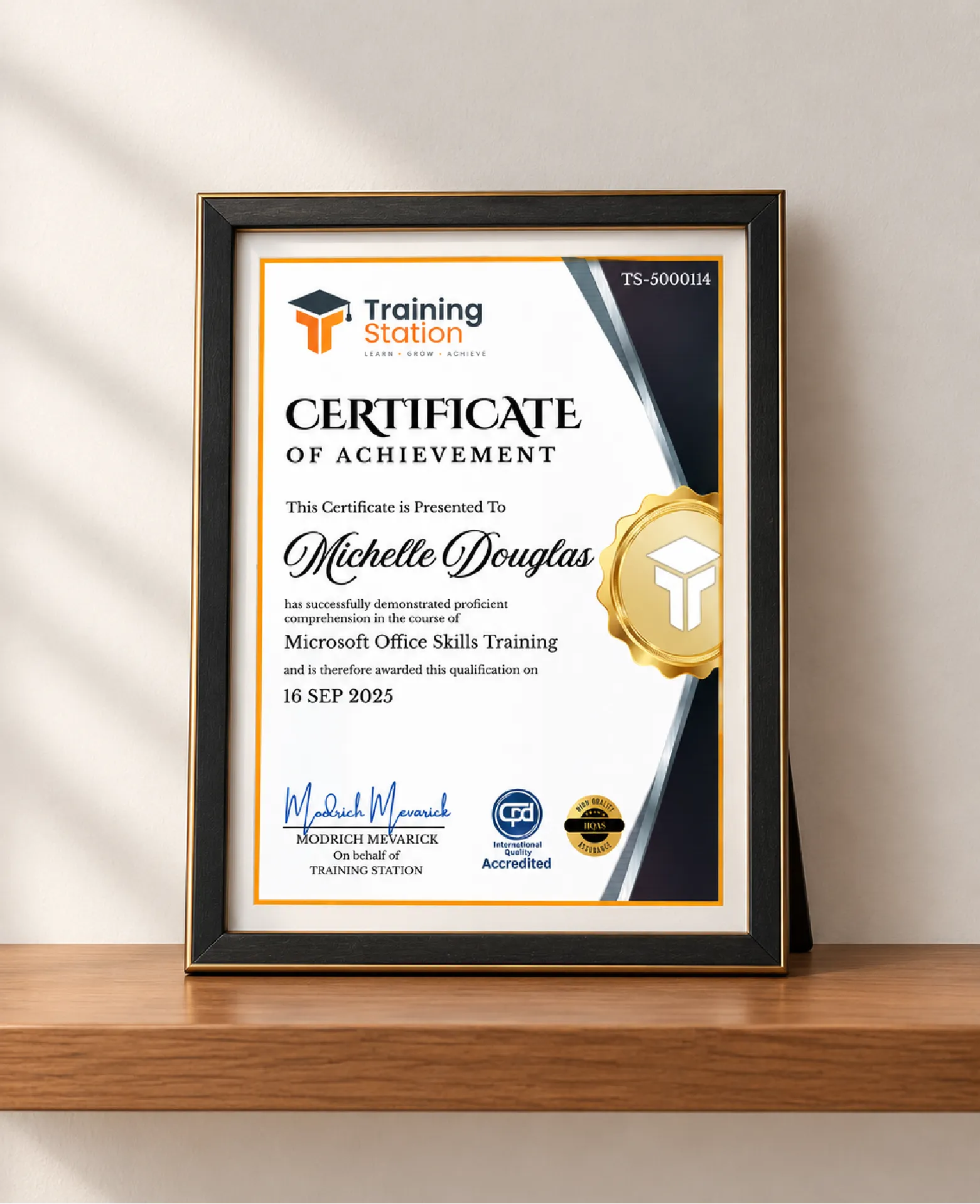
Celebrate your achievement with a CPD-IQ accredited certificate from Training Station! Perfect for showcasing your skills, boosting your career, and enhancing your professional profile.
Get this CourseOur Courses Accreditation





Frequently Asked Questions
Fully online through PDF materials and video lessons. Learn anytime, anywhere.
Self-paced: complete it in a week or spread it over months.
No. The course is beginner-friendly.
Yes. Instructor support is available Monday to Friday.
Yes. We offer a 14-day money-back guarantee.
 Access all courses for Only £99