
Quick answer: How do you become a PAT tester? To become a PAT tester in the UK, you need sufficient knowledge, appropriate training and practical experience to inspect and test electrical equipment competently. There is no single statutory PAT testing licence that every PAT tester must hold. A typical route involves learning electrical safety fundamentals, completing suitable PAT testing training, developing practical inspection and testing skills, gaining relevant experience, and keeping your knowledge up to date through ongoing professional development.
Quick Overview
Becoming a PAT tester in the UK is mainly about developing the right knowledge, practical skills and competence rather than obtaining a single mandatory licence. Suitable training, hands-on experience and an understanding of electrical safety are key to carrying out PAT testing responsibly.
This guide covers:
✅ How to become a PAT tester in the UK
✅ The steps involved in learning how to become a PAT tester UK
✅ What PAT testing involves and why it is carried out
✅ PAT testing training, qualifications and PAT tester certificates
✅ The skills and practical experience needed to work as a PAT tester
✅ PAT testing legislation, legal requirements and risk-based testing
✅ PAT testing equipment, inspection methods and testing procedures
✅ PAT tester career opportunities, salaries and finding PAT testing jobs
✅ How to become a self-employed PAT tester and start a PAT testing business
✅ How to choose suitable PAT testing training and continue your professional development
People searching how to become a PAT tester UK often assume that they first need a particular licence. In reality, the central requirement is competence. Training can help you build that competence, but you must also understand the equipment you inspect, choose suitable tests and recognise when a task requires greater electrical expertise.
The usual pathway to become a PAT tester can be broken down into five steps.
Start by understanding the basics of electrical safety and in-service inspection and testing.
You should become familiar with common electrical hazards, plugs, flexes, fuses, earthing, insulation, appliance construction and the differences between equipment classes. It is also important to understand the different levels of maintenance, including user checks, formal visual inspections, and combined inspection and testing.

If your starting question is “how do I become a PAT tester?”, learning these fundamentals is more valuable than simply learning which buttons to press on a testing machine.
You also need to understand that PAT testing is not synonymous with mandatory annual testing. The appropriate inspection and testing regime depends on the level of risk, the equipment, its environment and how it is used.
A suitable PAT testing course provides a structured way to develop your theoretical knowledge.
Course content should ideally cover electrical safety, relevant legislation, equipment classes, inspection methods, test instruments, risk assessment, interpreting results and record keeping.
If you are researching how to train to be a PAT tester, look beyond the course title. Check what you will actually learn, how your knowledge will be assessed and whether there are opportunities for practical learning.
An online course can be useful for developing theoretical knowledge, particularly for someone researching how to become a PAT tester UK. However, completing digital modules should not automatically be treated as evidence that you can demonstrate every practical testing skill safely.
The next stage is learning to apply your knowledge in practice.
As a PAT tester, you need to recognise visible damage, identify equipment correctly, understand which test is appropriate and know how to interpret the results. You should also be able to distinguish between something you can safely inspect yourself and a problem that should be referred to a competent electrician or other appropriate specialist.
This distinction matters when people are considering how to become a qualified PAT tester or how to become a certified PAT tester. A certificate may show that you completed a particular training programme, but competence involves the knowledge, practical ability and experience appropriate to the task.
Practical experience is particularly important before taking responsibility for commercial testing.
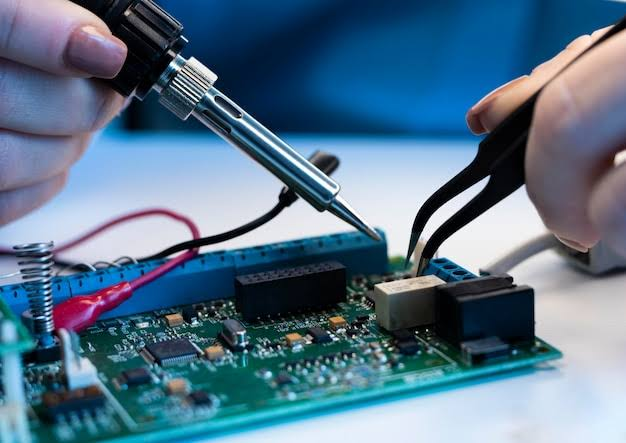
Hands-on experience can include carrying out formal visual inspections, identifying Class I and Class II equipment, connecting test equipment correctly, interpreting readings and recording results.
If you are inexperienced, supervised practice can help you develop confidence and practical skills without accepting work beyond your capabilities.
Good PAT test training should therefore be regarded as a combination of theoretical learning and practical development, rather than simply passing an online assessment. This practical experience is an important part of the process to become a PAT tester who can work safely and competently.
Competence needs to be maintained over time.
Testing equipment develops, electrical products change and industry guidance is updated. A PAT tester should therefore continue reviewing relevant HSE guidance, recognised industry standards and manufacturer information.
If your career expands into appliance repair, fixed-installation work or more advanced electrical testing, obtain training appropriate to those activities. Do not assume that PAT testing experience automatically makes you competent in every area of electrical work.
Following these steps can provide a sensible pathway for anyone asking how to become a PAT tester UK, whether they are considering employment, self-employment or adding PAT testing to an existing electrical or facilities-related role.
Portable appliance testing, commonly known as PAT testing, is the examination of electrical appliances and equipment to assess whether they are safe to continue using. Depending on the equipment and level of risk, this may involve user checks, a formal visual inspection and electrical testing using an appropriate instrument.
A trained PAT tester should understand that PAT testing is not limited to using a test instrument. It also involves identifying potential hazards, assessing the condition of equipment and determining whether further inspection or testing is appropriate.
Electrical equipment can deteriorate through use, movement, impact, heat, moisture, contamination or damaged cables and plugs.
A maintenance programme aims to identify problems before they create an unacceptable risk of electric shock, burns, fire or other harm.
A PAT test can form part of that programme, but electronically testing equipment is not the whole process. Visual inspection is particularly important because some faults may be obvious to a trained person even when they would not necessarily be identified by a test instrument.
Anyone considering how to become a qualified PAT tester should therefore understand the importance of both visual inspection and appropriate electrical testing.
There is no single requirement stating that every electrical appliance must be tested at the same interval.
The correct approach considers factors such as:
A computer sitting permanently on an office desk therefore presents a different maintenance situation from a power tool that is repeatedly transported around a construction site.
For people researching how to become a certified PAT tester, understanding these risk-based requirements is an important part of developing the knowledge needed to carry out PAT testing responsibly. A PAT testing course can provide a structured introduction to these principles, although practical competence also requires appropriate experience.
PAT testing frequency should be based on risk rather than a universal annual schedule.
| Example | Frequency consideration |
| Office IT rarely moved | Usually relatively low risk, so inspection or testing can be less frequent |
| Hand-held equipment | Often needs closer monitoring because it is handled and moved regularly |
| Class I earthed appliances | Periodic combined inspection and testing may be appropriate |
| Construction tools | Usually require much more frequent inspection because of demanding conditions |
| Hire equipment | Checks are commonly appropriate around issue and return |
These are general examples rather than fixed legal deadlines. The dutyholder should establish a maintenance programme appropriate to the circumstances and adjust it if inspection results show that equipment is deteriorating more quickly or slowly than expected.
For those researching how to become a PAT tester online, learning how risk affects inspection and testing frequency is an important part of building a sound theoretical foundation. Online learning can help introduce the principles, while practical training and experience are important for developing the competence required to carry out testing safely.
A PAT tester examines electrical equipment for safety, carries out appropriate electrical tests where required, interprets the results and records or reports faults so that unsafe equipment can be dealt with appropriately.
Day-to-day duties can involve inspecting plugs, cables, cases and connections; identifying equipment classes; selecting suitable tests; operating a PAT testing instrument; recording test results; and notifying the responsible person when equipment fails an inspection.
Some organisations also use labels to identify tested equipment. However, a sticker itself does not make an appliance safe and does not replace an effective maintenance system.
Suitable PAT testing training can help testers develop the knowledge needed to carry out these duties safely. PAT test training may cover areas such as visual inspection, equipment classification, test procedures, using testing instruments and interpreting results.
You do not automatically have to be a qualified electrician to perform all forms of portable appliance inspection or testing.

A trained employee may be competent to undertake straightforward visual checks in a low-risk workplace. Combined inspection and testing requires greater knowledge and experience because the tester must choose an appropriate procedure, use the equipment safely and interpret the results correctly.
More complex work may require substantially greater electrical expertise and, where appropriate, additional training.
Competence is task-specific. A competent PAT tester should have sufficient knowledge and experience to recognise hazards, understand the equipment being examined, choose appropriate methods and avoid creating additional risks while testing.
They should also recognise the limits of their competence. Someone who can safely test a standard office appliance may not automatically be competent to investigate complicated faults, dismantle specialist equipment or repair electrical systems.
People considering a PAT testing qualification should therefore look at the knowledge and practical skills covered by the training, rather than focusing solely on whether a course provides a certificate.
Do you need to be qualified to PAT test? Not necessarily in the sense of holding a single mandatory PAT testing qualification. The key requirement is that the person carrying out the work is competent for the particular task.
Appropriate PAT testing training can help develop the required knowledge and skills. However, a PAT testing certificate is evidence of completing a particular course or programme and should not automatically be treated as proof of complete practical competence.
The organisation or dutyholder controlling the equipment retains responsibility for complying with applicable health and safety law.
Employing an external PAT-testing contractor does not automatically remove that responsibility. At the same time, a professional PAT tester should only accept work they are competent to perform and should communicate defects, test results and any limitations clearly.
Ultimately, effective PAT testing depends on appropriate risk assessment, competent inspection and testing, accurate records and taking suitable action when defects are identified.
There is no single PAT testing qualification that UK law requires every person to hold before undertaking PAT testing. The important requirement is that the individual is competent to carry out the particular work being performed.
The answer to “do you need to be qualified to PAT test?” depends partly on what is meant by “qualified”.
You do not generally need a statutory PAT-testing licence. However, appropriate training can provide useful evidence of your knowledge and may be expected by employers or clients.
A PAT tester certificate gained after completing training may therefore be useful, but its status needs to be described accurately. A course-completion certificate is not automatically a regulated electrical qualification, government approval or proof that the holder can competently perform every practical PAT-testing task.
A PAT test should be carried out only by someone who has the appropriate knowledge, training and experience for the work involved.
Suitable PAT testing training should prepare you to understand both the practical process and the reasons behind it.
Useful learning areas include appliance classes, electrical hazards, visual inspection, risk-based maintenance, test methods, test instruments, recording results and relevant legal duties.
People planning to work commercially should also obtain sufficient practical experience to apply that knowledge safely. This is particularly important for anyone considering how to become a self-employed PAT tester, as working independently means taking responsibility for accepting only work that you are competent to carry out.
There is no legally prescribed period for becoming a PAT tester.
A short course may introduce the core theory relatively quickly, but becoming independently competent can take longer, particularly for someone with no previous electrical background.
Your existing knowledge, the complexity of the equipment you expect to encounter and the amount of supervised practical experience available will all influence your development.
Ultimately, becoming a competent PAT tester involves more than completing a course or obtaining a PAT tester certificate. Appropriate training, practical experience, sound judgement and an understanding of your own limits are all important when carrying out PAT testing professionally.
UK PAT-testing requirements are better understood as part of wider electrical safety law rather than as a standalone “PAT Testing Act”. A PAT tester should understand the legal framework that applies to the equipment and workplace being inspected.
In England, Scotland and Wales, the Electricity at Work Regulations 1989 are central to workplace electrical safety.
They require electrical systems to be maintained, where necessary, to prevent danger. Importantly, the regulations do not prescribe a universal testing method or an annual PAT testing schedule.
Regulation 16 also addresses competence where technical knowledge or experience is necessary to prevent danger or injury. This is particularly relevant to anyone carrying out a PAT test, as the person undertaking the work should have the appropriate knowledge and experience for the task.
Northern Ireland has its own corresponding Electricity at Work Regulations (Northern Ireland) 1991, so businesses should check the rules that apply to their particular jurisdiction.
Dutyholders should establish a suitable maintenance system that keeps electrical equipment safe for use.
PAT testing may be one part of that system. Depending on the level of risk, a maintenance programme can also involve user checks, formal visual inspections, repairs, replacement and appropriate electrical testing.
There are sector-specific requirements too. In England, regulations extended to social housing in 2025 now require social landlords to arrange checks of electrical equipment that they provide under relevant tenancies at least every five years, alongside detailed requirements and transitional provisions.
This illustrates why both sector and jurisdiction matter. A general workplace requirement should not be presented as though it were identical to a specific landlord obligation.
For anyone researching how to become a self-employed PAT tester, understanding the relevant legal requirements is an important part of preparing to provide PAT testing services. A PAT tester certificate may demonstrate completion of a training course, but it does not replace the need to understand and comply with the legislation relevant to the work being undertaken.
Breaching electrical safety or wider health and safety duties can lead to regulatory enforcement and, in serious cases, prosecution and fines.
There is not simply a standard “fine for failing to PAT test annually”, because annual PAT testing is not itself a universal legal duty.
The important question is whether the responsible organisation has taken suitable steps to prevent danger and meet the legislation that applies to its activities. A PAT tester can support an organisation's maintenance arrangements by carrying out appropriate inspections and testing, but responsibility for electrical safety remains with the relevant dutyholder.
The key skills for becoming a PAT tester include electrical safety knowledge, practical testing ability, attention to detail, risk assessment and accurate record keeping.
A PAT tester needs a sufficient understanding of electricity to recognise hazards and carry out the work they accept safely.
Important concepts include earthing, insulation, protective devices, plugs, cables, equipment construction and common causes of electrical deterioration. This knowledge helps a tester understand when an appliance can be safely inspected or tested and when further electrical expertise may be required.
Visual inspection is a central skill for any PAT tester. Before carrying out a PAT test, the tester should examine the appliance, plug, cable and other relevant components for visible signs of damage or deterioration.
Testers must also know how to operate suitable test equipment, select the appropriate test and interpret the results correctly, rather than relying blindly on a simple pass or fail message.
Appropriate training can help develop these skills. However, a PAT tester certificate should be viewed as evidence of completing a particular course and not as automatic proof of complete practical competence.
A damaged cable, cracked casing, unsuitable plug or evidence of overheating can indicate a significant safety issue.
Good PAT testers notice both individual defects and the environment in which the equipment is being used. They should consider factors such as how frequently equipment is moved, the conditions in which it operates and the likelihood of damage occurring.
Risk awareness is particularly important for anyone considering how to become a self-employed PAT tester, as independent testers need to make sound decisions about the work they accept and recognise when a task falls outside their competence.
There is no universal legal requirement to label every item or maintain a PAT database, but accurate records can be valuable when managing an effective electrical maintenance programme.
Commercial PAT testers should be able to produce clear records showing what was inspected or tested, the outcome, any defects identified and any further action required.
Good reporting is an important part of carrying out a PAT test professionally. Clear records can also help dutyholders demonstrate that appropriate maintenance arrangements are in place and that identified issues have been addressed.
Choosing the right training should involve more than simply finding the shortest or cheapest option. Consider the course content, practical learning opportunities, assessment methods and how well the training prepares you for the work you intend to carry out as a PAT tester.
A useful PAT testing course should cover areas such as:
The exact depth of training required will depend on the type of work you plan to perform and the equipment you expect to encounter.
If your objective is to work as a professional PAT tester, look for practical learning that matches the course outcomes.
Being able to explain an earth-continuity test is different from safely selecting, setting up and performing the test on real equipment. For practical performance outcomes, direct observation or other meaningful practical evidence is stronger than relying solely on multiple-choice questions.
Practical experience is particularly important for anyone considering how to become a self-employed PAT tester, as working independently requires you to make appropriate decisions about the work you accept and your own level of competence.
Check the course content, assessment methods, practical opportunities, trainer competence, learner support and certificate status.
If a provider uses terms such as “accredited”, “certified” or “qualified”, identify exactly what those terms mean. Ask whether the accreditation applies to the training provider or the particular course, and whether the resulting PAT tester certificate is a private training certificate or a regulated qualification.
A certificate can provide evidence that you have completed a particular programme, but it should not automatically be treated as proof that you are competent to undertake every type of PAT testing work.
This career guide provides an overview rather than a substitute for practical instruction. Anyone carrying out a PAT test should have the appropriate knowledge, training and experience for the work involved.
A formal visual inspection may consider the plug, flex, casing, connections, signs of overheating, contamination, damage and whether the equipment is suitable for its environment.
Many electrical safety defects can be identified at this stage. A careful visual inspection is therefore an important part of the work carried out by a competent PAT tester.
Where electrical testing is appropriate, a competent person selects tests suitable for the appliance class and uses appropriate equipment.
The important skill is not merely operating the tester. You must understand why the test is appropriate, carry it out safely and understand what the result means.
For detailed procedures, refer readers to a dedicated How to Perform a PAT Test guide rather than attempting to learn practical testing solely from this career article.
Unusual equipment, complex faults or results requiring specialist interpretation should be handled by someone with appropriate additional competence.
Knowing when to refer work to a suitably qualified or experienced person is itself an important part of professional competence. A PAT tester should not accept work that falls outside their knowledge, training or experience.
Good practice includes carrying out a systematic visual inspection, selecting suitable equipment and tests, keeping clear records, taking appropriate action when an item fails and periodically reviewing the maintenance regime.
PAT testing should not be performed mechanically simply because a calendar date has arrived. The inspection and testing programme should reflect the risks associated with the equipment, its environment and how it is used.
Class I appliances use protective earthing as part of their protection against electric shock.
Class II equipment generally uses double or reinforced insulation and does not rely on protective earthing in the same way. Class III equipment is supplied from a separated extra-low-voltage source.
Understanding equipment classes helps a PAT tester determine which inspection and testing methods are appropriate for a particular appliance.
Residual Current Devices (RCDs) can provide additional protection against certain electric-shock risks.
Testing protective devices can involve different procedures from ordinary appliance testing and should only be undertaken where the person has the appropriate knowledge, training and suitable equipment.
For anyone learning how to carry out a PAT test professionally, it is important to understand the limits of routine appliance testing and recognise when specialist electrical work requires additional expertise.
Someone entering the profession will normally require a suitable PAT tester, along with accessories appropriate to the work, a reliable way to identify equipment and an effective system for recording results.
Before purchasing equipment, a new PAT tester should understand which types of inspection and testing they intend to carry out. The equipment selected should be suitable for those tasks and used only within the tester’s level of competence.
| Tester type | What beginners should understand |
| Simple pass/fail tester | Easier to operate for straightforward applications, but still requires correct test selection |
| Manual tester with numerical readings | Provides more information but requires competence to interpret the results |
| Downloadable PAT tester | Can support higher-volume work and digital record management |
| Multifunction tester | Offers broader capabilities but may require greater knowledge and training |
Consider usability, required test functions, data storage, compatibility with your intended work, accessories, maintenance and calibration arrangements before purchasing.
The most expensive tester is not automatically the right choice for a beginner. Training and practical experience should guide your equipment selection rather than relying solely on the features or price of a particular model.
As of 14 August 2026, Indeed reported an average UK PAT tester base salary of approximately £28,464 per year, based on 390 reported salaries.
This figure should be treated as a current market estimate rather than an expected or guaranteed income. Actual earnings can vary considerably depending on the role, location, experience and employer.
Location, employer, experience, workload and additional electrical skills can all influence a PAT tester's earnings.
Self-employed testers may generate higher turnover than an employed salary in some circumstances, but they also need to cover costs such as equipment, travel, insurance, marketing, administration and tax. Revenue should therefore not be confused with take-home earnings.
Anyone researching how to become a self-employed PAT tester should consider these business costs alongside potential income before starting an independent service.
A PAT tester certificate may support a training record and demonstrate completion of a particular course, but it does not guarantee a specific level of earnings or automatically establish professional competence.
Find PAT testing jobs through specialist testing companies, electrical contractors, facilities management firms, and organisations that require regular electrical equipment inspections.
PAT testers may work for specialist testing businesses, electrical contractors, facilities management firms, educational institutions, housing providers and organisations with large amounts of electrical equipment.
Job advertisements can use titles including PAT Tester, Portable Appliance Test Engineer, Electrical Test Technician and Electrical Compliance Technician.
Practical experience and appropriate training can help candidates demonstrate that they have the knowledge and skills needed for the particular role. Before carrying out a PAT test professionally, individuals should ensure that they are competent for the work involved.
PAT testing can provide full-time work, particularly in specialist compliance businesses or roles involving large equipment portfolios.
Some people combine PAT testing with facilities management, electrical maintenance or other compliance services. Developing additional competence can broaden the range of roles available and provide opportunities to take on more varied responsibilities.
For those considering becoming a self-employed PAT tester, building practical experience, maintaining accurate records, investing in suitable equipment and continuing professional development can all contribute to establishing a responsible and sustainable service.
Learn the key steps involved in setting up a PAT testing business, from gaining competence and choosing equipment to finding clients and managing ongoing business costs.
Technical competence is only one part of starting a PAT testing business.
A new business also needs suitable test equipment, appropriate insurance, a reliable record-management system, clear pricing, suitable business and tax arrangements, clear terms and conditions, and an efficient way to schedule work.
You should avoid advertising electrical services that go beyond your actual competence. A PAT tester should only accept work they have the appropriate knowledge, training and experience to carry out safely.
If you are researching how to become a self-employed PAT tester, first ensure that you can confidently undertake the type of inspection and testing you intend to offer.
Then consider operating costs, travel, equipment maintenance, insurance, client reporting and how much productive testing time is realistically available each day.
Self-employment offers flexibility, but it does not guarantee a particular income. Building a reliable client base and managing your business costs effectively are important parts of working independently as a PAT tester.
Potential clients can include offices, schools, landlords, charities, workshops, hospitality businesses and other organisations responsible for electrical equipment.
Professional records, reliable appointments and clear communication can be valuable differentiators when offering a PAT test service.
Avoid promising that a PAT certificate automatically makes a client's business legally compliant. Electrical safety compliance is broader than simply having a set of test labels or a certificate.
Initial PAT test training provides a foundation, not the end of your professional learning.
Equipment changes, guidance evolves and experience may expose you to appliances or environments outside your original training. Continuing professional development helps you keep your knowledge and skills relevant to the work you undertake.
Review current HSE guidance, manufacturer information and relevant industry publications. The IET's current Code of Practice for In-service Inspection and Testing of Electrical Equipment is also an important professional reference.
Where your work expands into areas requiring additional electrical expertise, undertake suitable further training and practical development rather than assuming that PAT testing experience automatically covers other types of electrical work.
For learners considering PAT testing training from Traiining Station, the most useful approach is to compare the current course with the skills needed for the work you ultimately want to perform.
Look for clear information about the syllabus, learning format, assessment method, access period, practical content, learner support and certification arrangements. Where accreditation or recognition is advertised, check exactly which organisation provides it and what that recognition means.
The same applies to a PAT tester certificate. Before enrolling, confirm whether the certificate simply records course completion, involves assessed achievement or forms part of a regulated qualification. These are different forms of recognition and should not be treated as interchangeable.
Reviews and testimonials can provide useful information about the learner experience, but they should complement rather than replace a careful examination of the curriculum and assessment.
If flexible learning suits your circumstances, explore Traiining Station's current PAT training information and compare its stated learning outcomes with the competence you will need for your intended role. Verify all current course details, fees, certificate options and recognition directly before enrolling.
If you want to become a PAT tester, a sensible first step is to build a structured knowledge foundation and then develop practical ability.
Training can help you understand electrical hazards, inspection methods, equipment classes and testing principles. Practical experience then helps you learn how those principles apply to real appliances and workplaces.
Do not focus solely on obtaining a PAT testing certificate. Employers and clients need someone who can perform the relevant work safely, recognise problems and know when specialist help is required.
Choose appropriate training, practise responsibly and build your competence gradually. With the right combination of knowledge, practical experience and ongoing professional development, you can develop the skills needed to work responsibly as a PAT tester.
Yes. A person can become a PAT tester without first becoming a qualified electrician, provided they develop sufficient competence for the work they undertake. The necessary level of knowledge and experience depends on the complexity of the inspection or testing involved. More advanced electrical work requires a correspondingly higher level of competence.
No. UK guidance does not require every PAT tester to be an electrician. Straightforward inspection work can be undertaken by appropriately trained people. However, combined testing and complex electrical situations require greater knowledge and experience, and some work may need to be referred to a suitably qualified electrician.
No single PAT testing qualification is legally mandatory for every tester. The key requirement is competence. Relevant training and assessment can help demonstrate your knowledge, while practical experience helps establish whether you can perform the work safely.
Employers may nevertheless specify particular qualifications or certificates for their own roles. A PAT tester certificate can demonstrate completion of a particular training course, but it should not automatically be treated as proof of complete practical competence.
There is no fixed timeframe for becoming a PAT tester. Theoretical training may be completed relatively quickly, but developing independent practical competence can take longer.
Someone with an existing electrical background may progress faster than a complete beginner, while complex commercial testing can require additional training and experience.
Indeed reported an average UK PAT Tester base salary of approximately £28,464 per year in August 2026. Actual earnings vary according to location, employer, experience and additional skills.
Self-employed income depends on pricing, client volume and operating expenses and therefore cannot be guaranteed. Anyone considering how to become a self-employed PAT tester should take these costs into account when assessing the potential viability of working independently.
Yes. PAT testing can form a full-time role within specialist testing companies, electrical contractors and facilities management businesses.
Some workers combine PAT testing with other electrical, maintenance or compliance responsibilities, which can provide a broader career path and potentially increase the range of jobs available.
Yes, provided you are competent to perform the services offered and meet the normal responsibilities of running a business.
This includes having suitable equipment, insurance, record-keeping systems, appropriate pricing, tax arrangements and effective client management. Training should be supplemented with practical experience before accepting work that you cannot confidently and safely perform.
There is no universal annual testing rule. The frequency of inspection and testing should reflect the appliance, its environment, how frequently it is moved or used and previous inspection results.
Higher-risk equipment may require substantially more frequent checks than relatively static office equipment. Some sector-specific legal requirements may also prescribe particular minimum intervals.
A PAT test should therefore form part of a suitable risk-based maintenance programme rather than being carried out simply because a fixed annual date has been reached.

Becoming a PAT tester in the UK is primarily about achieving and maintaining competence rather than acquiring a single mandatory licence.
PAT testing is used to help determine whether electrical equipment remains safe. It can involve formal visual inspection and, where appropriate, combined inspection and electrical testing. Visual checks remain important because electrical testing alone cannot identify every possible defect.
There is no general UK rule requiring every appliance to receive the same annual PAT test. Inspection and testing should normally be based on risk, although particular sectors can have more specific statutory requirements.
If you are researching how to become a PAT tester UK, the typical pathway is straightforward: learn the fundamentals, complete suitable PAT testing training, develop practical inspection and testing skills, gain relevant experience and continue your professional development.
Likewise, questions about how to become a qualified PAT tester or how to become a certified PAT tester should not be reduced to possessing a course certificate. Training and certification can support your development, but occupational competence depends on whether you can safely perform the particular work in practice.
Career routes include employment with testing and compliance companies, facilities management organisations and electrical contractors. Once suitably competent and prepared for the commercial responsibilities involved, self-employment is another possible route.
Whichever path you choose, the strongest foundation is the same: appropriate training, practical experience, careful risk assessment, accurate reporting and a willingness to recognise the limits of your own competence.