

Critical Control Points in Food Production are the essential stages where food safety depends on effective control. These are the points within a food production process where a significant hazard must be prevented, eliminated or reduced to an acceptable level before the product reaches the customer.
Quick Overview
Critical Control Points in Food Production are essential stages where food businesses apply specific controls to prevent, eliminate or reduce significant food safety hazards. These controls help ensure that risks such as biological, chemical, physical and allergenic contamination are identified, monitored and managed effectively.
This guide covers:
✅ What Critical Control Points in Food Production are and why CCPs are essential for food safety
✅ What are the critical control points in food production and how businesses identify them through HACCP principles
✅ Common hazards, control measures and examples of critical control points in food production
✅ How to monitor CCPs, establish critical limits, maintain records and take corrective actions
✅ How HACCP systems support compliance, continuous improvement and safer food production operations
For food businesses, CCPs are more than just technical HACCP terminology. They are practical safety controls that influence everyday operations, including cooking, cooling, storage, allergen management, packaging, labelling, transport and final product handling. When these controls are not properly identified or managed, unsafe food may enter the supply chain. However, when CCPs are correctly monitored and supported by accurate records, businesses can demonstrate that food safety risks are being effectively controlled.
This guide explains what are the critical control points in food production, how CCPs support HACCP-based food safety management systems, where contamination risks can occur and how businesses can identify critical control points in the food production system. It also provides practical critical control points in food production examples to help food handlers, supervisors and production teams understand how CCPs are applied in real-world food operations.
By following recognised food safety principles, maintaining effective monitoring procedures and regularly reviewing controls, food businesses can improve compliance, protect consumers and build a stronger food safety culture.
Critical Control Points in Food Production are the specific stages where food safety depends on effective control. A Critical Control Point (CCP) is a step in the food production process where control is essential because failure could result in an unsafe product unless immediate corrective action is taken.
CCPs are directly linked to significant food safety hazards. These hazards may be biological, chemical, physical or allergenic. Biological hazards include harmful bacteria, viruses and parasites that can cause foodborne illness. Chemical hazards include cleaning chemicals, pesticide residues, allergens or incorrect levels of food additives. Physical hazards include foreign materials such as glass, metal, stones, plastic or packaging fragments. Allergenic hazards involve risks from undeclared allergens or cross-contact between allergenic and non-allergenic products.
Understanding what are the critical control points in food production requires businesses to identify where these hazards can occur and where effective controls must be applied. A CCP is not simply an important activity; it is a specific point where a control measure is essential to protect consumers.
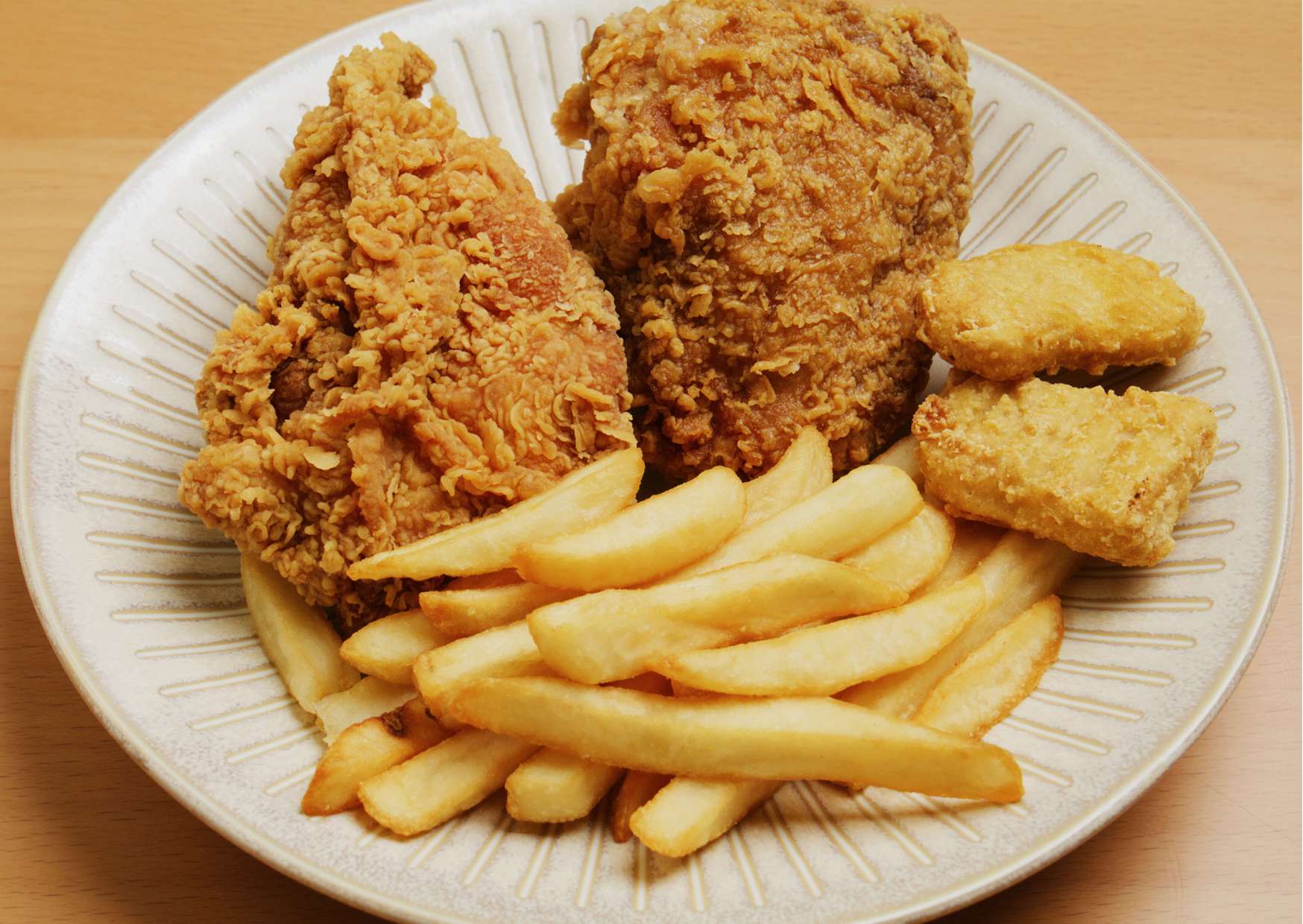
A common example is cooking chicken. Raw chicken may contain harmful bacteria, including pathogens that can cause food poisoning. Cooking the product to the correct time and temperature reduces this hazard to a safe level. If the chicken is undercooked, the hazard may remain, which is why cooking is often identified as a CCP in poultry operations.
Another example of critical control points in food production is metal detection after packing. If there is a realistic risk of metal fragments entering food through machinery or processing equipment, a metal detector may be installed as a control measure before products leave the factory. If the detector fails, affected products must be identified, isolated and investigated before release.
The key principle is that a CCP must be specific and measurable. A general instruction such as “be careful with food” is not a CCP. A clear control such as “cook each batch to a defined core temperature for a specified time and record the result” represents a practical CCP because it can be monitored and verified.
To understand critical control points in food production properly, it is important to separate three key concepts: hazards, control measures and critical limits.
A hazard is anything that could make food unsafe. A control measure is an action used to prevent, eliminate or reduce that hazard. A critical limit is a measurable boundary that determines whether the control measure is operating effectively.
For example, the hazard may be the survival of harmful bacteria in cooked food. The control measure is the cooking process. The critical limit may be a required core temperature maintained for a specific period. Monitoring records then provide evidence that the product achieved the required safety standard.
Not every important food safety activity is a CCP. Controls such as cleaning, pest management, staff hygiene, supplier approval and equipment maintenance are essential, but they are often managed through prerequisite programmes (PRPs). These programmes create the foundation for safe food production and support the effectiveness of CCPs.
A CCP is usually a stage where losing control could create a significant food safety risk and where immediate corrective action is required. This is why businesses must carefully assess their own processes rather than relying on generic lists.
The idea of 10 critical control points in food production can sometimes be misleading. HACCP does not require every business to have the same number of CCPs. A chilled ready-meal manufacturer, bakery, dairy processor, seafood producer and catering kitchen may all have different CCPs depending on their products, processes, equipment, hazards and intended consumers.
Understanding critical control points in food production is essential because UK food businesses are expected to manage food safety using procedures based on HACCP principles. HACCP stands for Hazard Analysis and Critical Control Point and provides a structured approach to identifying hazards, establishing controls, monitoring performance and maintaining evidence.
Food businesses must understand what could go wrong within their operations and identify hazards that need to be prevented, eliminated or reduced to an acceptable level. They must also establish CCPs, define critical limits, monitor controls, take corrective action when problems occur and maintain accurate records.
Effective CCP management supports legal compliance, but it also builds trust with customers, retailers, auditors and enforcement authorities. A well-developed HACCP plan, supported by accurate CCP monitoring records, demonstrates that food safety is managed through planned procedures rather than assumptions.
Poor management of critical control points in food production can result in unsafe products, recalls, customer complaints, enforcement action and damage to business reputation. It may also affect relationships with retailers, wholesalers and commercial customers who require evidence of strong food safety controls.
Good CCP management helps businesses identify problems before unsafe food reaches consumers. For example:
These practical examples of critical control points in food production show why CCPs are a fundamental part of professional food safety management. When correctly identified, monitored and reviewed, CCPs help businesses protect consumers, maintain compliance and improve confidence in their food production systems.
Critical Control Points in Food Production are managed effectively through a structured HACCP cycle that helps businesses identify, control and monitor food safety risks. The HACCP cycle begins with a clear understanding of the food product and its production process. A business should know its ingredients, suppliers, packaging materials, storage conditions, shelf life, intended use and the consumers who may use the product.
The next stage is to map the complete production process. To explain the complete food production cycle in industries highlighting critical control points, businesses must review every stage from the arrival of raw materials through to the final product reaching the customer.
In a food manufacturing environment, this may include raw material receiving, chilled or frozen storage, preparation, mixing, cooking, cooling, portioning, packing, labelling, finished product storage and dispatch. In catering operations, the cycle may include purchasing, delivery, storage, preparation, cooking, hot holding, cooling, reheating, service and disposal.
The HACCP team then reviews each stage and identifies potential hazards. This is where critical points of food contamination become visible. Raw ingredients may contaminate ready-to-eat foods, products may remain too long at unsafe temperatures, allergens may transfer through shared equipment, packaging may not match the product, or incorrect chemicals may be used during cleaning.

Once hazards are identified, appropriate control measures are selected. Some risks are managed through general food safety procedures, such as cleaning schedules, hygiene controls and supplier approval. Other hazards require critical control points in food production because control at a specific stage is essential to prevent unsafe food.
The HACCP cycle continues through monitoring, corrective action, verification and review. HACCP is not simply a document stored away for audits; it should reflect the real processes of the business and demonstrate how food safety is checked and maintained every day.
The effective management of Critical Control Points in Food Production can be understood through seven connected HACCP steps.
The first step is to identify hazards at every stage of production. Businesses should consider biological, chemical, physical and allergenic risks, including hazards linked to ingredients, employees, equipment, storage conditions, processing methods and packaging.
A strong hazard analysis focuses on realistic risks based on scientific knowledge, industry experience and the specific characteristics of the operation.
The second step is to determine where control is essential. To identify critical control points in the food production system, businesses must assess whether losing control at a particular stage could result in unsafe food.
If the hazard can be controlled effectively at a later stage, the process step may not be a CCP. However, if no later step exists to remove or reduce the hazard, the stage may become a critical control point.
Each CCP must have clearly defined critical limits that separate safe and unsafe conditions. These limits must be measurable and may include temperature, time, pH level, water activity, chemical concentration, detector sensitivity or verified label information.
For example, a cooking CCP may require a specific core temperature for a set period to ensure harmful microorganisms are reduced to a safe level.
Monitoring ensures that critical control points in food production remain under control. Businesses must define who is responsible, how often checks are completed, what equipment is used and how results are recorded.
Reliable monitoring provides evidence that food safety controls are operating effectively.
A corrective action procedure explains what employees must do when a critical limit is not achieved. This may include isolating affected products, assessing safety, correcting the process, informing responsible managers and recording the actions taken.
Clear corrective actions help businesses respond quickly and prevent unsafe products from reaching consumers.
Verification confirms that the HACCP system is working as intended. This may involve reviewing monitoring records, checking calibration certificates, auditing procedures, testing equipment performance and confirming that employees follow established controls.
Accurate documentation is essential for demonstrating effective food safety management. Records should show what CCP was checked, when it was monitored, who completed the check, the results obtained and any corrective actions taken.
Without reliable records, businesses cannot demonstrate that their Critical Control Points in Food Production are properly controlled.
To successfully identify critical control points in the food production system, businesses should begin with their actual processes rather than relying on generic templates.
A practical approach is to follow the complete operation from receiving raw materials to dispatch and compare documented procedures with what employees actually do during daily production. This review should include temporary storage, delays, rework, product changeovers, cleaning activities and staff handovers.
Many food safety weaknesses occur when a HACCP plan describes an ideal process rather than the real working environment. A practical HACCP assessment should reflect actual production conditions.
Once the process flow is confirmed, each stage should be assessed by asking:
For example, chilled storage can slow bacterial growth but does not remove bacteria already present. Cooking may become the CCP because it reduces the biological hazard. After cooking, cooling may become critical if food is stored for later consumption.
An example of critical control point in food industry operations is allergen label verification. A business producing foods containing allergens may rely on segregation, cleaning procedures and recipe controls as preventive measures. However, final label checks may become a CCP if incorrect labelling could expose allergic consumers to serious harm.
Effective HACCP systems are specific, practical and based on evidence. They should include only the controls that are genuinely necessary for protecting food safety.
The most common critical control points in food production vary depending on the product, process and hazards identified. However, several stages frequently require strict control across different food industries.
Cooking is one of the most recognised CCPs. It is commonly used to reduce harmful microorganisms in meat, poultry, fish, sauces and ready meals. Pasteurisation performs a similar role in dairy products, juices and other liquid foods by reducing microbiological risks.
Cooling can become a CCP when cooked products must move quickly through temperature ranges where bacteria can multiply. Chilled storage and frozen storage may also be critical where temperature abuse could make products unsafe or affect their intended shelf life.
Metal detection and X-ray inspection may become CCPs in manufacturing environments where foreign-body contamination is a realistic risk. Filtration, sieving and magnetic separation may also provide essential controls in dry ingredient and liquid-processing operations.
Packaging and seal integrity can become important Critical Control Points in Food Production for vacuum-packed and modified-atmosphere products. A packaging failure may allow contamination, spoilage or reduced shelf life.
Allergen label verification is another important CCP. A product may be cooked, chilled and packed correctly but still present a serious safety risk if allergen information is incorrect. For this reason, many businesses treat allergen controls as safety-critical processes alongside temperature and contamination controls.
The frequently searched term “10 critical control points in food production” should not be treated as a fixed HACCP requirement. The number of CCPs depends on the business, product, hazards and production methods. A well-designed HACCP system focuses on controlling genuine risks rather than creating unnecessary CCPs.
Critical Control Points in Food Production are best understood through practical examples because they show how CCPs operate within real food businesses. These examples demonstrate how companies identify hazards, apply controls, monitor results and take corrective action to protect consumers.
In a cooked chicken operation, raw poultry may contain harmful bacteria such as Salmonella or Campylobacter. The cooking stage may become a CCP because heat treatment is required to reduce the hazard to a safe level. The critical limit may be a defined core temperature and holding time. Monitoring involves using a calibrated temperature probe, checking each batch and maintaining accurate records as evidence that the control has been achieved.
In a chilled ready-meal factory, cooling may be one of the important critical control points for food safety. After cooking, products must be cooled safely before being placed into chilled storage. If cooling is too slow, bacteria may multiply and create a food safety risk. Monitoring may include checking product temperatures at defined intervals and recording results for verification.
In a dairy processing plant, pasteurisation may be identified as a CCP. The hazard is the presence of harmful microorganisms in milk or liquid products. The control measure is heat treatment under controlled conditions. The business must monitor time, temperature and equipment performance to ensure that the process consistently meets food safety requirements.
In a bakery or dry goods manufacturing environment, metal detection may become a CCP where machinery or processing activities create a realistic risk of physical contamination. Test pieces are used regularly to confirm that detection equipment is operating correctly. If the detector fails, affected products must be isolated, assessed and managed according to the corrective action procedure.
In an allergen-controlled sandwich operation, final label verification may become a critical control point. The product, recipe, ingredients and packaging information must match correctly before release. If allergens such as nuts, milk, eggs or gluten are not declared accurately, the product may pose a serious risk to allergic consumers.
These critical points of food contamination examples show that CCPs are not simply theoretical concepts. They represent real stages where food safety depends on effective controls, accurate monitoring and trained employees following established procedures.
Technology plays an increasingly important role in managing Critical Control Points in Food Production by improving accuracy, traceability and monitoring efficiency. Digital temperature probes, automated monitoring systems, barcode verification, cloud-based records, X-ray inspection and metal detection equipment help businesses maintain consistent food safety controls.
Modern technology can help identify critical points of food contamination in a food production control cycle by providing faster information and better visibility of production activities. For example, temperature sensors can continuously monitor cold storage conditions and alert managers when limits are exceeded.
In cooking operations, digital systems can record batch temperatures automatically, reducing manual recording errors. In packaging areas, barcode verification systems can help confirm that the correct product, label and packaging materials are being used before distribution.
Digital HACCP systems can also strengthen traceability. If a CCP failure affects a specific batch, electronic records can help identify production times, ingredients, processing lines, equipment, employees involved and distribution routes. This allows businesses to carry out focused investigations, product holds or withdrawals when necessary.
However, technology does not replace human responsibility in managing critical control points for food safety. Sensors must be calibrated correctly, alarms must be investigated and employees must understand how to interpret records and respond appropriately.
A business may invest in advanced equipment but still experience failures if employees ignore warnings, monitoring is not reviewed or corrective actions are unclear. Technology should support HACCP systems by improving control and decision-making, not replace training, supervision and professional judgement.
Training is the connection between a written HACCP plan and effective daily food safety practices. Well-trained employees are essential for maintaining Critical Control Points in Food Production because they are responsible for carrying out monitoring activities and responding when problems occur.
A food handler responsible for monitoring a CCP must understand the purpose of the check, the critical limit and the consequences of failure. They should know how to use equipment correctly, record results accurately and report issues immediately. Simply completing a form without understanding the reason behind the check creates a weak food safety system.
Supervisors require a deeper understanding of critical control points for food safety. They should be able to review monitoring records, investigate failures, confirm corrective actions and recognise when HACCP procedures may need updating.
Managers also play an important role by ensuring that staffing levels, equipment, resources and workplace culture support effective food safety management. Strong leadership helps ensure that CCP procedures are followed consistently.
Training should always be practical and linked to real production activities. Employees should practise using thermometers, checking labels, identifying cross-contamination risks, completing detector checks and recording monitoring results correctly.
Staff should also understand the critical points of food contamination within their own operation, including where hazards may enter, increase or transfer between products. This knowledge helps employees make better decisions during daily production.
Food safety training should be refreshed whenever roles change, new equipment is introduced, new products are developed, procedures are updated or monitoring failures occur. Regular training ensures that employees remain confident and competent in managing Critical Control Points in Food Production.
A business with knowledgeable and well-trained employees is more likely to identify problems early, apply effective corrective actions and maintain a strong food safety culture.
Food businesses must be able to demonstrate that food safety risks are managed through suitable procedures and effective controls. Critical Control Points in Food Production form an important part of this process because they show where significant hazards are identified, controlled and monitored.
For small food businesses, tools such as Safer Food Better Business can help structure safe working methods and daily food safety records. For larger manufacturers and more complex operations, a detailed HACCP plan is usually required to identify hazards and establish appropriate CCP controls.
Compliance depends on both system design and practical implementation. A HACCP plan that looks effective on paper but is not followed during daily production will not protect consumers or the business.
A complete food safety system should include the process flow, hazard analysis, CCP decisions, critical limits, monitoring procedures, corrective actions, verification activities and review history. Employees should understand the parts of the system that apply to their responsibilities.
Retailers, local authorities, auditors and customers may also expect evidence of staff training, equipment calibration, cleaning procedures, allergen management and supplier controls. Some customer or industry requirements may go beyond minimum legal expectations.
This is why critical control points for food safety must be managed consistently throughout the operation. The purpose is not to create unnecessary paperwork. The purpose is to demonstrate that the business understands its hazards and applies effective controls at the correct stages.
Effective management of Critical Control Points in Food Production begins with clarity. Every CCP should have a clear purpose, a defined hazard, a measurable critical limit and an assigned responsible person.
The monitoring method should be realistic and suitable for the workplace. A system that appears detailed but cannot be followed during busy production periods is unlikely to work effectively. Records should be simple enough for employees to complete correctly while providing enough evidence to demonstrate control.
Corrective actions should always be established before problems occur. Employees should not have to make uncertain decisions under pressure about whether unsafe food should be reworked, held, investigated or disposed of. Procedures should clearly explain who is responsible, how products are controlled and what actions must be recorded.
Calibration is another essential part of managing Critical Control Points in Food Production. Equipment such as thermometers, pH meters, weighing scales and detection systems must provide accurate results. Calibration records should be actively reviewed to confirm that monitoring equipment remains reliable.
Communication between departments is also important. Procurement decisions, engineering work, production changes and packaging updates can all affect CCP performance. For example, a supplier change may introduce a new allergen risk, while equipment adjustments may affect temperature control or contamination risks.
A strong food safety culture encourages employees to report problems rather than hide them. Understanding the critical points of food contamination helps staff recognise where failures may occur and why early reporting is essential.
When employees feel comfortable raising concerns, businesses can investigate issues, apply corrective actions and improve their food safety systems before serious failures occur.
Critical Control Points in Food Production should improve over time as businesses learn from monitoring records, incidents, audits, customer feedback and operational experience.
A HACCP review should take place whenever significant changes occur, including new products, new ingredients, supplier changes, equipment replacement, packaging redesign, increased production volumes or updated guidance.
Reviews should also be completed after customer complaints, near misses, recalls, audit findings or repeated CCP failures.
If a CCP repeatedly fails, the business should investigate the root cause instead of applying the same corrective action repeatedly. For example, repeated cooling failures may indicate overloaded chillers, poor tray spacing, slow movement between cooking and chilling areas or unsuitable batch sizes.
Monitoring records can help identify trends before they become serious problems. A refrigerator that regularly approaches its temperature limit may require maintenance before failure occurs. A team that frequently misses label checks may need improved workflow design rather than additional reminders alone.
Understanding the critical points of food contamination in a food production control cycle allows businesses to identify weaknesses and improve preventive measures. Monitoring trends, reviewing procedures and learning from failures all contribute to stronger food safety performance.
Continuous improvement also includes employee development. If staff struggle to understand a CCP, training may need to become more practical. If records are incomplete, the monitoring form or process may need to be redesigned.
A strong HACCP system should become more effective as the business gains experience and improves its controls.
Modern food production is becoming faster, more automated and increasingly complex. Longer supply chains, changing product ranges and higher customer expectations mean businesses must maintain strong food safety controls.
Critical Control Points in Food Production help businesses remain in control by identifying the stages where safety risks require immediate attention. They also provide evidence that the organisation is actively managing hazards and protecting consumers.
For growing food businesses, effective CCP management supports expansion. A company moving from small-scale catering into retail supply may require stronger documentation, improved verification systems and more detailed monitoring records.
Manufacturers supplying retailers or large customers may also face additional audit requirements. Demonstrating effective critical control points for food safety can help build trust with customers, auditors and regulatory authorities.
Future-ready production lines will combine trained employees, effective processes and reliable technology. Digital monitoring systems, automation and traceability tools can improve control, but they are only effective when supported by a well-designed HACCP system.
Technology cannot replace professional judgement. Employees must understand hazards, recognise the critical points of food contamination, follow procedures correctly and take action when controls are at risk.
The strongest food businesses are not necessarily those with the longest HACCP documents. They are the businesses where teams understand their responsibilities, monitor controls effectively and respond quickly when food safety risks appear.
Critical Control Points in Food Production protect both consumers and food businesses by identifying where significant hazards must be controlled. They provide a structured approach for monitoring processes, taking corrective action when problems occur and verifying that food safety controls remain effective.
To explain the complete food production cycle in industries highlighting critical control points, businesses must consider every stage of production, including receiving, storage, preparation, processing, cooking, cooling, packing, labelling, finished-product storage, distribution and service.
Food safety hazards can enter at any stage of the process. However, Critical Control Points in Food Production are the specific stages where control is essential to prevent, eliminate or reduce risks to an acceptable level.
The critical points of food contamination in a food production control cycle commonly include poor temperature control, raw-to-ready food contamination, inadequate cooking, slow cooling, foreign-body contamination and incorrect allergen labelling. These risks are not only food safety concerns; they can also create legal, financial and reputational risks for businesses.
A strong CCP management system helps food businesses demonstrate that they take food safety seriously. Effective critical control points for food safety support regulatory compliance, reduce the likelihood of recalls and help build confidence among customers, employees, retailers and commercial partners.
For learners who want to strengthen their understanding of Critical Control Points in Food Production, structured training can make HACCP principles easier to understand and apply in practical situations.
Training Station provides food safety training covering HACCP principles, allergen management and wider catering safety practices. This type of learning can support food handlers, supervisors, catering employees, production teams and individuals who want to improve their knowledge of food safety compliance.
Training does not replace a business-specific HACCP plan, and completing a course alone does not automatically make a workplace compliant. The purpose of training is to help individuals understand safe food production principles, recognise hazards and apply controls more effectively within their role.
For anyone working in food handling, supervision, catering, production, hygiene monitoring or quality assurance, improving HACCP knowledge is a practical step towards safer operations and stronger compliance awareness.

The food business operator has overall responsibility for ensuring that food safety procedures are effective. However, daily CCP monitoring may be completed by trained food handlers, cooks, production operatives, supervisors or quality assurance personnel.
Each person responsible for a CCP should be clearly identified, properly trained and authorised to recognise problems, complete monitoring records and report failures when they occur.
UK food businesses must operate food safety management procedures based on HACCP principles. The law does not require every employee to complete one specific HACCP course, but employees must receive suitable training or supervision based on their responsibilities.
Anyone involved in monitoring Critical Control Points in Food Production should understand HACCP principles at a level appropriate for their role.
CCPs should be reviewed whenever important changes occur, including new products, ingredients, suppliers, equipment, production methods, packaging formats or storage conditions.
Reviews should also take place after complaints, near misses, audit findings, recalls or repeated monitoring failures. Regular planned reviews help confirm that the HACCP system continues to reflect actual business operations.
Yes. Online HACCP and food safety training can help learners understand hazards, CCP identification, monitoring procedures, corrective actions and record keeping.
However, practical workplace competence may still require site-specific training, supervision and experience to ensure that employees can apply food safety controls correctly.
The critical control points in food production are the stages where control is essential to prevent, remove or reduce significant food safety hazards.
Common examples of Critical Control Points in Food Production include cooking, pasteurisation, cooling, chilled storage, metal detection, allergen label verification and packaging seal checks.
The correct CCPs depend on the product, process, equipment, hazards identified and intended consumer group.
No. There is no requirement for every business to have exactly ten CCPs. The number of Critical Control Points in Food Production depends on the individual hazard analysis and the complexity of the operation.
A small catering business may have only a few CCPs, while a large manufacturing facility may require several controls across different production stages.
An example of critical control point in food industry operations is cooking poultry to a defined core temperature.
The hazard is harmful bacteria, the control measure is heat treatment, the critical limit is the required combination of time and temperature, and monitoring is carried out using a calibrated thermometer with recorded results.
The main critical points of food contamination may include receiving contaminated raw materials, poor storage conditions, raw-to-ready food contact, ineffective cleaning, poor personal hygiene, inadequate cooking, slow cooling, foreign-body risks and incorrect allergen information.
Understanding these critical points of food contamination in a food production control cycle helps businesses apply preventive controls at the stages where they matter most.
CCP records should include monitoring results, dates, times, responsible employees, equipment checks, deviations, corrective actions and verification activities.
Records should be clear and accurate enough to demonstrate that Critical Control Points in Food Production have been monitored and controlled effectively.
When a CCP fails, the affected product must be controlled immediately. The business should assess whether the product can be made safe, requires further investigation or must be rejected.
The cause of the failure should then be identified, corrective actions should be completed and all actions should be properly recorded to prevent the issue from happening again.