
Designated Safeguarding Lead (DSL) Training

- Access
- Lifetime
- Assistance
- Expert Tutor Support
- Flexibility
- Learn Anytime, Anywhere
Overview
Designated Safeguarding Lead (DSL) Training
Get Ready to Develop Your Safeguarding Expertise or Take on Designated Safeguarding Lead Responsibilities in the UK
Develop essential safeguarding knowledge, understand child protection responsibilities, and build a strong foundation for safeguarding leadership and professional development opportunities in the UK’s education and childcare sectors!
✅ Master Safeguarding Fundamentals — Learn essential safeguarding principles, explore child protection legislation, and understand the responsibilities of a Designated Safeguarding Lead.
✅ Develop Child Protection & Reporting Knowledge — Discover how to recognise signs of abuse, respond appropriately to safeguarding disclosures, and understand reporting and record-keeping procedures.
✅ Build Safeguarding Leadership & Online Safety Awareness — Explore multi-agency working, confidentiality, information sharing, safer recruitment, online safety, child exploitation, and the Prevent Duty.
✅ Explore Career Development Opportunities — Build industry-relevant knowledge for safeguarding responsibilities, designated safeguarding lead duties, and child protection support roles in schools, nurseries, childcare settings, and other organisations working with children.
Course Overview
Explore the responsibilities of a Designated Safeguarding Lead (DSL) and the procedures involved in safeguarding children. This training course introduces safeguarding principles, relevant legislation and guidance, and the role of designated safeguarding personnel in managing concerns within child-facing settings.
The curriculum examines how safeguarding concerns may be recognised and responded to, including the signs of abuse and the handling of disclosures. It also explores the responsibilities associated with recording concerns, maintaining confidentiality and sharing information appropriately.
Further topics include the role of the DSL in child protection procedures and multi-agency working. Learners also examine online safeguarding risks and different forms of exploitation and abuse, providing context for the range of concerns that may arise in safeguarding practice.
Designed for learners interested in designated safeguarding responsibilities in schools, childcare and related environments, the course provides an overview of the policies, procedures and professional considerations associated with the DSL role.
Key Curriculum Topics
-
Safeguarding Legislation, Guidance, Policies and Procedures: Explore the frameworks and procedures that inform safeguarding responsibilities.
-
DSL Roles, Responsibilities and Multi-Agency Working: Examine the duties of a designated safeguarding lead and their relationship with other agencies.
-
Recognising Signs of Abuse and Responding to Disclosures: Understand the principles of identifying and responding to safeguarding concerns.
-
Record Keeping, Confidentiality and Information Sharing: Explore the responsibilities involved in managing safeguarding information.
-
Child Protection, Online Risks and Exploitation: Examine child protection considerations, online safeguarding risks and different forms of abuse and exploitation.
Course Curriculum
Module 1: Introduction to Safeguarding
This module introduces safeguarding and its central purpose in protecting children from harm and promoting their welfare.
Main learning topics:
-
Introduction to safeguarding
-
Child safety and welfare
-
Safeguarding principles
-
Safeguarding in child-facing settings
Module 2: Understanding Child Abuse
This module explores child abuse as a safeguarding concern and introduces the importance of understanding abuse when protecting children.
Main learning topics:
-
Understanding child abuse
-
Forms of abuse
-
Child protection concerns
-
Safeguarding awareness
Module 3: Legislation and Guidance
This module introduces legislation and guidance relevant to safeguarding. It provides a foundation for understanding the rules and guidance that inform safeguarding responsibilities.
Main learning topics:
-
Safeguarding legislation
-
Relevant guidance
-
Legal frameworks for child protection
-
Safeguarding responsibilities
Module 4: Roles and Responsibilities of a DSL
This module focuses on the role of a designated safeguarding lead and the responsibilities associated with the position.
Main learning topics:
-
The designated safeguarding lead role
-
DSL responsibilities
-
Safeguarding oversight
-
Child protection responsibilities
Module 5: Safeguarding Policies and Procedures
This module examines safeguarding policies and procedures, highlighting their place in organising and guiding safeguarding practice.
Main learning topics:
-
Safeguarding policies
-
Safeguarding procedures
-
Applying organisational procedures
-
Consistent safeguarding practice
Module 6: Recognising Signs of Abuse
This module focuses on recognising signs of abuse. It introduces an important area of safeguarding awareness: identifying potential indicators that may require appropriate attention.
Main learning topics:
-
Signs of abuse
-
Recognising safeguarding concerns
-
Identifying potential indicators
-
Responding to concerns through appropriate procedures
Module 7: Responding to Disclosure
This module covers responding when a child discloses information relating to a safeguarding concern. It introduces disclosure as an important part of child protection practice.
Main learning topics:
-
Understanding disclosures
-
Responding to a disclosure
-
Safeguarding concerns raised by children
-
Following relevant procedures
Module 8: Record Keeping and Documentation
This module explores record keeping and documentation in safeguarding. It introduces the importance of maintaining records in accordance with relevant procedures.
Main learning topics:
-
Safeguarding records
-
Documentation
-
Recording concerns
-
Record-keeping procedures
Module 9: Multi-Agency Working
This module introduces multi-agency working and its relevance to safeguarding children across different services and organisations.
Main learning topics:
-
Multi-agency working
-
Working with relevant agencies
-
Coordination in safeguarding
-
Shared child protection responsibilities
Module 10: Safer Recruitment
This module explores safer recruitment as a safeguarding measure. It introduces the connection between recruitment procedures and protecting children in relevant organisations.
Main learning topics:
-
Safer recruitment
-
Recruitment-related safeguarding
-
Organisational recruitment procedures
-
Child protection considerations
Module 11: Child Protection Procedures
This module focuses on child protection procedures and their role in responding to concerns about a child’s safety or welfare.
Main learning topics:
-
Child protection procedures
-
Safeguarding concerns
-
Following established procedures
-
Child protection responsibilities
Module 12: Confidentiality and Information Sharing
This module introduces confidentiality and information sharing within safeguarding. It explores these important considerations when handling sensitive information about children and safeguarding concerns.
Main learning topics:
-
Confidentiality
-
Safeguarding information
-
Information sharing
-
Handling sensitive records
Module 13: E-Safety and Online Risks
This module explores e-safety and online risks as part of child safeguarding, introducing concerns associated with children’s online environments.
Main learning topics:
-
E-safety
-
Online risks
-
Children’s online safety
-
Digital safeguarding concerns
Module 14: Child Sexual Exploitation (CSE)
This module introduces child sexual exploitation and its relevance to safeguarding and child protection.
Main learning topics:
-
Child sexual exploitation
-
CSE awareness
-
Exploitation-related safeguarding concerns
-
Child protection
Module 15: Child Criminal Exploitation (CCE)
This module focuses on child criminal exploitation, introducing another form of exploitation that safeguarding professionals and child-facing organisations need to understand.
Main learning topics:
-
Child criminal exploitation
-
CCE awareness
-
Exploitation-related concerns
-
Safeguarding children at risk
Module 16: Radicalisation and Prevent Duty
This module explores radicalisation and the Prevent Duty in the context of safeguarding children. It introduces these subjects as areas of concern within safeguarding practice.
Main learning topics:
-
Radicalisation
-
Prevent Duty
-
Safeguarding-related concerns
-
Child protection awareness
Module 17: Female Genital Mutilation (FGM)
This module introduces female genital mutilation (FGM) as a safeguarding concern and places it within the wider context of child protection.
Main learning topics:
-
Female genital mutilation
-
FGM awareness
-
Safeguarding concerns
-
Child protection context
Module 18: Forced Marriage
This module explores forced marriage as a safeguarding concern. It introduces the subject in the context of recognising and addressing potential risks to children and vulnerable individuals.
Main learning topics:
-
Forced marriage
-
Safeguarding awareness
-
Recognising related concerns
-
Child protection context
Module 19: Honour-Based Abuse (HBA)
This module introduces honour-based abuse and its relevance to safeguarding. It helps learners recognise the topic as a distinct area within the course’s coverage of abuse and protection.
Main learning topics:
-
Honour-based abuse
-
HBA awareness
-
Safeguarding concerns
-
Child protection context
Module 20: Domestic Abuse and Safeguarding
This module explores domestic abuse in relation to safeguarding. It introduces the subject as a concern that may affect children’s safety and welfare.
Main learning topics:
-
Domestic abuse
-
Domestic abuse awareness
-
Safeguarding concerns
-
Child protection and welfare
Who Is This Course For?
The Designated Safeguarding Lead Training course is intended for learners who want to understand safeguarding responsibilities and child protection procedures. It may be relevant to people working in or exploring the following areas.
-
Aspiring designated safeguarding leads: People interested in understanding the responsibilities and procedures associated with a DSL role before exploring the position’s requirements.
-
Existing DSLs and deputy DSLs: Individuals who want to revisit safeguarding policies, record keeping, information sharing and multi-agency working. They should check whether the course meets their employer’s training requirements.
-
Teachers and school staff: Education professionals who want to develop their understanding of child protection procedures, signs of abuse and safeguarding concerns.
-
Childcare and early years staff: People working with children who want foundational knowledge of safeguarding and the importance of appropriate procedures.
-
Safeguarding and child protection support staff: Individuals interested in safeguarding-related work who want to study legislation, guidance, exploitation and online risks.
-
Learners considering safeguarding careers: Career changers and beginners who want an introduction to the subject before researching suitable roles, further training and employer requirements.
The course title and curriculum cover a broad range of safeguarding topics, but the supplied information does not confirm specialist practical training or separate modules dedicated to each professional setting.
Requirements
No formal entry requirements have been provided in the supplied course information. Specific academic qualifications, previous safeguarding experience or professional registration requirements therefore cannot be confirmed.
Learners interested in designated safeguarding lead jobs should review the requirements of the relevant employer and setting. DSL appointments may involve additional safeguarding training, professional experience and responsibilities appropriate to the organisation. Completing this online course should not be assumed to satisfy statutory guidance, employer-specific training requirements or the requirements for appointment as a DSL.
Skills You Can Develop
Safeguarding awareness — Build an understanding of safeguarding principles and their relevance to protecting children from harm.
Understanding child abuse — Explore child abuse as a safeguarding concern and develop awareness of the subject.
Recognition of potential abuse indicators — Study the signs of abuse covered in the curriculum and understand their relevance to safeguarding concerns.
Understanding DSL responsibilities — Develop foundational knowledge of the role and responsibilities of a designated safeguarding lead.
Policy and procedure awareness — Understand the importance of safeguarding policies and child protection procedures.
Responding to disclosures — Learn about responding to disclosures within the context of safeguarding procedures.
Record keeping and documentation awareness — Understand the role of safeguarding records and documentation.
Multi-agency working awareness — Explore how working with other agencies relates to safeguarding children.
Confidentiality and information-sharing awareness — Understand these considerations when handling safeguarding information.
Awareness of specific safeguarding risks — Develop introductory knowledge of e-safety, exploitation, radicalisation, FGM, forced marriage, honour-based abuse and domestic abuse.
These are learning areas supported by the supplied curriculum. They should not be interpreted as confirmation of practical competence or professional authorisation.
Learning Outcomes
By the end of the course, learners should be able to:
-
Explain the purpose and principles of safeguarding children.
-
Identify key concepts relating to child abuse and safeguarding concerns.
-
Describe the relevance of legislation and guidance to safeguarding.
-
Explain the roles and responsibilities associated with a designated safeguarding lead.
-
Recognise the importance of safeguarding policies and procedures.
-
Identify the relevance of recognising signs of abuse and responding to disclosures.
-
Explain the role of record keeping and documentation in safeguarding.
-
Describe the importance of multi-agency working and safer recruitment.
-
Explain confidentiality and information sharing in a safeguarding context.
-
Identify safeguarding concerns associated with online risks, exploitation, radicalisation, FGM, forced marriage, honour-based abuse and domestic abuse.
Career Paths
The course may provide foundational knowledge for learners exploring safeguarding-related work. However, it does not guarantee employment or automatically qualify learners for a designated safeguarding lead position. Actual requirements depend on the organisation, setting, responsibilities and relevant professional guidance.
Designated Safeguarding Lead (DSL)
Typical UK Salary: Recent UK school vacancies show full-time-equivalent salaries of approximately £35,000–£50,000, with some specialist or senior posts advertised above this range. These are examples from job adverts, not a guaranteed national salary range.
How the course is relevant: The modules on DSL responsibilities, safeguarding policies, child protection procedures, record keeping and multi-agency working introduce subjects associated with this role. Employers may require relevant professional experience and additional training.
Deputy Designated Safeguarding Lead
Typical UK Salary: Recent school vacancies show full-time-equivalent pay varying considerably, with one deputy DSL vacancy advertising approximately £29,500–£31,000. Actual pay depends on responsibilities, employer and working pattern.
How the course is relevant: The course covers safeguarding procedures, disclosures, information sharing and record keeping. This knowledge may be relevant to learners exploring deputy DSL responsibilities, although appointment depends on employer requirements and suitable experience.
Safeguarding Officer / Child Protection Officer
Typical UK Salary: The National Careers Service lists approximately £25,000 a year for starters and £40,000 for experienced child protection officers, a role also known as a safeguarding officer.
How the course is relevant: The curriculum covers child abuse, legislation and guidance, exploitation, domestic abuse, safeguarding procedures and multi-agency working. These topics provide introductory knowledge relevant to safeguarding-related work. Specific roles may require additional qualifications, experience or specialist training.
Safeguarding Support Officer
Typical UK Salary: Salaries vary by organisation, location, seniority and responsibilities. Check current UK vacancies for a reliable range for the specific role.
How the course is relevant: The course’s coverage of safeguarding documentation, confidentiality, information sharing and child protection procedures may be useful to learners exploring safeguarding support positions. Employers may set additional requirements for handling sensitive cases or records.
School Pastoral or Child Welfare Support Roles
Typical UK Salary: Pay varies according to the job title, school, responsibilities and working pattern. Review current vacancies for role-specific salary information.
How the course is relevant: The course introduces safeguarding concerns, child protection procedures and multi-agency working. These subjects may be relevant to people exploring pastoral or child welfare support work, but the course does not establish that learners meet the entry requirements for any particular position.
FAQs
1. What is a DSL?
A DSL, or designated safeguarding lead, is a person with a designated safeguarding role within an organisation working with children. The role involves safeguarding responsibilities defined by the relevant setting and applicable guidance.
2. What does designated safeguarding lead training cover?
This course covers safeguarding principles, child abuse, legislation and guidance, DSL responsibilities, policies and procedures, signs of abuse, disclosures, record keeping, multi-agency working, safer recruitment and child protection. It also explores online risks and specific forms of exploitation and abuse.
3. Is this designated safeguarding lead training available online?
The supplied course link identifies the course as an online course. For current delivery arrangements, access details and other practical information, consult the provider’s course page.
View the Designated Safeguarding Lead Training course
4. Who should consider taking a DSL safeguarding course?
People exploring safeguarding responsibilities in schools, childcare settings and other child-facing organisations may find the subject relevant. It may also interest existing education or safeguarding staff who want to review key topics, subject to their employer’s training requirements.
5. Does completing DSL training automatically qualify me to become a designated safeguarding lead?
No. Completing this course should not be assumed to qualify someone automatically for a DSL appointment. Employers may require relevant experience, professional qualifications, further training and compliance with applicable safeguarding guidance.
6. What jobs are related to designated safeguarding lead training?
Related roles may include designated safeguarding lead, deputy DSL, safeguarding officer, child protection officer and safeguarding support officer. Entry requirements vary, and some positions require substantial experience or additional professional training.
7. What is the typical designated safeguarding lead salary in the UK?
Salary depends on the employer, setting, experience, responsibilities and working arrangements. Recent school vacancies include full-time-equivalent salaries of around £35,000–£50,000, while some senior roles advertise higher figures. These are indicative vacancy examples, not guaranteed earnings.
Curriculum
- Introduction to Safeguarding
- Understanding Child Abuse
- Legislation and Guidance
- Roles and Responsibilities of a DSL
- Safeguarding Policies and Procedures
- Recognising Signs of Abuse
- Responding to Disclosure
- Record Keeping and Documentation
- Multi-Agency Working
- Safer Recruitment
- Child Protection Procedures
- Confidentiality and Information Sharing
- E-Safety and Online Risks
- Child Sexual Exploitation (CSE)
- Child Criminal Exploitation (CCE)
- Radicalisation and Prevent Duty
- Female Genital Mutilation (FGM)
- Forced Marriage
- Honour-Based Abuse (HBA)
- Domestic Abuse and Safeguarding
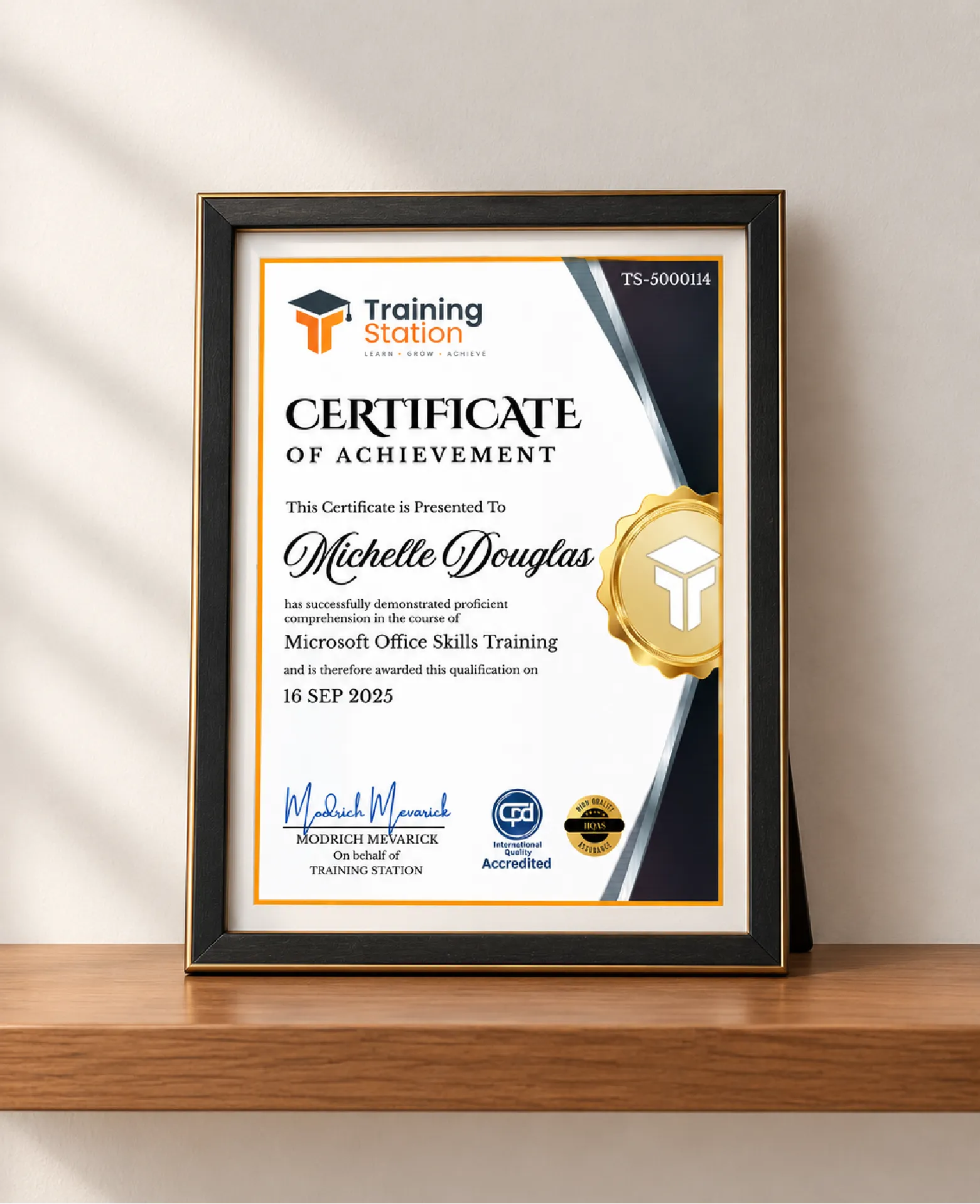
Celebrate your achievement with a CPD-IQ accredited certificate from Training Station! Perfect for showcasing your skills, boosting your career, and enhancing your professional profile.
Get this CourseOur Courses Accreditation




Frequently Asked Questions
Fully online through PDF materials and video lessons. Learn anytime, anywhere.
Self-paced: complete it in a week or spread it over months.
No. The course is beginner-friendly.
Yes. Instructor support is available Monday to Friday.
Yes. We offer a 14-day money-back guarantee.
 Access all courses for Only £99