
Care Certificate (15 Standards)

- Access
- Lifetime
- Assistance
- Expert Tutor Support
- Flexibility
- Learn Anytime, Anywhere
Overview
Care Certificate (15 Standards)
Get Ready to Build a Career as a Care Assistant or Healthcare Support Worker in the UK
Develop essential care knowledge, understand safe and person-centred care principles, and build a strong foundation for exciting career opportunities in the UK’s health and social care sector!
✅ Understand Care Fundamentals — Learn essential care principles, explore the 15 Care Certificate standards, and understand the responsibilities of care assistants and healthcare support workers.
✅ Develop Person-Centred Care & Communication Skills — Explore person-centred care principles, effective communication, equality and diversity, and the importance of maintaining privacy and dignity.
✅ Build Safeguarding & Healthcare Safety Awareness — Understand safeguarding children and adults, infection prevention and control, duty of care, health and safety, basic life support concepts, and essential care responsibilities.
✅ Explore Career Opportunities — Build foundational knowledge relevant to care assistant, healthcare support worker, and social care support roles in care homes, hospitals, community healthcare services, and domiciliary care settings.
Course Overview
Explore the principles of safe, respectful and person-centred care with this Care Certificate training course. The programme introduces the responsibilities, professional values and essential knowledge associated with health and social care support roles.
The curriculum examines the role of care workers, personal development and duty of care, alongside safeguarding children and adults. Learners also explore person-centred approaches, privacy and dignity, and the importance of effective communication when supporting individuals.
Further topics include infection prevention and control, health and safety, basic life support, fluids and nutrition, and equality and diversity. The course also introduces mental health awareness and the responsibilities involved in handling personal information appropriately.
Designed for people exploring care assistant and support worker roles, as well as learners seeking introductory care knowledge, the programme provides an overview of important principles and workplace responsibilities in health and social care.
Key Topics Covered
-
Care Roles, Personal Development and Duty of Care: Explore professional responsibilities and the principles that guide care work.
-
Safeguarding Children and Adults: Understand introductory safeguarding responsibilities and the importance of recognising and reporting concerns.
-
Person-Centred Care, Privacy and Dignity: Examine respectful approaches to supporting individuals and their preferences.
-
Infection Prevention, Health and Safety, and Basic Life Support: Explore essential care safety principles and related responsibilities.
-
Fluids and Nutrition, Equality, Communication and Mental Health: Understand additional considerations involved in providing inclusive and person-centred support.
Course Curriculum
Module 1: Standard 1 – Your Role and Responsibilities
Explore the responsibilities associated with working in a care environment and the importance of understanding your role.
Main learning topics:
-
Care worker roles
-
Professional responsibilities
-
Workplace expectations
-
Responsibilities in care settings
Module 2: Standard 2 – Your Personal Development
Understand the importance of personal development in care and the value of building knowledge and improving work practices.
Main learning topics:
-
Personal development
-
Knowledge and skills development
-
Learning needs
-
Professional improvement
Module 3: Standard 3 – Safeguarding Children
Study safeguarding principles relating to children and the importance of recognising and responding appropriately to concerns about their safety and wellbeing.
Main learning topics:
-
Child safeguarding
-
Children’s safety and wellbeing
-
Recognising safeguarding concerns
-
Safeguarding responsibilities
Module 4: Standard 4 – Safeguarding Adults
Explore safeguarding adults and the importance of protecting people from harm while supporting their wellbeing and rights.
Main learning topics:
-
Adult safeguarding
-
Protection from harm
-
Recognising concerns
-
Safeguarding responsibilities
Module 5: Standard 5 – Person-Centred Care
Learn about person-centred care and the importance of respecting each individual’s needs, preferences and circumstances.
Main learning topics:
-
Person-centred care
-
Individual needs
-
Personal preferences
-
Respectful care practices
Module 6: Standard 6 – Infection Prevention and Control
Understand the importance of preventing and controlling infection to help maintain safer care environments.
Main learning topics:
-
Infection prevention
-
Infection control
-
Reducing infection risks
-
Safe care environments
Module 7: Standard 7 – Health and Safety
Explore health and safety responsibilities and their importance in protecting people in care settings.
Main learning topics:
-
Health and safety principles
-
Workplace responsibilities
-
Recognising potential hazards
-
Safer care environments
Module 8: Standard 8 – Fluids and Nutrition
Study the importance of fluids and nutrition in supporting people’s health and everyday care needs.
Main learning topics:
-
Fluids and hydration
-
Nutrition
-
Individual dietary needs
-
Supporting wellbeing through nutrition
Module 9: Standard 9 – Equality and Diversity
Understand equality and diversity principles and their relevance to fair, respectful and inclusive care.
Main learning topics:
-
Equality
-
Diversity
-
Respect for individual differences
-
Inclusive care practices
Module 10: Standard 10 – Duty of Care
Explore duty of care and the importance of acting responsibly when supporting people in health and social care settings.
Main learning topics:
-
Duty of care
-
Care responsibilities
-
Responsible practice
-
Supporting people’s wellbeing
Module 11: Standard 11 – Data Protection and Confidentiality
Learn why personal information must be handled responsibly and why confidentiality matters in care environments.
Main learning topics:
-
Data protection
-
Confidentiality
-
Handling personal information
-
Respecting privacy
Module 12: Standard 12 – Communication
Explore the role of communication in supporting understanding, respectful relationships and effective care.
Main learning topics:
-
Communication principles
-
Sharing information appropriately
-
Understanding individual needs
-
Communication in care settings
Module 13: Standard 13 – Basic Life Support
Study the subject of basic life support and its importance when responding to situations in which someone may need urgent assistance.
Main learning topics:
-
Basic life support
-
Recognising an emergency
-
The importance of a prompt response
-
Supporting emergency care
Note: This curriculum listing does not specify practical assessment or certification in basic life support.
Module 14: Standard 14 – Caring for Mental Health
Explore mental health as part of care and the importance of considering people’s psychological wellbeing and individual needs.
Main learning topics:
-
Mental health
-
Mental wellbeing
-
Individual care needs
-
Respectful support
Module 15: Standard 15 – Privacy and Dignity
Understand why privacy and dignity are essential to respectful care and how these principles relate to people’s rights and personal preferences.
Main learning topics:
-
Privacy
-
Personal dignity
-
Respectful care
-
Individual rights and preferences
Who Is This Course For?
The Care Certificate (15 Standards) course may be suitable for learners who want to understand the foundations of safe, respectful and responsible care.
-
Aspiring care assistants: Build foundational knowledge of safeguarding, communication, infection control and person-centred care relevant to care assistant roles.
-
Healthcare support worker applicants: Explore care responsibilities, confidentiality, health and safety, and basic life support as introductory learning.
-
Residential care workers: Revisit important principles concerning dignity, privacy, nutrition, mental health and individual needs.
-
Home care and domiciliary care applicants: Develop an understanding of respectful support, safeguarding and responsibilities when assisting people in their own homes.
-
Adult social care workers: Review core care topics, including equality, diversity, duty of care and infection prevention.
-
People considering children’s care or support roles: Gain introductory knowledge of child safeguarding alongside wider care principles.
-
Career changers: Explore essential health and social care concepts before deciding whether to pursue further learning or workplace training.
-
Existing care staff: Use the curriculum as a learning resource to revisit key subjects and identify areas for additional development.
-
Learners interested in safeguarding: Explore the fundamentals of safeguarding children and adults before considering more specialised safeguarding education.
Is this course suitable for aspiring Designated Safeguarding Leads?
It may provide introductory safeguarding knowledge, but it is not specifically a designated safeguarding lead (DSL) training course based on the supplied curriculum. People seeking designated safeguarding lead jobs should investigate role-specific training, relevant experience and the safeguarding requirements of their intended workplace.
Requirements
No formal entry requirements have been supplied for this course.
-
Previous experience in health and social care has not been specified as a requirement.
-
No particular academic qualifications have been stated.
-
No professional registration requirements have been provided.
-
The course may be relevant to beginners who want an introduction to care principles.
Learners should check the provider’s current course information for any additional enrolment requirements. People intending to work in care should also check the training, practical competence, background checks and workplace-specific requirements applicable to their chosen role.
Skills You Can Develop
-
Understanding care responsibilities — Explore the duties and responsibilities associated with working in care settings.
-
Safeguarding awareness — Develop introductory knowledge of safeguarding children and adults and the importance of recognising concerns.
-
Person-centred thinking — Understand why care should reflect individual needs, preferences and circumstances.
-
Infection prevention awareness — Learn about the importance of preventing and controlling infection in care environments.
-
Health and safety awareness — Understand the relevance of safe working practices and workplace responsibilities.
-
Nutrition and hydration awareness — Explore the importance of fluids and nutrition in supporting people’s wellbeing.
-
Equality and diversity awareness — Develop an understanding of respectful and inclusive care.
-
Confidentiality and data protection awareness — Recognise the importance of protecting personal information and respecting privacy.
-
Communication awareness — Understand the role of clear, appropriate communication in care settings.
-
Dignity and privacy awareness — Explore how respectful care recognises individual rights and personal preferences.
-
Mental health awareness — Develop introductory knowledge of mental health as part of a person’s wider care needs.
-
Awareness of basic life support — Become familiar with the subject of basic life support, while recognising that practical competence requires appropriate training and assessment.
Learning Outcomes
By the end of the course, learners should be able to:
-
Explain the importance of understanding their role and responsibilities in a care setting.
-
Identify the value of personal development in improving care knowledge and practice.
-
Recognise the importance of safeguarding children and adults from harm.
-
Describe the principles of person-centred care and the importance of individual needs and preferences.
-
Explain why infection prevention, infection control, and health and safety matter in care environments.
-
Identify the importance of fluids and nutrition in supporting people’s health and wellbeing.
-
Describe the relevance of equality, diversity and duty of care to responsible care practice.
-
Explain the importance of data protection, confidentiality and appropriate communication.
-
Recognise the role of basic life support and the importance of mental health awareness in care.
-
Explain how privacy and dignity contribute to respectful, person-centred care.
Career Paths
The Care Certificate (15 Standards) course covers foundational topics relevant to several health and social care roles. The salary figures below are indicative UK estimates, not guaranteed earnings or outcomes of completing this course. Actual pay depends on employer, location, experience, responsibilities and working hours.
Care Assistant
Typical UK Salary: Approximately £22,000–£28,000 per year.
How the course is relevant: Safeguarding, person-centred care, infection prevention, nutrition, communication and dignity are relevant to supporting people with everyday care needs. Employers may require additional training and workplace assessment.
Healthcare Support Worker
Typical UK Salary: Approximately £24,000–£29,000 per year, depending on employer and NHS pay arrangements.
How the course is relevant: The curriculum introduces health and safety, confidentiality, basic life support, safeguarding and communication. These subjects are relevant to support work in healthcare environments, but the course does not replace employer-specific induction or competency assessments.
Residential Care Worker
Typical UK Salary: Approximately £22,000–£29,000 per year.
How the course is relevant: The course covers privacy, dignity, equality, mental health, fluids and nutrition, and responsibilities towards people receiving care. These topics are relevant to residential care work.
Home Care Worker
Typical UK Salary: Approximately £22,000–£28,000 per year, with actual earnings affected by contracted hours and travel arrangements.
How the course is relevant: Person-centred care, safeguarding, confidentiality, communication and infection control are relevant to providing support in people’s homes. Additional practical training may be required by the employer.
Support Worker
Typical UK Salary: Approximately £22,000–£29,000 per year, depending on the service and level of responsibility.
How the course is relevant: The curriculum provides introductory knowledge of safeguarding, mental health, equality, duty of care and individual dignity. These subjects can be relevant to support roles in health and social care, although particular positions may require specialist experience or further qualifications.
Designated Safeguarding Lead (DSL)
Typical UK Salary: Varies considerably by sector, seniority, employer and existing professional role. Check current UK vacancies for a reliable role-specific estimate.
How the course is relevant: The safeguarding children and adults modules provide introductory knowledge of safeguarding principles. However, a designated safeguarding lead usually needs role-specific safeguarding training, relevant experience and a clear understanding of the legal and organisational responsibilities attached to the position. This course alone should not be treated as designated safeguarding lead training or as a qualification for DSL jobs.
Important career note
These roles have different entry requirements. The course may help learners build foundational knowledge, but employers determine whether applicants meet the required qualifications, practical competencies, experience and training standards.
FAQs
1. What is the Care Certificate (15 Standards)?
The Care Certificate (15 Standards) course introduces essential principles for health and social care, including safeguarding, person-centred care, infection prevention, communication, confidentiality, health and safety, mental health, and privacy and dignity. It provides foundational knowledge relevant to people exploring care roles.
2. What are the 15 standards covered in the Care Certificate course?
The course covers your role and responsibilities, personal development, safeguarding children, safeguarding adults, person-centred care, infection prevention and control, health and safety, fluids and nutrition, equality and diversity, duty of care, data protection and confidentiality, communication, basic life support, caring for mental health, and privacy and dignity.
3. What is a DSL in safeguarding?
A DSL, or designated safeguarding lead, is a person appointed within an organisation to take responsibility for coordinating safeguarding arrangements and helping ensure that concerns are handled appropriately. The exact duties depend on the organisation and sector. The Care Certificate course introduces safeguarding children and adults but does not, based on the supplied curriculum, cover the full responsibilities of a designated safeguarding lead.
4. Does this course provide designated safeguarding lead training online?
The course includes safeguarding children and safeguarding adults, making it relevant to learners seeking introductory safeguarding knowledge. However, it is not presented as a dedicated online designated safeguarding lead training course. Anyone seeking DSL training should check that their chosen programme covers the specific responsibilities, procedures and requirements relevant to their workplace.
5. Can this course help me apply for designated safeguarding lead jobs?
The safeguarding modules may provide useful background knowledge, but completing this course does not automatically qualify you for designated safeguarding lead jobs. Such positions can require relevant professional experience, specialist safeguarding training and knowledge of the applicable legal and organisational framework. Check the requirements of individual vacancies before choosing a training pathway.
6. What skills can I develop through this course?
You can develop foundational knowledge of safeguarding, person-centred care, infection prevention, health and safety, equality and diversity, confidentiality, communication, nutrition, mental health, basic life support, privacy and dignity. Practical competence in areas such as basic life support may require additional training and assessment.
7. What jobs can I explore after studying the Care Certificate (15 Standards)?
The course content is relevant to people exploring care assistant, healthcare support worker, residential care worker, home care worker and support worker roles. It may also help existing care staff revisit essential principles. Employment depends on individual circumstances and employer requirements, and additional qualifications, practical training or experience may be necessary.
Curriculum
- Your role and responsibilities
- Your personal development
- Safeguarding children
- Safeguarding adults
- Person-centered care
- Infection prevention and control
- Health and safety
- Fluids and nutrition
- Equality and diversity
- Duty of care
- Data protection and confidentiality
- Communication
- Basic life support
- Caring for Mental Health
- Privacy and Dignity
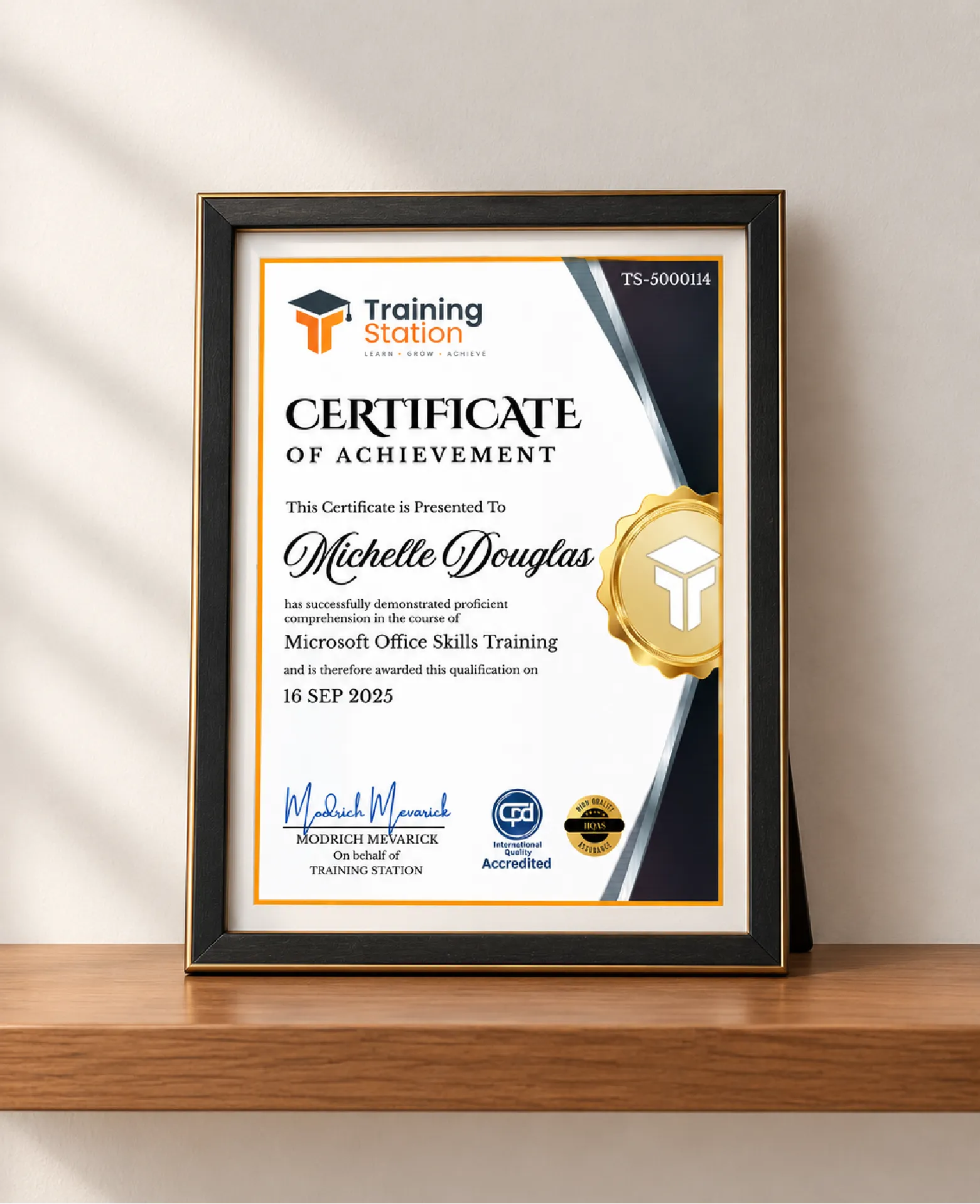
Celebrate your achievement with a CPD-IQ accredited certificate from Training Station! Perfect for showcasing your skills, boosting your career, and enhancing your professional profile.
Get this CourseOur Courses Accreditation





Frequently Asked Questions
Fully online through PDF materials and video lessons. Learn anytime, anywhere.
Self-paced: complete it in a week or spread it over months.
No. The course is beginner-friendly.
Yes. Instructor support is available Monday to Friday.
Yes. We offer a 14-day money-back guarantee.
 Access all courses for Only £99