
PMP Certification Preparation Course: Project Management Training

- Access
- Lifetime
- Assistance
- Expert Tutor Support
- Flexibility
- Learn Anytime, Anywhere
Overview
The Project Management Professional (PMP) Certification Preparation Course is designed to help you develop a structured understanding of project management principles and prepare for further study towards the PMP certification examination. Project management involves organising people, resources, activities and information to achieve defined objectives within agreed constraints. It is used across industries, including construction, technology, healthcare, finance, engineering, business services and public-sector organisations.
This course introduces the knowledge areas, processes, professional responsibilities and practical considerations that contribute to successful project delivery. You will explore how projects are initiated, planned, executed, monitored and brought to completion. You will also examine the importance of communication, stakeholder engagement, risk management, scheduling, budgeting, quality and team leadership.
The training will help you understand how project managers balance competing priorities and respond to changing requirements. You will explore predictive, agile and hybrid approaches and consider how different delivery methods can be selected according to project needs.
The course is intended to support structured examination preparation and strengthen your understanding of project management practice. PMP certification is awarded by the Project Management Institute (PMI), not by this course. Eligibility requirements, examination content and certification policies can change, so you should check the current PMI handbook and official guidance before applying.
By completing the training, you should have a clearer understanding of project management concepts and a stronger foundation for continuing your preparation for the PMP examination.
What You Will Learn
You will develop an understanding of:
-
The role and responsibilities of a project manager.
-
Project management principles and terminology.
-
Project initiation and business justification.
-
Scope definition and requirements management.
-
Scheduling, resources and cost planning.
-
Risk identification and response planning.
-
Quality management and project performance.
-
Stakeholder engagement and communication.
-
Team leadership and conflict management.
-
Predictive, agile and hybrid delivery approaches.
-
Project monitoring, change control and closure.
-
Examination preparation and knowledge review.
Understanding Project Management
You will begin by exploring what projects are and how they differ from ongoing operational activities. A project is generally a temporary undertaking designed to create a specific product, service or result. Project management provides the structure needed to coordinate work and manage constraints.
You will examine the responsibilities of a project manager and the importance of balancing scope, schedule, cost, quality, resources and stakeholder expectations.
You will also explore how project management supports organisational objectives. Understanding the purpose behind a project can help teams make better decisions about priorities, resources and expected outcomes.
Project Management Principles and Professional Responsibilities
You will explore the principles that guide effective project management, including accountability, collaboration, value delivery, adaptability and responsible decision-making.
The course will introduce the importance of professional conduct, ethical behaviour and transparent communication. You will consider how project managers handle competing interests, maintain trust and make decisions that support the project’s objectives.
You will also examine why project management requires both technical knowledge and interpersonal capability. Planning tools are important, but successful delivery also depends on communication, judgement and collaboration.
Project Initiation and Business Justification
A project needs a clear purpose before significant work begins. You will explore the initiation stage and the information used to establish why a project should proceed.
You will learn about business cases, project objectives, expected benefits, constraints and initial feasibility considerations. You will also examine the purpose of a project charter and how it can establish authority, direction and high-level expectations.
This section will help you understand why clear initiation reduces uncertainty and provides a foundation for planning.
Scope Management and Requirements
Project scope describes the work required to deliver the intended result. You will explore how requirements are gathered, clarified and documented.
You will learn about scope statements, deliverables, work breakdown structures and methods for organising project activities. You will also consider how unclear requirements and uncontrolled changes can affect delivery.
The course will introduce the importance of confirming expectations with stakeholders and maintaining an agreed understanding of what the project will and will not include.
Schedule and Resource Planning
You will explore how project activities are identified, sequenced and organised into a workable schedule. This includes understanding task dependencies, milestones, durations and the importance of realistic time estimates.
You will also examine resource planning, including people, equipment, materials and other requirements. You will learn why resource availability can affect project timing and why plans should be reviewed when circumstances change.
The course will introduce scheduling concepts and help you understand how project managers use planning information to monitor progress.
Cost Management and Budget Control
Managing project costs involves estimating, allocating and monitoring financial resources. You will explore the purpose of project budgets and the relationship between planned expenditure and actual costs.
You will learn about cost estimates, budget baselines, expenditure monitoring and the importance of identifying financial variances. You will also consider how changes to scope or schedule may affect the project budget.
This section will help you understand why cost management is an ongoing activity rather than a task completed only at the beginning of a project.
Risk and Issue Management
Projects operate in uncertain environments. You will explore the difference between risks and issues and learn why both need to be managed.
You will examine approaches to identifying risks, assessing their likelihood and impact, prioritising responses and monitoring changes. You will also consider possible response strategies and the importance of assigning responsibility for agreed actions.
The course will help you understand how proactive risk management can support informed decisions and reduce avoidable disruption.
Quality Management and Project Performance
Quality management focuses on ensuring that project deliverables meet agreed requirements and expectations. You will explore quality planning, assurance and control at an introductory level.
You will also examine the importance of defining measurable acceptance criteria and reviewing deliverables before they are approved.
The course will introduce performance monitoring and the use of relevant information to understand whether the project is progressing as planned. You will consider why quality should be built into project activities rather than treated as a final inspection alone.
Stakeholder Engagement and Communication
Projects involve people with different interests, expectations and levels of influence. You will explore stakeholder identification and the importance of understanding what different groups need from a project.
You will learn how communication planning can help ensure that the right information reaches the appropriate people. You will also examine feedback, reporting, meetings and stakeholder engagement.
This section will help you understand why communication needs to be clear, timely and appropriate to the audience.
Leadership, Teamwork and Conflict Management
Project managers often coordinate people who have different skills, responsibilities and priorities. You will explore leadership approaches and the importance of creating a collaborative working environment.
You will examine team development, motivation, delegation and conflict management. You will also consider how project managers can respond to disagreements, clarify responsibilities and support constructive problem-solving.
These skills are important because project performance depends not only on plans and processes but also on the people responsible for delivering the work.
Predictive, Agile and Hybrid Approaches
You will explore different project delivery approaches and understand why the choice of method should reflect the nature of the project.
Predictive approaches generally involve more detailed upfront planning, while agile approaches use iterative delivery, feedback and adaptation. Hybrid approaches combine elements of different methods.
You will examine the general strengths and considerations associated with each approach and learn why project managers need to understand the working environment before selecting a delivery method.
Monitoring, Change Control and Project Closure
Once a project is underway, progress must be monitored and changes managed. You will explore how project managers compare actual performance with plans and identify areas requiring attention.
You will examine change requests, impact assessments, approval processes and the importance of maintaining clear records. You will also consider how project closure involves confirming deliverables, obtaining acceptance, documenting lessons learned and completing administrative activities.
A structured closure process can help organisations retain useful knowledge and improve future projects.
PMP Examination Preparation
You will explore how to organise your preparation for the PMP examination. This includes reviewing key project management concepts, understanding scenario-based questions and identifying areas that need further study.
You will consider how to create a revision schedule, practise applying concepts and review incorrect answers to identify knowledge gaps.
Because the PMP examination content and eligibility rules may change, you should use the latest official PMI examination materials and handbook as your reference. This course supports preparation but does not guarantee examination success or award the PMP credential.
Who Is This For?
This course is suitable for:
-
Aspiring project managers.
-
Project coordinators and project support staff.
-
Team leaders and supervisors.
-
Business professionals involved in project delivery.
-
Professionals preparing for PMP certification study.
-
Project management students.
-
Individuals moving into project-based responsibilities.
-
Experienced project team members seeking to strengthen their knowledge.
Requirements / Prerequisites
No formal academic qualification is required to study the course. However, learners should understand that the PMP certification itself has separate eligibility requirements set by PMI. These may include specific education, project management experience and project management education requirements.
You should have access to an internet-connected device and be willing to review project management concepts, complete practice activities and undertake independent examination preparation.
Before applying for the PMP examination, check the latest eligibility criteria, application procedures, examination outline and certification requirements directly with PMI.
Career Path
The knowledge covered may support further development towards roles such as:
Project Coordinator: Assist with schedules, documentation, communication and project administration.
Project Support Officer: Help maintain project records, monitor progress and coordinate project activities.
Assistant Project Manager: Support planning, delivery and stakeholder communication under appropriate supervision.
Project Manager: Manage project activities, resources, risks and stakeholder expectations, subject to relevant experience and employer requirements.
Programme Support Professional: Develop knowledge relevant to coordinating related projects and reporting progress.
Project Management Consultant: Consider further professional development in project delivery, governance and organisational improvement.
PMO Analyst: Explore project management office activities involving reporting, standards, documentation and performance information.
PMP certification may support professional development, but this course does not award the credential or guarantee eligibility, examination success or employment. Each role may require additional experience, qualifications and practical competence.
Your Learning Outcome
By completing this course, you should have a stronger understanding of project management principles, processes and professional responsibilities. You will be better prepared to understand project initiation, planning, execution, monitoring and closure, as well as the importance of stakeholder engagement, risk management and leadership.
You will also have a foundation for organising your PMP examination preparation and identifying areas that require further study using current official PMI resources. The course is intended to support your learning journey towards stronger project management knowledge and professional development.
Curriculum
- Module 1_ Introduction to Project Management
- Module 2_ PMP Certification Overview
- Module 3_ Project Integration Management
- Module 4_ Project Scope Management
- Module 5_ Project Schedule Management
- Module 6_ Project Cost Management
- Module 8_ Project Resource Management
- Module 9_ Project Communication Management
- Module 10_ Project Risk Management
- Module 11_ Project Procurement Management
- Module 12_ Project Stakeholder Management
- Module 13_ Agile and Hybrid Project Approaches
- Module 14_ Initiating the Project
- Module 15_ Planning the Project
- Module 16_ Executing the Project
- Module 17_ Monitoring and Controlling the Project
- Module 18_ Closing the Project
- Module 19_ Ethics and Professional Conduct
- Module 20_ Project Governance
- Module 21_ Tailoring Project Management
- Module 22_ Organisational Influences
- Module 23_ Leadership and Team Building
- Module 24_ Servant Leadership
- Module 25_ Project Estimation Techniques
- Module 26_ Scheduling Tools and Techniques
- Module 27_ Budgeting and Forecasting
- Module 28_ Quality Tools and Techniques
- Module 29_ Risk Response Strategies
- Module 30_ Contract and Procurement Management
- Module 31_ Stakeholder Engagement Strategies
- Module 32_ Communication Methods
- Module 33_ Quality Assurance and Control
- Module 34_ Managing Virtual Teams
- Module 35_ Change Management
- Module 36_ Project Performance Measurement
- Module 37_ Lessons Learned and Knowledge Management
- Module 38_ UK-Specific Project Management Practices
- Module 39_ Mock Exam Strategies
- Module 40_ Final Review and Exam Preparation
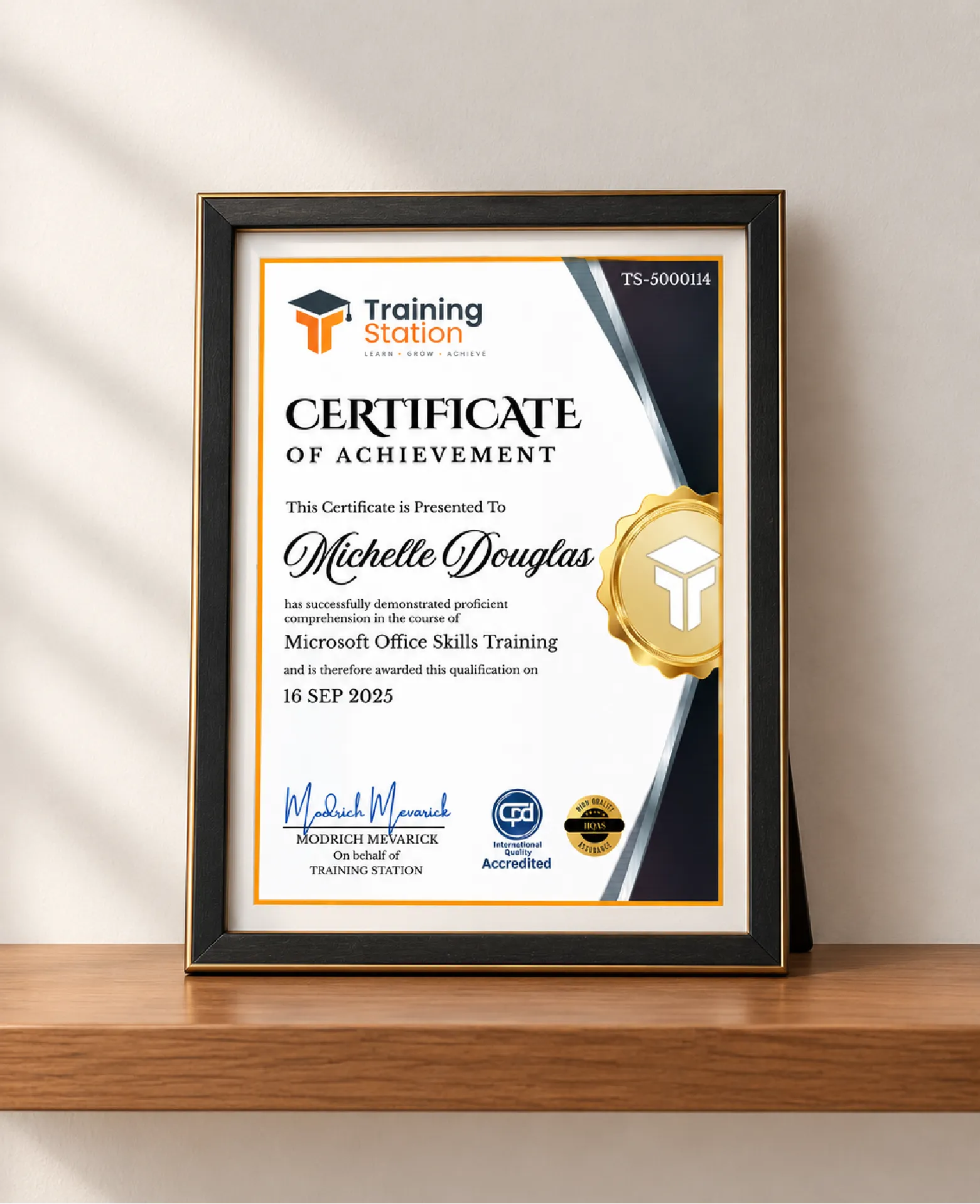
Celebrate your achievement with a CPD-IQ accredited certificate from Training Station! Perfect for showcasing your skills, boosting your career, and enhancing your professional profile.
Get this CourseOur Courses Accreditation



Frequently Asked Questions
Fully online through PDF materials and video lessons. Learn anytime, anywhere.
Self-paced: complete it in a week or spread it over months.
No. The course is beginner-friendly.
Yes. Instructor support is available Monday to Friday.
Yes. We offer a 14-day money-back guarantee.
 Access all courses for Only £99