
Business Development and Strategic Partnerships Course

- Access
- Lifetime
- Assistance
- Expert Tutor Support
- Flexibility
- Learn Anytime, Anywhere
Overview
Successful businesses rarely grow through their own activities alone. Strategic partnerships can help organisations reach new customers, access additional resources, enter different markets and create opportunities that would be difficult to achieve independently. However, building valuable business relationships requires more than exchanging contact details or agreeing to work together. It involves identifying suitable partners, understanding shared objectives, communicating effectively and creating arrangements that benefit all parties.
The Business Development and Strategic Partnerships Course is designed to help you understand how professional partnerships are identified, developed, managed and evaluated. You will explore the role of business development in organisational growth and learn how partnerships can support sales, marketing, innovation, distribution and long-term commercial objectives.
Throughout the course, you will examine how to research potential partners, assess strategic compatibility and identify opportunities for collaboration. You will learn why organisations need clear objectives before approaching prospective partners and how to communicate a partnership proposal in a professional and persuasive way.
You will also explore relationship management, negotiation, stakeholder communication, performance monitoring and partnership development. These topics will help you understand how to establish trust, manage expectations and maintain productive working relationships beyond the initial agreement.
A strong partnership should create measurable value. For this reason, the course introduces the importance of defining responsibilities, setting expectations and evaluating results. You will consider how businesses can review partnership performance, respond to challenges and identify opportunities to improve collaboration.
By the end of the course, you will have a clearer understanding of the business development process and the skills involved in creating successful professional relationships. You will be better prepared to contribute to partnership planning, business growth activities, stakeholder engagement and commercial development initiatives.
What You Will Learn
By completing this course, you will develop the ability to:
-
Explain the purpose of business development and strategic partnerships.
-
Identify potential partners based on business objectives.
-
Research organisations and assess partnership opportunities.
-
Recognise mutual benefits and shared commercial interests.
-
Prepare a structured partnership proposal.
-
Communicate business opportunities professionally.
-
Understand negotiation and relationship-building principles.
-
Set expectations and clarify partnership responsibilities.
-
Maintain productive relationships with stakeholders.
-
Identify potential risks and partnership challenges.
-
Monitor partnership performance using suitable measures.
-
Recognise opportunities for long-term collaboration and growth.
Who Is This For?
Aspiring business development professionals: If you want to explore a career involving business growth, client relationships and commercial opportunities, this course introduces the core concepts you may encounter.
Business owners and entrepreneurs: You can learn how to identify organisations that may complement your products or services and how to approach potential partners with a clear value proposition.
Sales and marketing professionals: The course can help you understand how partnerships may support customer acquisition, market visibility, lead generation and wider commercial activity.
Account managers and relationship managers: You will explore principles that can help you maintain professional relationships, manage expectations and identify opportunities to strengthen existing partnerships.
Project and operations professionals: If your work involves coordinating different organisations, suppliers or stakeholders, the course can help you understand how effective collaboration supports shared objectives.
Recent graduates and career changers: The course provides an accessible introduction to business development and partnership management for learners who want to build transferable commercial knowledge.
Requirements / Prerequisites
No formal qualifications or previous business development experience are required. The course is suitable for beginners as well as professionals who want to refresh or broaden their understanding of business partnerships.
An interest in business, sales, marketing, entrepreneurship or professional communication will be helpful. You should be willing to consider business scenarios, evaluate opportunities and think about how organisations can work together.
Access to a computer or digital device will help you study the course materials. Basic communication and research skills can support your learning, but specialist business knowledge is not essential.
Course Content
Module 1: Introduction to Business Development and Partnerships
You will explore the meaning of business development and its contribution to organisational growth. This module introduces different forms of business relationships and explains how partnerships can support commercial and strategic objectives.
You will consider the difference between a one-time business transaction and a longer-term collaborative relationship.
Module 2: Identifying Strategic Partnership Opportunities
You will learn how organisations identify potential partners and assess whether a relationship could create value. Topics include business objectives, complementary strengths, target markets and strategic alignment.
You will develop an understanding of why a partnership should support a clear business purpose.
Module 3: Researching and Evaluating Potential Partners
This module explores how to gather information about prospective partners. You will consider their products, services, reputation, customers, capabilities and business priorities.
You will learn to assess compatibility and recognise potential concerns before entering discussions.
Module 4: Building a Strong Value Proposition
You will examine how to explain the benefits of a proposed partnership. This includes identifying shared goals, describing potential outcomes and presenting a clear reason for collaboration.
You will learn why a persuasive proposal should demonstrate value for both organisations rather than focus on only one party’s interests.
Module 5: Partnership Outreach and Professional Communication
You will explore how to approach prospective partners through professional messages, meetings and presentations. The module considers preparation, communication style, relationship-building and follow-up.
You will develop an understanding of how to make a positive first impression while keeping discussions focused on business objectives.
Module 6: Negotiation and Partnership Agreements
You will study the principles of negotiation and the importance of discussing expectations before a partnership begins. Topics include responsibilities, resources, timelines, deliverables and communication arrangements.
You will also consider why formal agreements may be necessary and why legal advice can be important for significant commercial arrangements.
Module 7: Managing and Maintaining Partnerships
You will learn how to maintain relationships after an agreement has been established. This includes regular communication, resolving misunderstandings, managing changing expectations and reviewing shared objectives.
You will understand why trust and consistency are essential to long-term collaboration.
Module 8: Measuring Partnership Performance
You will explore ways to evaluate whether a partnership is delivering its intended benefits. You will consider suitable performance indicators, progress reviews, commercial outcomes and relationship feedback.
This module will help you understand how measurement supports informed decisions about continuing or improving a partnership.
Module 9: Managing Risks and Partnership Challenges
You will examine potential challenges such as conflicting priorities, poor communication, unclear responsibilities and changing business conditions.
You will learn why risks should be considered early and how structured communication can help prevent small issues from damaging a professional relationship.
Module 10: Developing Long-Term Business Relationships
The final module brings together the course concepts and explores how organisations can identify further opportunities within existing partnerships. You will consider continuous improvement, relationship development and the role of collaboration in sustainable business growth.
Skills You Can Develop
The course can help you strengthen:
-
Business development awareness.
-
Strategic partnership planning.
-
Commercial research and evaluation.
-
Stakeholder communication.
-
Professional networking.
-
Proposal development.
-
Negotiation awareness.
-
Relationship management.
-
Performance monitoring.
-
Problem-solving and collaboration.
These skills are relevant across many industries because organisations regularly work with customers, suppliers, agencies, distributors and other business partners.
Career Path
The knowledge developed through this course may support progression towards roles such as:
Business Development Assistant: Support research, outreach, proposal preparation and business development administration.
Business Development Executive: Help identify commercial opportunities, contact prospective partners and contribute to business growth activities. Employers may expect relevant experience and sales or commercial skills.
Partnership Coordinator: Assist with partnership communications, meetings, documentation and ongoing relationship administration.
Partnership Manager: Manage professional relationships and coordinate collaborative activities. This role generally requires demonstrated experience and strong stakeholder-management abilities.
Account Manager: Maintain customer relationships, understand client needs and identify opportunities to develop existing accounts.
Sales and Marketing Executive: Apply commercial communication and relationship-building skills to support customer engagement and revenue objectives.
Business Development Manager: Lead business growth initiatives, develop strategic relationships and manage commercial opportunities. This is generally a more experienced position.
The course provides foundational knowledge rather than a guaranteed professional qualification or employment outcome. Career progression will depend on your experience, results, communication skills and the requirements of individual employers.
Applying Your Knowledge
A useful exercise is to select a business you understand and identify three organisations that could potentially become partners. Consider what each organisation offers, what it needs and how a collaboration could create value for both sides.
You can then prepare a short partnership proposal explaining the opportunity, shared objectives, expected benefits and possible next steps. This will help you practise turning business development concepts into a structured commercial idea.
Conclusion
The Business Development and Strategic Partnerships Course will help you understand how organisations identify opportunities, build professional relationships and create value through collaboration. You will explore partner research, proposals, communication, negotiation, relationship management and performance evaluation.
Whether you want to develop your business career, improve your commercial skills or explore partnership opportunities for an organisation, this course can provide a useful foundation. You will finish with a clearer understanding of how effective partnerships are developed and how they can contribute to sustainable business growth.
Curriculum
- From frustration and $0 to a life filled with partners and opportunities
- How to speed up time to market_ Minimum viable product!
- What you see is all there is. Honesty, expectations, and social proof
- 20 positive reinforcement cycle found with the right partners
- When I was ready the partners I needed appeared
- What am I doing to be of service and provide value today_
- How do I manage my workflow each day_
- Where to take the next step today_
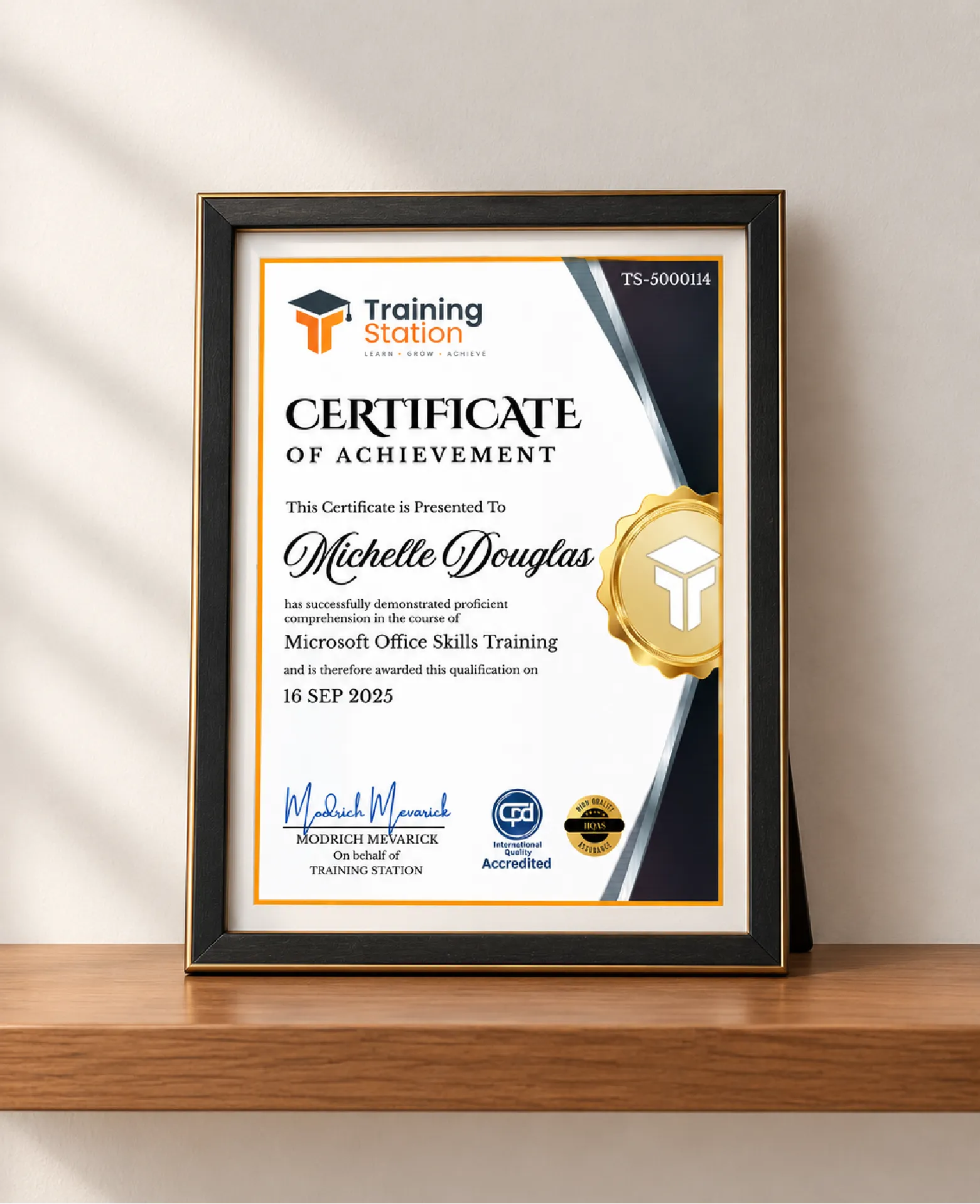
Celebrate your achievement with a CPD-IQ accredited certificate from Training Station! Perfect for showcasing your skills, boosting your career, and enhancing your professional profile.
Get this CourseOur Courses Accreditation



Frequently Asked Questions
Fully online through PDF materials and video lessons. Learn anytime, anywhere.
Self-paced: complete it in a week or spread it over months.
No. The course is beginner-friendly.
Yes. Instructor support is available Monday to Friday.
Yes. We offer a 14-day money-back guarantee.
 Access all courses for Only £99